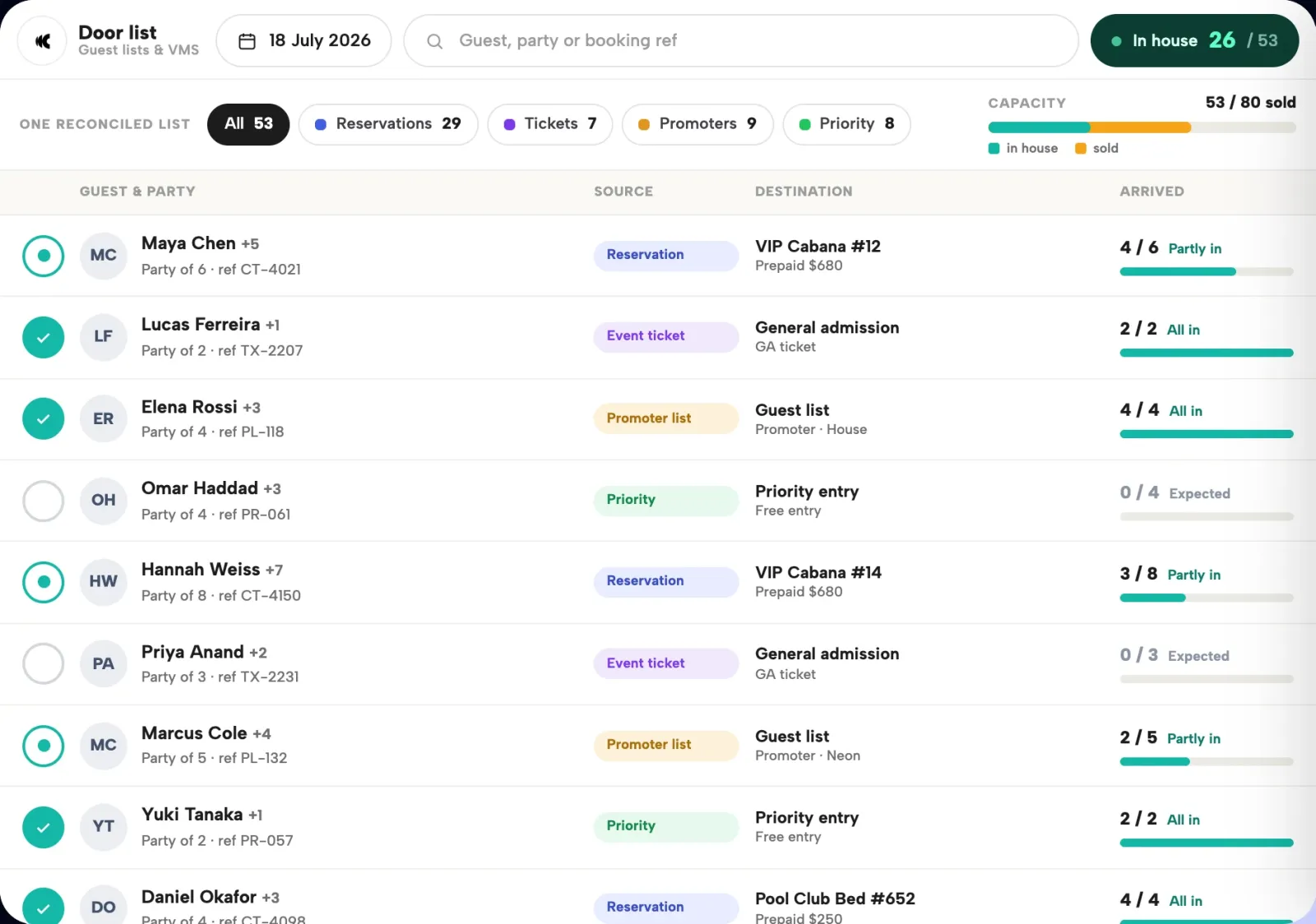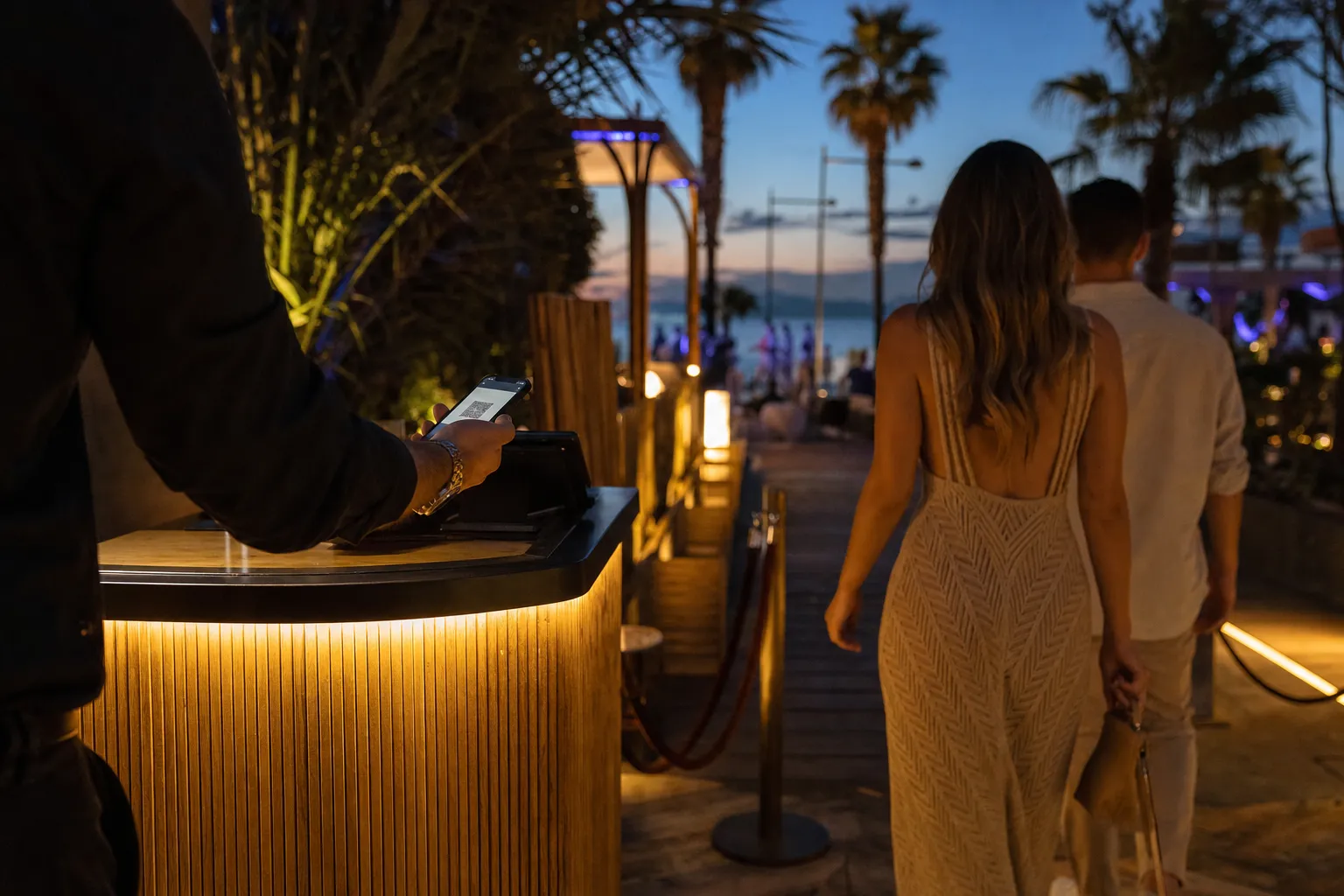
The first prepaid party of the day lands four minutes after opening. The code scans clean, and the host still spends ninety seconds on them — because the screen confirms a booking exists and says nothing about where it is going. Behind them a guest-list arrival and two walk-ups wait in the same line, needing different answers.
That is the shape of almost every door problem worth fixing. The scanner is rarely the bottleneck. The bottleneck is that the door does not know what the floor knows.
The direct answer: the arrival flow is decided before doors open
A venue check-in flow is not the scan. It is the chain from setting the service day's inventory to a party being seated without explaining itself twice. Three things must be true before the first guest arrives, or the door absorbs the failure in front of a queue.
- The inventory the team is selling is set. Which units are live, which are held, which zone is closed for a private booking — set once, centrally.
- Allocation has been run. Every confirmed party has a place on the venue map before doors open. Arrival confirms a decision, it does not make one.
- The team is briefed off that same plan. One plan, one copy. Two copies and the door starts making decisions the floor has already made.
Clubtech runs that on the operator side. The operator console owns the service day — set the inventory the team sells, run allocation from the venue map, know what is booked before doors open — with online inventory syncing to an interactive internal floor plan in real time. Guest-list and visitor management, plus QR-code check-in, run arrivals against that live plan rather than a printout of it.
Three arrival types, one queue, and why that jams
The door is one physical place, so most venues run one line. Three different transactions arrive at it.
Prepaid furniture owns a specific unit and has already paid. Confirm, walk them to it — the fastest arrival and the most expensive to get wrong, because the money landed days ago and the guest knows it.
Guest list owns entry, not a seat. The action is verification: is this name attached to a booking, a host, or a reason for entry. Seconds when the list is one system; a stall when it is a spreadsheet plus three promoters' phones.
Walk-up owns nothing yet, so the action is a sale — what is free, at what price, right now. The slowest by definition, and the one you least want to hurry, because it is still deciding how much to spend.
Confirm, verify, sell. Run them in one lane and the sale sets the pace for the prepaid party behind it. The fix is separate lanes off one system, not more people at the rope. The scan itself is covered in our guide to door check-in and QR scanning.
What the door team needs at the moment of arrival
Not more information — the right information, resolved by one action.
Every name should already be attached to something, so the host is matching rather than adjudicating, and tiered tickets should resolve through that same check rather than through a separate list per tier. The party should already be known too: when the booker invites their group through the booking flow, each guest supplies their own details, so nobody is collecting names at the rope while a line builds.
Role-based user permissions and staff access management decide who can see and do what, so what a door host can see and do is a setting rather than an afterthought.
Handing the party to the floor without a second conversation
The second conversation — host walks a party over, floor team asks what they booked — has one cause: door and floor are reading different copies of the day.
Automatic seating allocation and real-time inventory sync remove the copy: the seat the door confirms is the one the floor is already holding, package and add-ons attached. The handover becomes a walk, not a negotiation.
Exceptions still happen, and should. A party arrives larger than booked, a zone gets blocked, a table moves. Manual booking and override, check-in and check-out workflow management, and area or all-day blocking run from the same console, so the change lands on the plan everyone is reading.
What a bad arrival costs later in the night
The visible cost is the queue. The real ones land later.
A party held at the rope starts its visit behind, and the window in which they were going to spend is shorter than the one you sold them. The answer is not to sell harder at the door but to have sold already — the add-on shop sits inside the booking flow, where full-screen bottle video and swipeable product discovery have driven an 80% increase in bottle add-ons. Spend committed before arrival is not riding on how fast the queue moves.
The second cost is inventory nobody can see. A stale floor plan makes the venue look full to the door while two prepaid parties run late and a zone sits unsold, so you turn away walk-ups you could have taken. The system's job is to show the true state of the room while the decision is live.
The third is the guest who leaves no trace. When furniture genuinely is gone, priority-entry data capture still takes the details, so a turned-away arrival ends the night as a name rather than as nothing.
The reporting loop: arrival timing is data
Check-in run as a workflow rather than a clipboard leaves a record, and that record is the only honest description of how your door behaves.
Clubtech ships 20-plus reports on the operator side. The one that moves the arrival plan most is lead time by zone: which zones commit days ahead and which fill close to the date decides whether arrivals stack or spread. Read it alongside the nightly operations cycle and the door becomes a variable you set — how many lanes, from what hour, and where the walk-up sale is handled so it never sits behind a prepaid party.
Clubtech does not roster your team. It gives the plan its evidence — daily booking volume, lead time by zone, revenue by hour — so next weekend's door is argued from the record rather than from whoever remembers the night best.
Questions operators ask
What is a venue check-in flow?
It is the whole chain from setting the service day's inventory to a party being seated, not just the moment a code is scanned. Inventory is set, allocation is run against the venue map, and the team works from one live plan, so arrival confirms a decision already made.
Do prepaid guests and guest-list arrivals need separate lanes?
In practice, yes, because they are different transactions. A prepaid party needs confirming and walking to its unit. A guest-list arrival needs verifying against a booking, host, or reason for entry. A walk-up needs selling to, which takes longest, so one queue lets it set the pace for everyone behind it.
What does the door team need to know when a guest arrives?
Who the party is, what they bought, and where it sits, resolved by one action rather than a name search. Every arrival should already be attached to a record the system holds, and the party's details should have been captured through the booking flow rather than collected at the rope.
How does the door hand a party over to the floor team?
By both working from the same live plan. Online inventory syncs to the internal floor plan in real time and automatic seating allocation places confirmed parties before doors open, so the seat the door confirms is the one the floor is already holding. Overrides, moves, and area blocking run through the same console.
How much does it cost?
Commercials follow discovery. Every venue has a different mix of inventory, zones, payments, integrations, teams, and rollout work, so a list price would be fiction. Book a discovery call, we map the operation as it runs, and we come back with a proposal built around the real scope.
Bring one real service day to the call. We will set its inventory, run allocation on your floor plan, and walk the three arrival types end to end. Book a 30-minute demo