Built for beach clubs
Enable venue booking, operations, and capture revenue.
Turn your furniture, zones and day parts into pre-paid revenue. You run the floor, own the guest data and always know what’s been booked before the doors open.
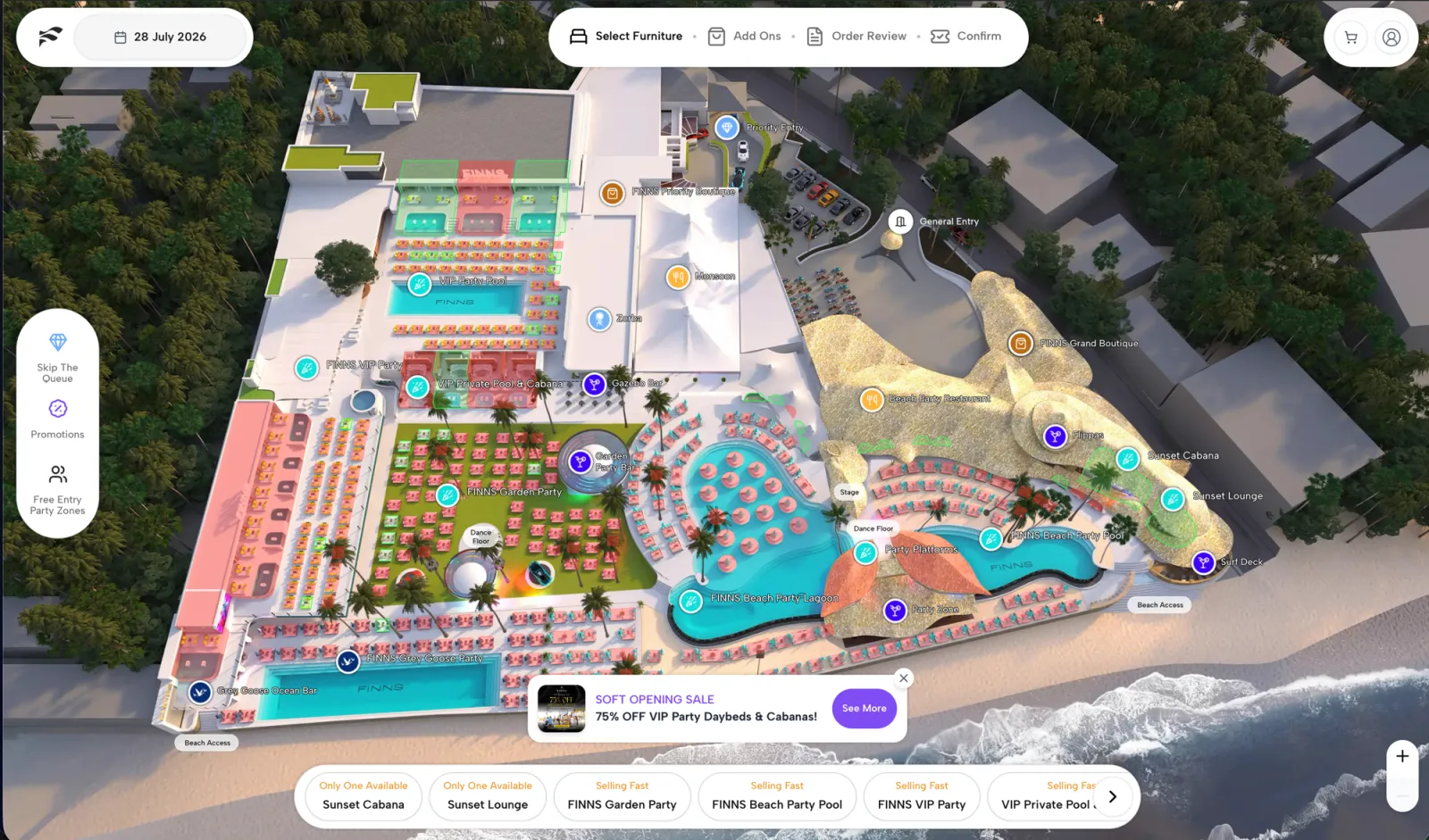
Explore 3D booking map- 3D mapFurniture-first booking
- 4 tapsMobile checkout
- FINNSNamed venue proof
Trusted by leading venues








The operating case
Turn your furniture, zones and day parts into pre-paid revenue. You run the floor, own the guest data and always know what’s been booked before the doors open. We power reservations for the world’s best beach clubs and nightclubs.
The commercial case, in numbers
Where it fits
Reservations. Operations. Marketing.
One platform connects your guests from the first tap to the team running service and to the campaigns that bring them back again and again. Explore the platform.
- Existing POS
- Existing PMS
- Meta
- Google Ads
- GA4
- Online Reservations
Take pre-payments, use dynamic pricing, add-ins, events, ticketing and a 3-D bird's-eye view map that sells the exact spot in the venue. See your booking journey
- Front Of House
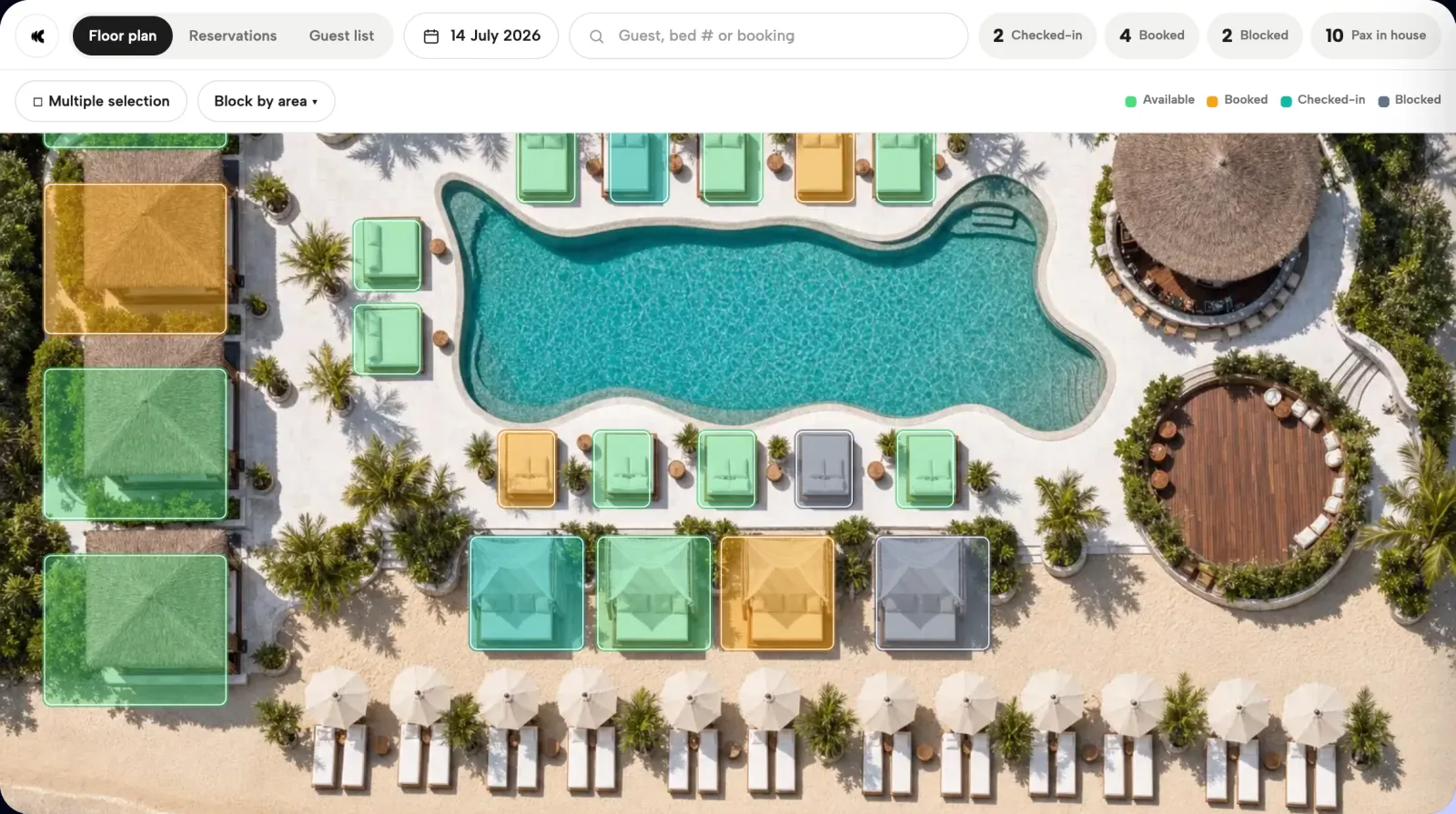
Use a live floor plan, automatic seating allocation, guest-list management and your inventory all synced in real time. See inside the front of house
- Marketing
Each and every booking flows into Meta, Google and GA4 with the revenue attached. Every guest becomes part of your audience. See how attribution works
The booking flow
Your guests buy a spot, not a “daybed.”
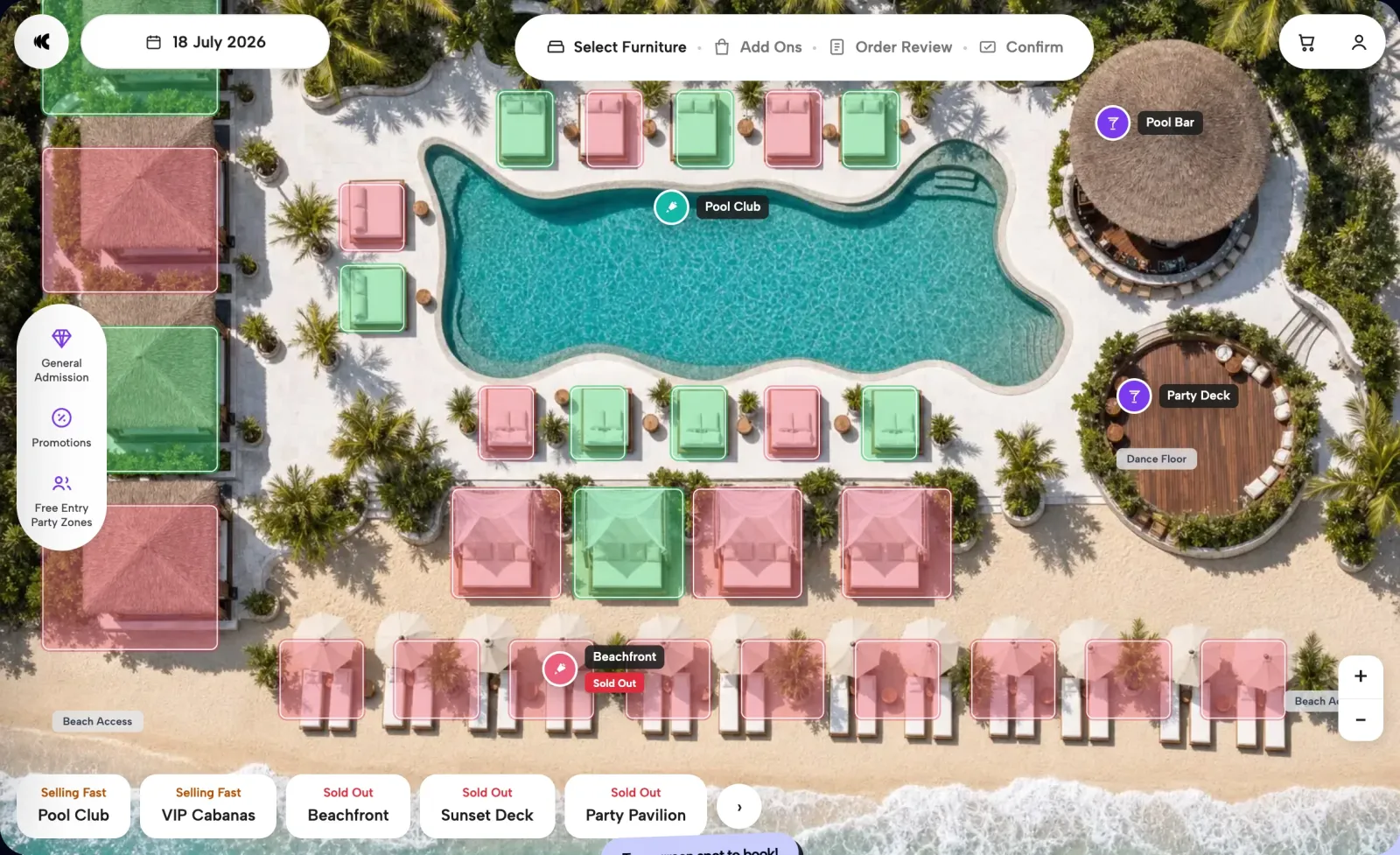
The 3-D bird’s-eye view interactive map turns your venue into the product you sell. Your guests can explore real zones, select the exact furniture, stack add-ons and make a real commitment before they arrive.
- 01Select the exact furniture
Guests explore real zones, see the energy, and choose their exact position.
01Select the exact furniture - 02Preview the experience
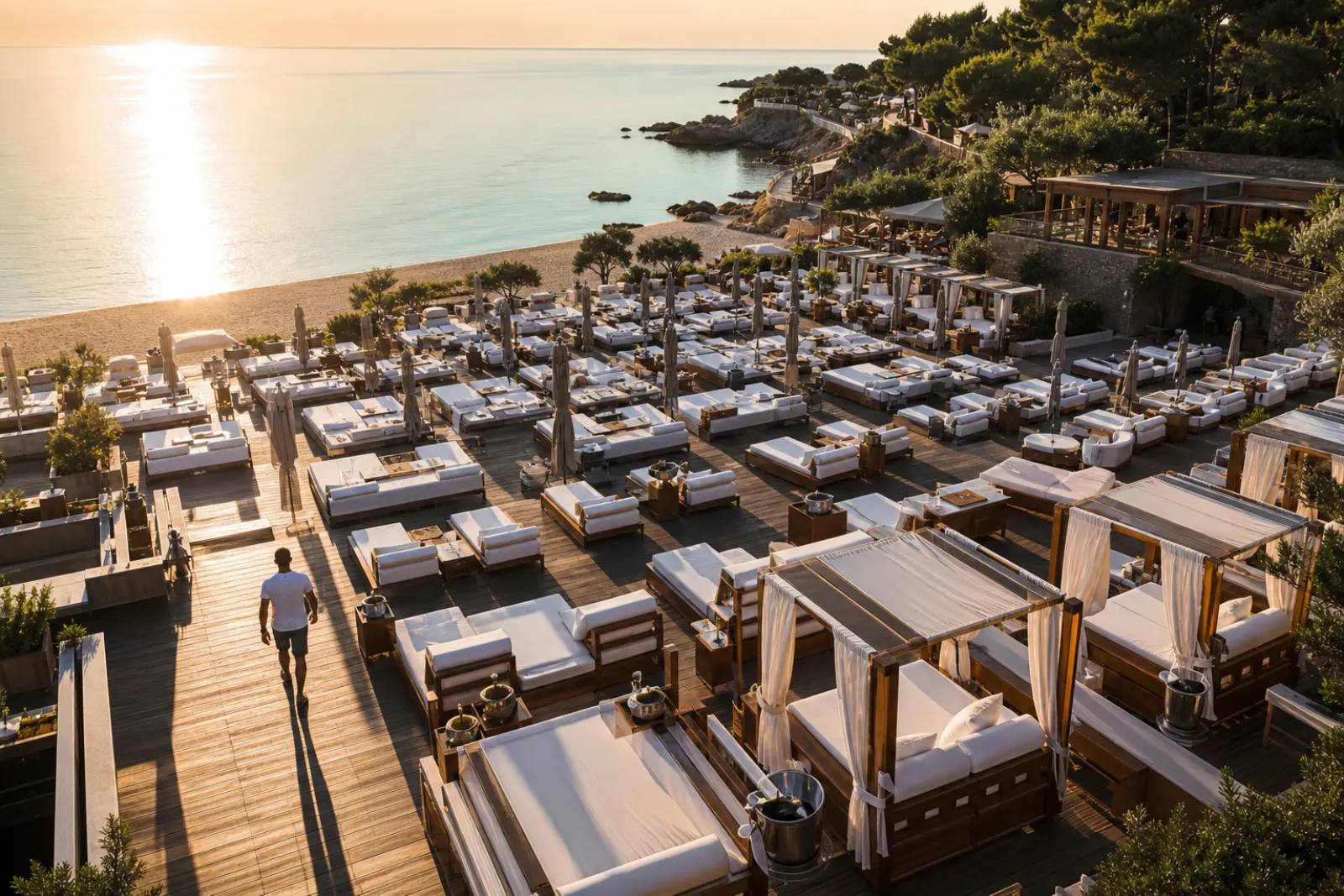
360° walkthroughs and visuals showcase the venue and energy before price is introduced.
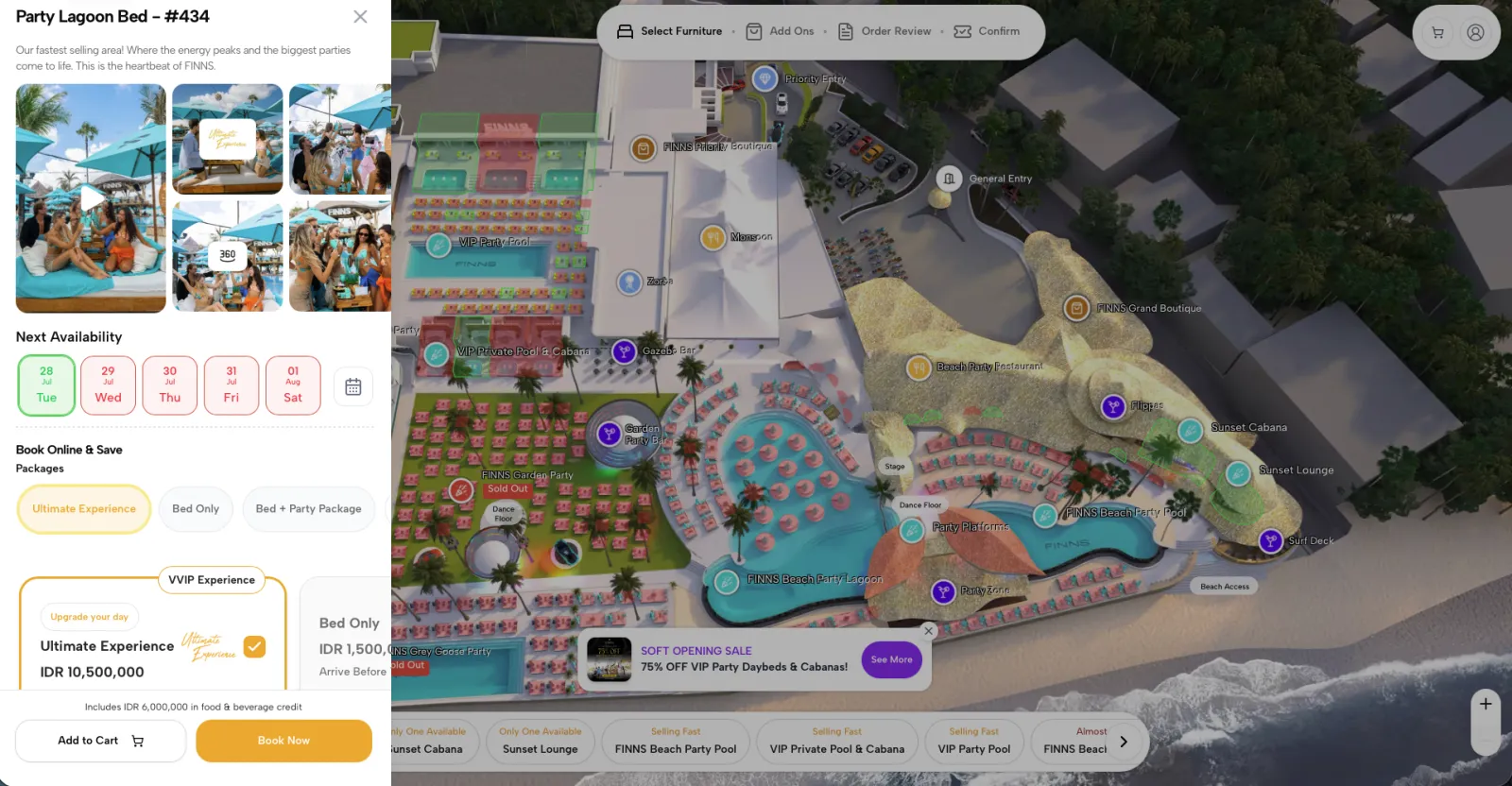
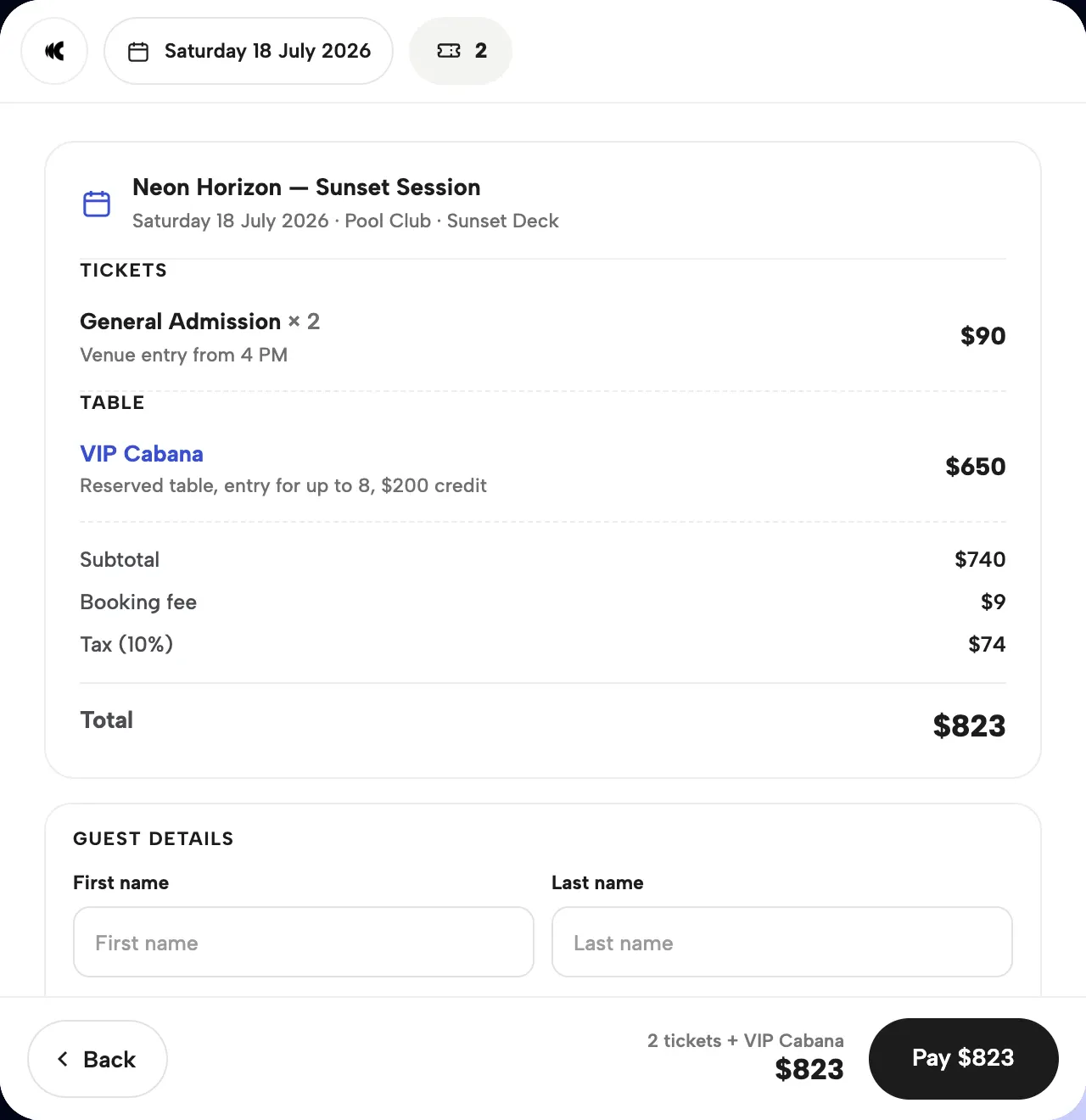
02Preview the experience - 03Add additional products all in the same flow
Stack bottles, packages, cakes, and transfers directly inside checkout.
03Add additional products - 04Four taps to confirmation
Fast mobile checkout with digital wallet or card and zero friction.
04Four taps to confirmation
Revenue levers
You make more from the same seats.
Clubtech captures your revenue before, during and after the reservation, not just at checkout. Here’s how the four levers work:
- 01Prepayments & Deposits
The money arrives before your guest does. How prepayment works
- 02Upsells & Add-ons
You can sell bottles, cakes, transfers and other products around the clock. Browse the add-ons
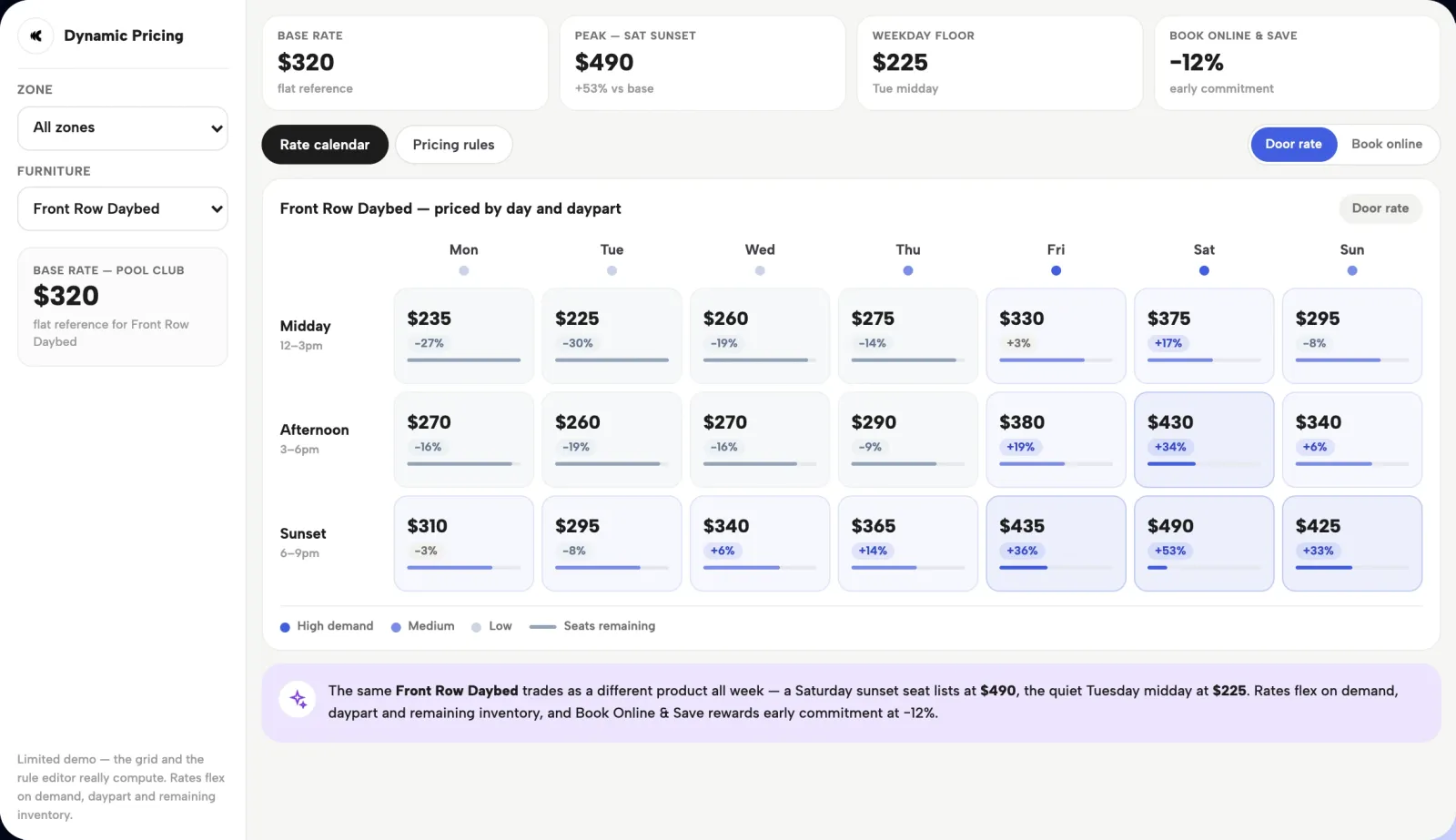
- 03Dynamic Pricing
When demand moves, so does the pricing. You make more from the same inventory. Pricing that moves
- 04Abandoned Booking Retargeting
The system brings your guests back to the zone, date and price that they abandoned. Winning your booking back
Operator outcomes
Control the floor, own the guest, and read the data
- 01You always know what’s booked before the doors open
You set the inventory that the team actually sells. You run allocation from a live venue map. Guest details, reports and promotions all operate inside the same loop. Explore operations
- 02You own the whole customer journey
The person who books invites their group. Each guest then shares their personal details before they arrive. Your audience grows with every reservation. See how every-guest capture works
- 03It’s easy to read the business, so that patterns never arrive too late to act on
You can see your revenue by the hour, the booking lead time, the product mix, origin markets, and repeat behaviours across 20+ reports. You never need to rebuild the week in a spreadsheet. Explore guest intelligence
The proof
We went from simple on-the-day bookings with no financial guarantee to millions of dollars of pre-paid bookings every month.
The proof, and the price
FINNS Beach Club in Bali runs this model at scale — same beach, same furniture, a different selling window.
Commercials follow discovery. We map the deck, zones, packages, payments, integrations, service-day teams, and rollout, then return with a proposal built around the confirmed operation. Book a discovery call using your venue inventory.
Operator questions
Questions operators ask
What is Clubtech?
Clubtech is your all-in-one booking system for beach clubs, day clubs, nightclubs and hotel pools. It supports online reservations, front-of-house operations and marketing all in a single platform. Founded in Singapore, it already processes over $1 million in GMV bookings and supports venue partners in 7+ countries.
What’s the best booking system for a beach club?
The best beach club booking system works by selling the venue in the same way that the guests buy it. It offers the exact daybeds and cabanas present on an interactive map. It provides tiered packages with add-ons, and prepayment is always collected upfront, reducing lost revenue on cancellations and no-shows.
Clubtech was built specifically for beach clubs, nightclubs and day clubs. It was not adapted from restaurant reservations software. It delivers a 3D bird’s-eye view map of your venue and four taps from landing to mobile checkout completion.
Is Clubtech a SevenRooms alternative for beach clubs and night clubs?
SevenRooms is a dining app; it’s designed around covers and time slots. Clubtech is built around venue-first management. Your guests can pick a specific daybed or VIP table on a live venue map; they can stack bottles or other add-ons, and then pay before they arrive.
How are Clubtech commercials set?
Our team starts with discovery: your inventory, booking journey, systems, payments, integrations, rollout and support. Then, we deliver a commercial proposal that is built around your venue and the confirmed operation.
Connected product path
See the capability, the operating fit, and the proof.

Your venue, pre-sold.
Put your venue
inside the demo.
Book a focused walkthrough, configured around a premium venue like yours.
Book a Demo