Built for VIP table sales
The nightclub table booking system that ends the DM-and-doorman era.
Sell VIP tables and bottle service before doors open. Map-based table booking with prepayment, packages, and guest data — built for the operator.
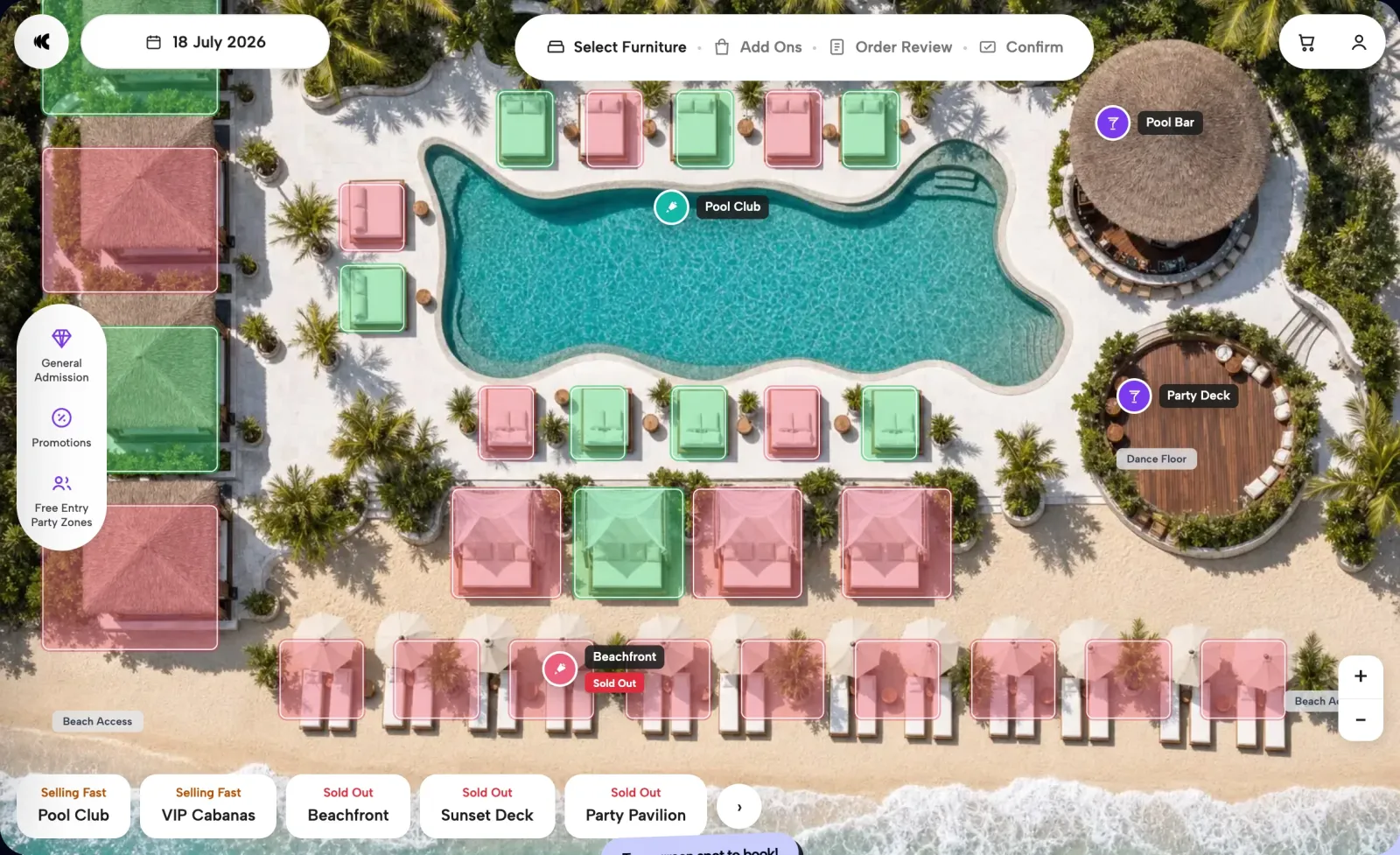
Explore 3D booking map- Map-basedExact VIP table
- PackagesBottle service attached
- PrepaidNo-show protection
Trusted by leading venues








The operating case
Right now, somewhere in your Instagram inbox, a group is asking about a table for Saturday. A promoter will answer eventually, a host will pencil something in, and at 11:30pm you'll find out whether they meant it. No payment, no attribution, no data — a four-figure booth held on a handshake made in a DM.
A nightclub table booking system replaces that handshake with a transaction. Guests pick the exact table on a 3D birds-eye map of your floor, choose a bottle service package, and prepay — days before the night. Clubtech is that system, built for the operator: reservations, front-of-house operations, and marketing in one platform, white-label on your own domain, processing $1M+ in weekly GMV for venue partners in more than 7 countries.
The commercial case, in numbers
The booking flow
Map-based tables, priced in tiers
On Clubtech, VIP table booking works the way the rest of your revenue should:
- 01Guests pick the exact table
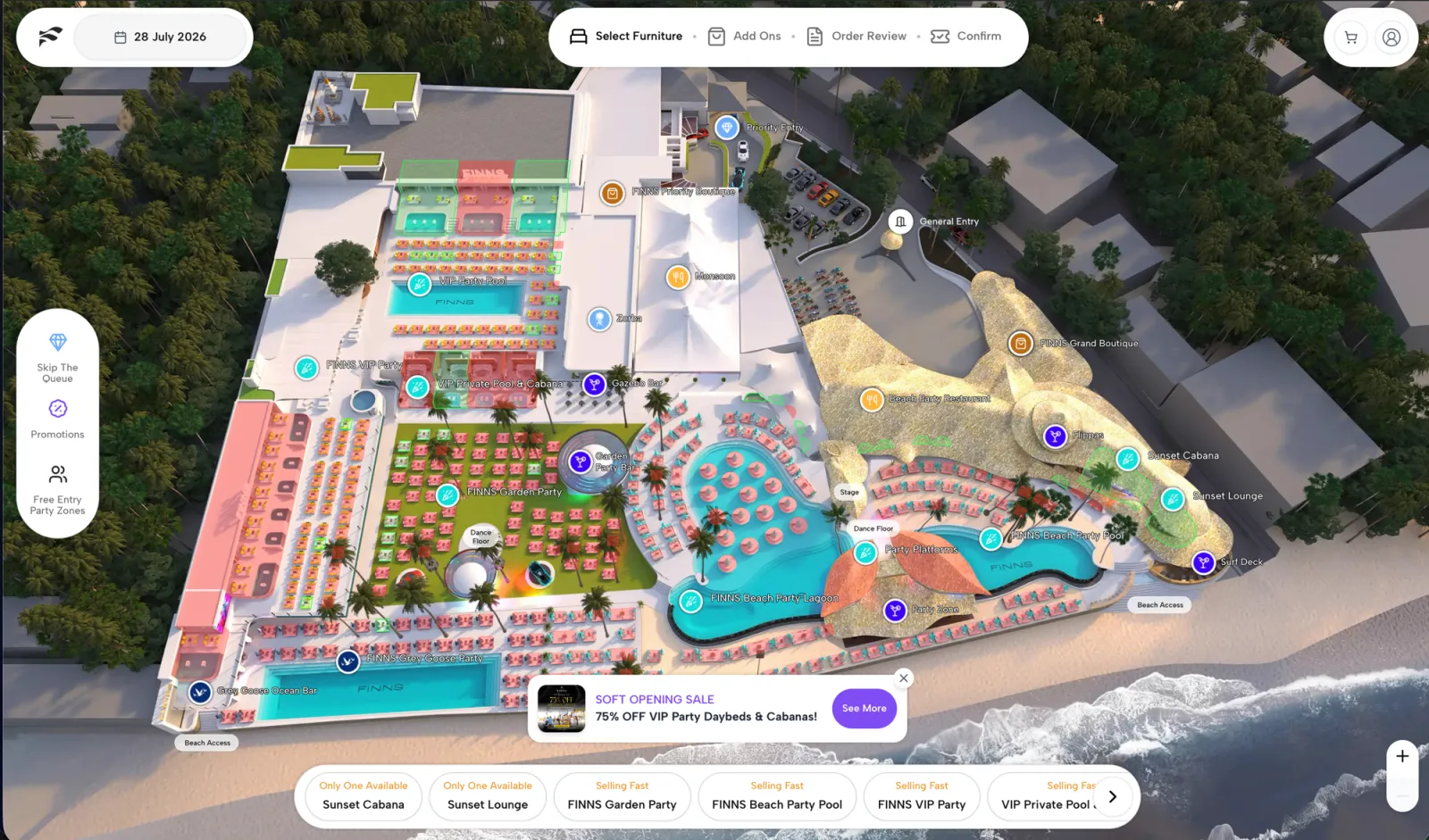
An interactive map of your floor — dancefloor booths, DJ-adjacent tables, mezzanine, terrace — with 360° walkthroughs of the room before they commit. By the time the price appears, they're not buying "a table"; they're defending the spot they've already pictured themselves at.
01Pick the table - 02Packages ladder them upward
Table only, table with bottles, the full party package — plus stackable add-ons: extra bottles, celebration cakes, transfers. The upsell is one tap at booking, not a negotiation at the rope. Dynamic pricing keeps a Friday booth and a Tuesday booth from being the same price.
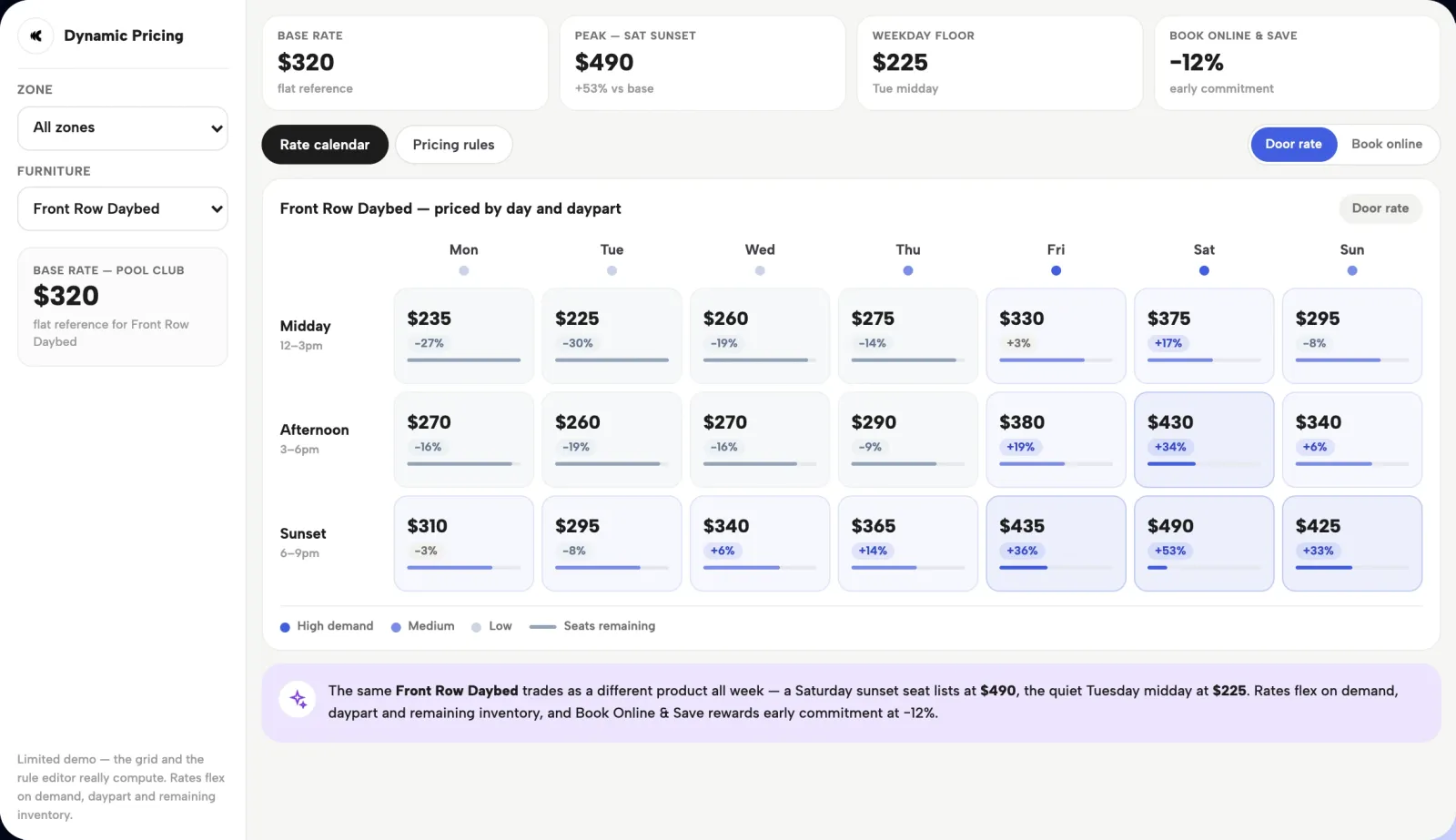
02Tier the price - 03Book online and save pulls commitment forward
A spread between the online price and the door gives groups a reason to lock in days ahead — so you're reading Saturday's floor on Wednesday: which zones are gone, which tables need a push, how many bottles are already sold.
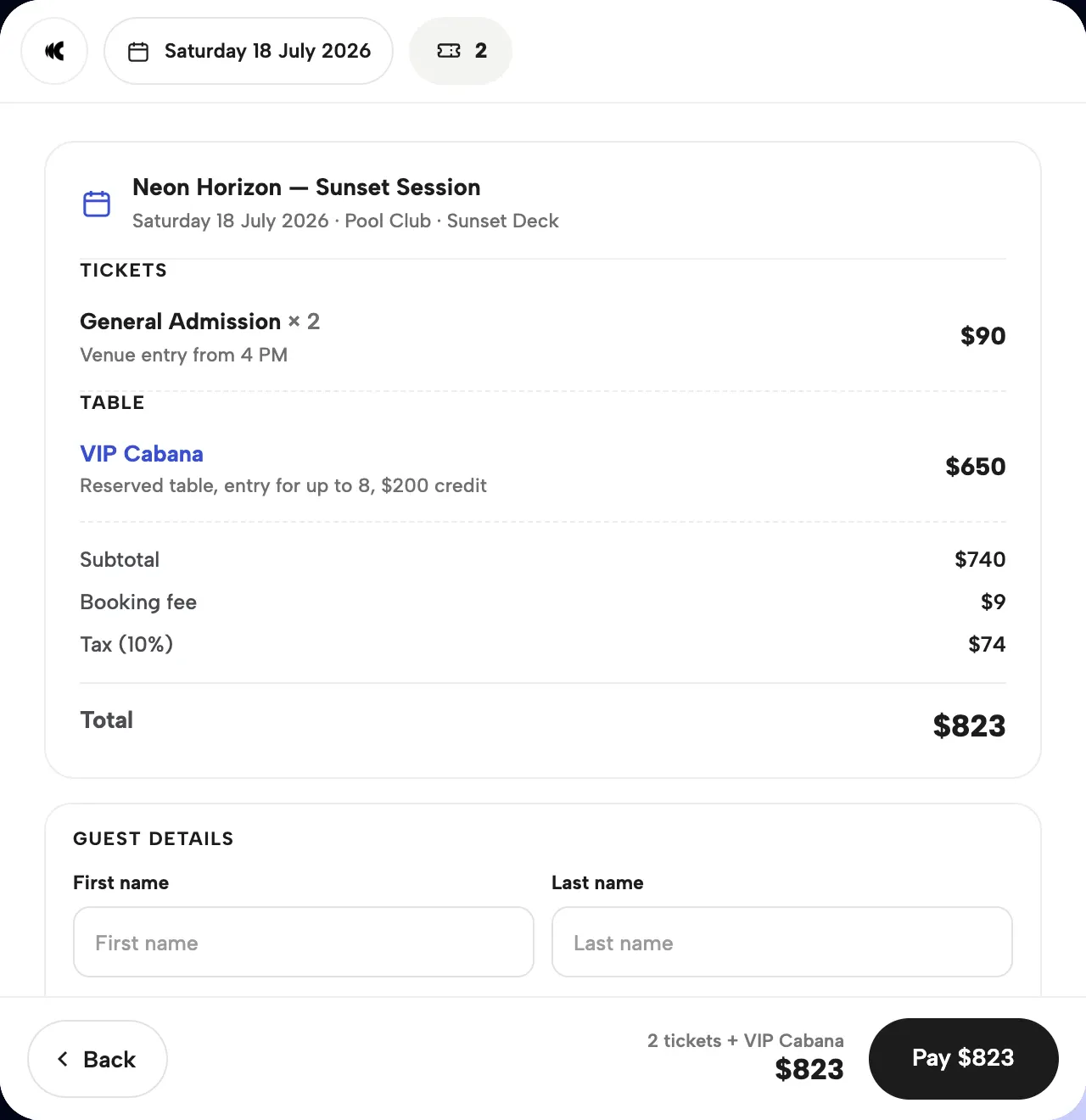
03Prepay the booth
Revenue levers
Prepayment kills the no-show table
- 01Money down, not a maybe
A $2,000 booth that no-shows at midnight is $2,000 of inventory that expired worthless — plus the spend of the group you turned away to protect it.
- 02Prepayment flips the incentive
Money down at booking means the group arrives, or the revenue stays with you either way — a promised table becomes a committed one.
- 03Sold out still captures
When the floor sells out, priority-entry capture takes the guest's details anyway, so the group that missed this Saturday is the easiest sell for the next one.
Operator outcomes
Tonight's bottle buyer is next month's audience
- 01Every booking feeds the ads
Bookings fire to Meta, Google, and GA4 in real time with revenue posted back, so campaigns optimize toward booked dollars, not clicks — and lookalike audiences are seeded from your highest-LTV guests: bottle buyers, not page likers.
- 02Warm groups come back
Abandoned bookings trigger retargeting within seconds, returning a group to the exact table, date, and price they left — usually before the group chat has settled on a different venue.
- 03The log becomes intelligence
More than 20 built-in reports turn the reservation log into guest data — booking volume, lead time, average value by package, repeat share — and because 82% of bookings happen on a phone after 10pm, checkout is four taps with no app install.
Where it fits
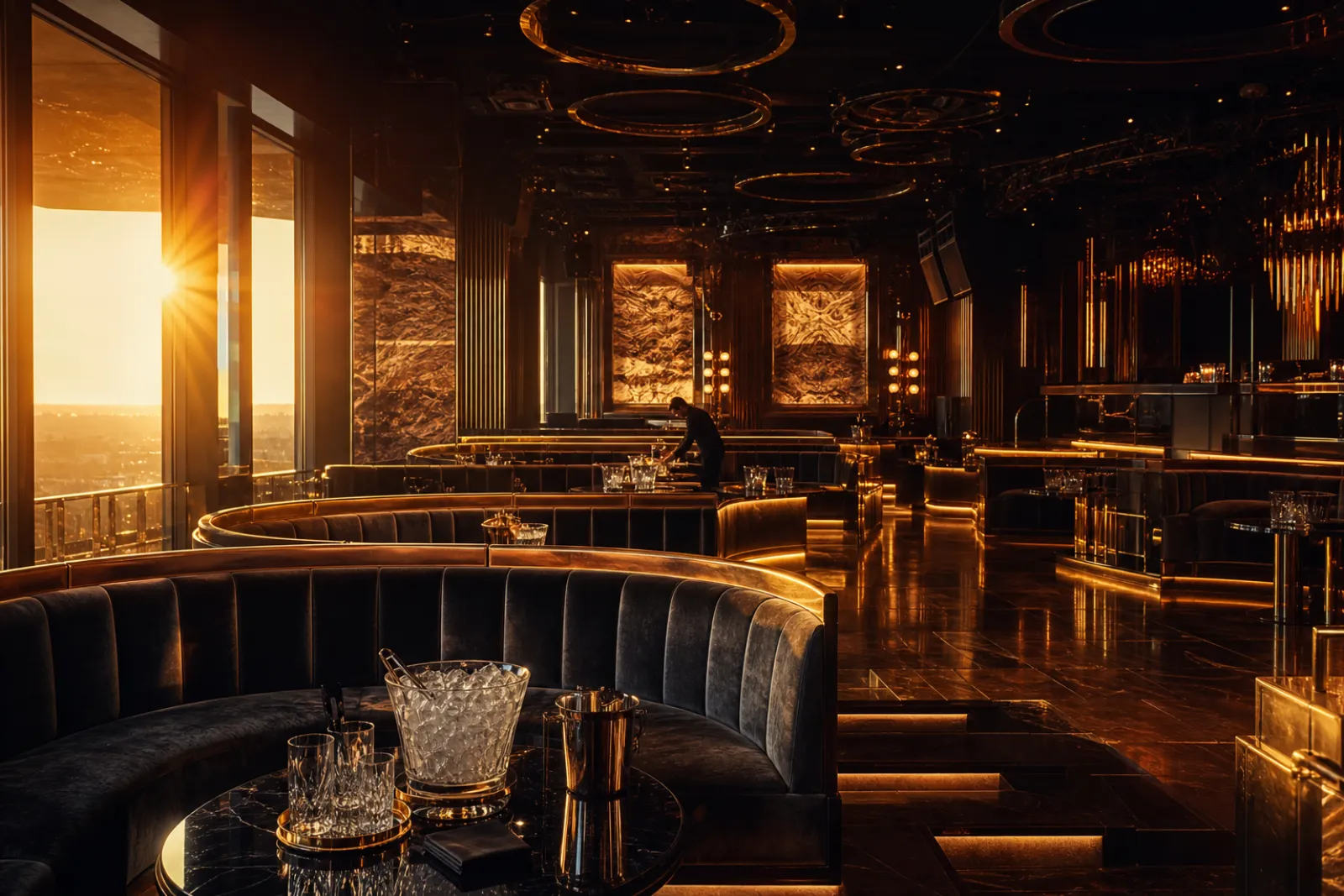
The floor, before doors open
- Existing POS
- Existing PMS
- Meta
- Google Ads
- GA4
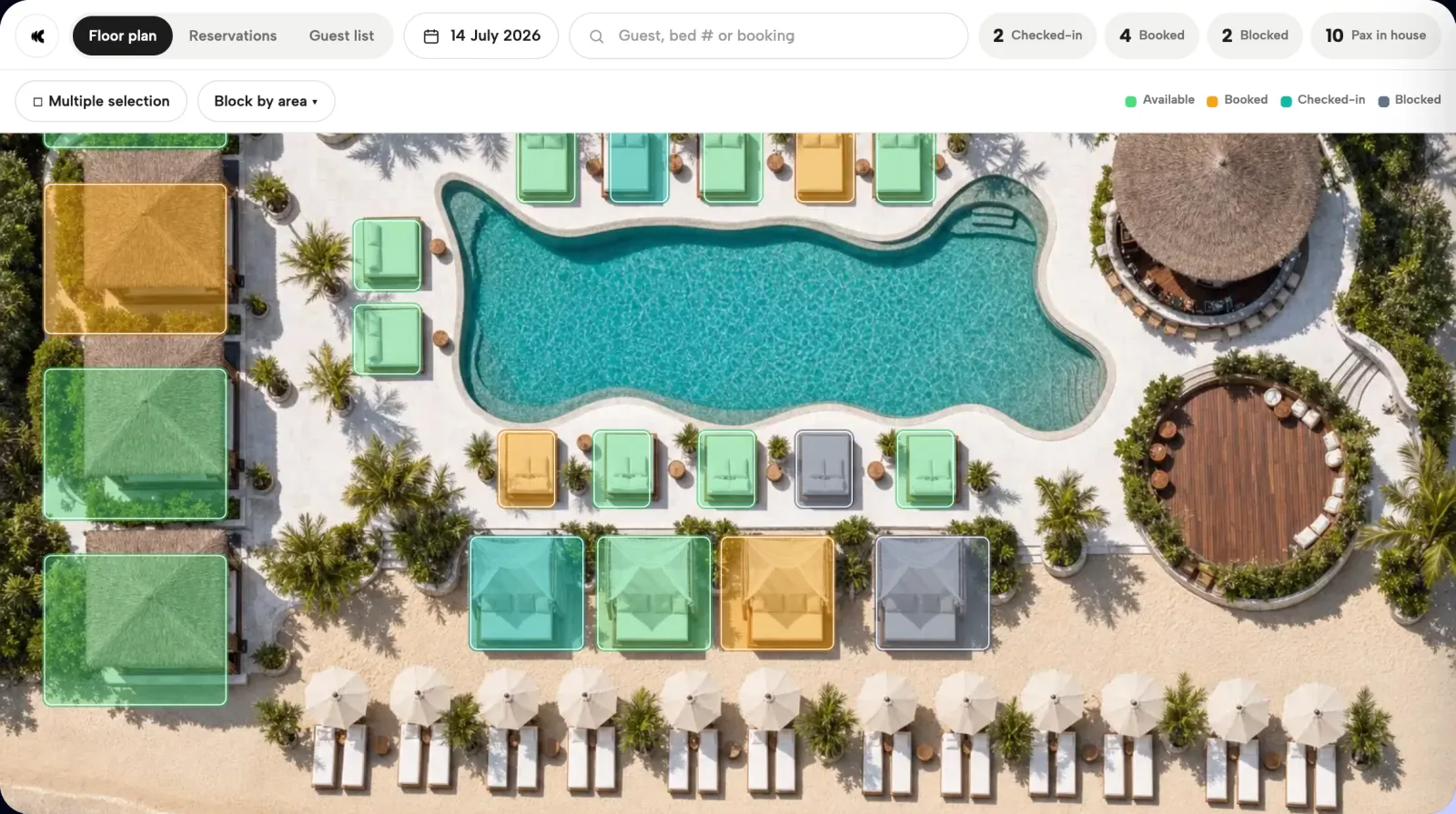
- The booking map is the floor plan
Online sales sync to an interactive internal floor plan in real time and automatic seating allocation places parties, so table booking isn't bolted onto venue management software — it's the same object. See the operations overview.
- The door works from the console
Guest-list and visitor management replaces the clipboard at the rope, and by 9pm the operator console shows where tonight's revenue is sitting — which booths are prepaid, what each table ordered, who's on the list.
- Confirmed parties get greeted, not triaged
Hosts welcome prepaid groups by name instead of working a queue of maybes.
- One engine, day and night
If you run a daytime concept alongside the club, the same engine handles the day club booking flow — one inventory, two products, one guest database.
The proof
Guaranteed, not promised
This is the same mechanic that took FINNS Beach Club from on-the-day bookings with no financial guarantee to millions of dollars worth of pre-paid bookings each month, in CEO Beau Whittington's words. Different vertical, identical physics: guaranteed inventory behaves differently from promised inventory.
Commercials follow discovery. We map the tables, packages, payments, POS boundary, integrations, teams, and rollout, then return with a proposal built around the confirmed operation. Book a discovery call using one real service night.
Operator questions
Questions operators ask
How does a nightclub table booking system work?
Guests choose a specific table on an interactive map of the venue, select a package — table minimum, bottles, add-ons — and pay online before the night. The table is guaranteed, the revenue is banked at booking, and the host team works from confirmed, prepaid parties instead of a list of maybes. On Clubtech the whole flow takes four taps on a phone.
How do nightclubs reduce table no-shows?
Take payment at booking. A group with money down shows up; a group with a DM confirmation costs nothing to ghost. Prepaid tables either arrive or leave the revenue behind — and because prepayment happens days ahead, gaps surface early enough to resell the booth instead of discovering the hole at midnight.
What software do nightclubs use for table bookings?
Options range from dining-reservation tools adapted to nightlife through to platforms built for premium venue inventory. The dividing line is what the system sells: cover-count tools book "a table for eight," while map-first platforms like Clubtech sell the specific table, the package tier, and the add-ons — then feed every booking back into your ads and guest database.
How should bottle service packages be priced?
As a ladder, not a number. Anchor each zone to a minimum that reflects its sightlines and status — dancefloor booths at the top, perimeter tables below — then wrap tiered packages around each zone so guests compare your options against each other, not against another club. An online-vs-door spread rewards early commitment and pulls revenue into the week.
Does a table booking system replace the guest list?
It absorbs it. Clubtech includes guest-list and visitor management alongside table bookings, so the door works from one system instead of a clipboard plus five promoters' phones. Free-entry and priority registrations capture contact details too — meaning the guest list finally builds a marketable database instead of evaporating at close.
Connected product path
See the capability, the operating fit, and the proof.

Your venue, pre-sold.
Put your venue
inside the demo.
Book a focused walkthrough, configured around a premium venue like yours.
Book a Demo