
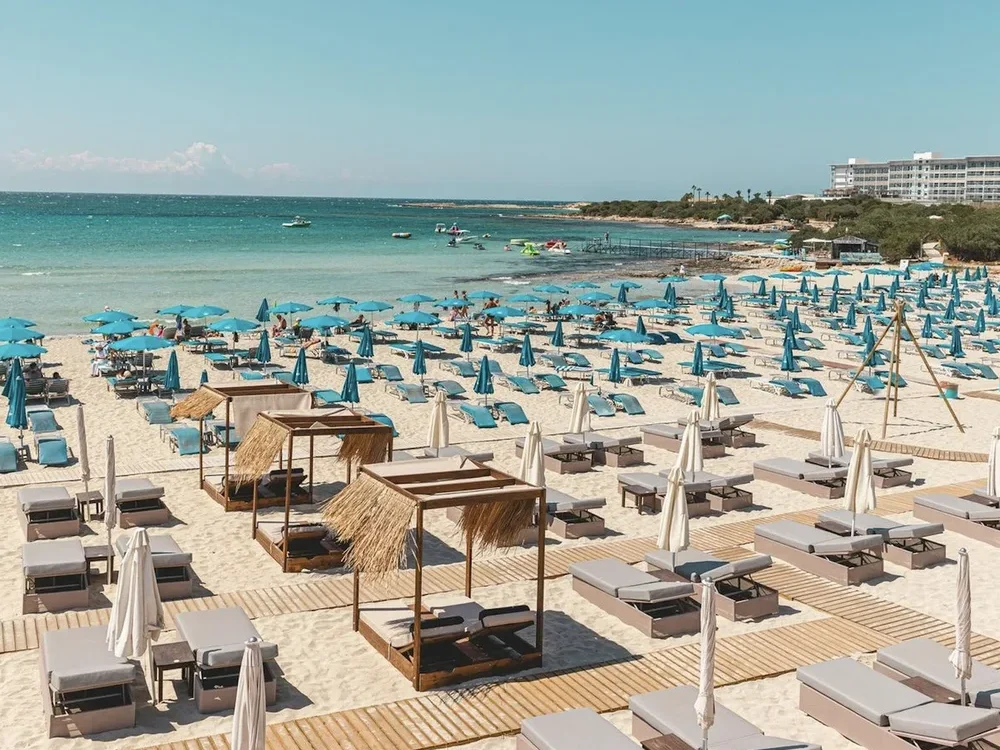
lasmari beach bar sits on the sand in Cyprus, running the kind of inventory every Mediterranean operator recognizes: rows of sunbeds, a cabana zone, a sofa deck, bean bags on the grass, a boho lounge, and a restaurant behind it all. It books on Clubtech, and between July 9 and August 6, 2026 it produced one of the cleanest before-and-after datasets we have — two consecutive fourteen-day windows, same venue, same summer, same furniture.
Two windows, one venue
Most venue case studies compare a period on the platform against a period before it, which means comparing two different operations and hoping the difference is the software. This comparison does not have that problem. Both fortnights ran on the same booking flow, the same furniture, the same prices, the same team. The only variables are the calendar and what guests chose.
That makes it a narrow but honest measurement. It cannot tell you what Clubtech is worth against a clipboard and a phone number. It can tell you what happens to the size of a booking when a compressed season peaks, which is a question every Mediterranean operator has to answer with their own numbers eventually.
What produced the bigger booking
Three mechanics in lasmari's booking flow do that work, and every one of them is a decision the guest makes before arriving rather than something the floor team has to sell on the day.
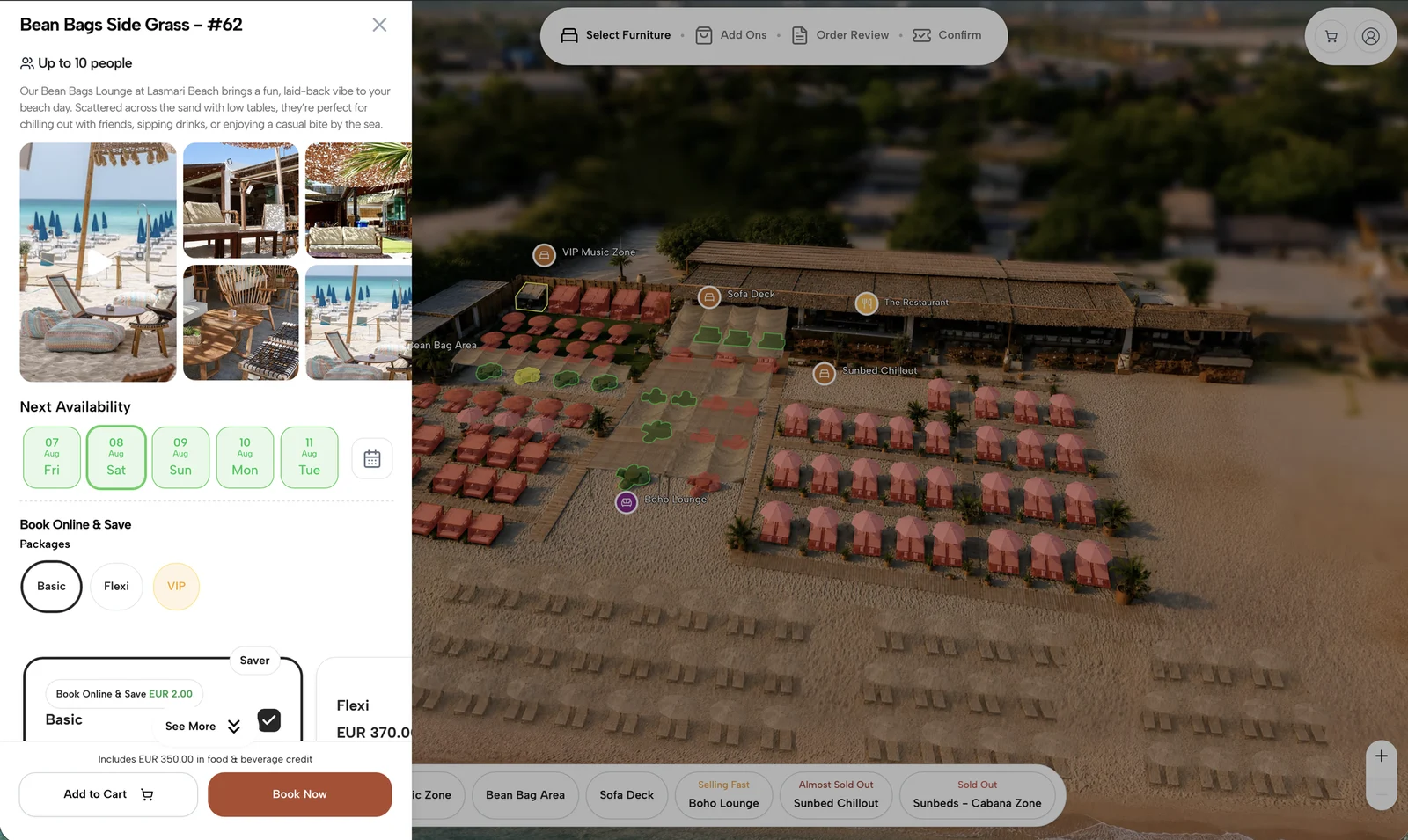
The map sells the better spot. Guests pick a specific place on a birds-eye view of the venue — a front sunbed, a cabana in the shade, the sofa deck near the music — rather than requesting a generic reservation for four people. When the difference between a €30 unit and a premium one is visible rather than described, the premium unit sells. This is the same behavior we documented at Luna Beach Club, where 63% of furniture bookings were premium tiers.
Tiered packages give the guest a reason to trade up. Each unit carries more than one way to book it: a saver tier for guests who commit early, a flexible tier for those who want to keep their options open, and a VIP tier that bundles food and beverage credit into the reservation. The credit is the important part — it converts a spend the guest was likely to make anyway into revenue committed before they arrive.
Booking online is the cheaper way to book. An explicit online-only saving moves the transaction off the phone, off the message thread, and onto a page that can upsell, take payment, and capture the guest's details. Every booking that lands there is a guest profile lasmari owns.
None of that is exotic. It is the same sunbed booking system logic that works on any beach with more than one grade of furniture — visible inventory, tiered pricing, money taken up front.
Why Cyprus matters
Clubtech's most-cited proof points are in Bali. lasmari is the Mediterranean, and that changes what the numbers are evidence for.
A beach club in Canggu and a beach bar in Cyprus have almost nothing in common commercially. Different seasons — Bali runs year-round, Cyprus compresses its year into a summer. Different currencies, different booking windows, different guests. Different average ticket by an order of magnitude.
What they share is the mechanic. Guests shown a map of real furniture, at real prices, with a real reason to commit early, book better units and pay sooner. That holding true in two markets with this little in common is a stronger signal than either result alone — and it is the same shift FINNS Beach Club made at flagship scale, where the money moved from the door to the days before arrival.
For an operator on a European coastline, the practical read is that a compressed season raises the stakes on merchandising rather than lowering them. When the year's revenue lands in fourteen weeks, a 23% larger average booking across those weeks is the difference between a good summer and a great one — and unlike footfall, it is a variable you control.
What to take from this
If you run a beach club, beach bar, or hotel pool with more than one grade of furniture, the transferable findings are narrow and specific:
- Track average ticket, not just revenue. Revenue during peak season flatters everyone. Average and median booking value tell you whether your booking flow is doing any work.
- Watch the median alongside the mean. lasmari's median rose 25%, which is what proves the whole book shifted rather than a few big reservations landing.
- Put the price difference in front of the guest. The premium unit sells when the guest can see what it is and where it is.
- Bundle spend the guest will make anyway. Food and beverage credit inside a package converts on-the-day spend into pre-paid, committed revenue.
The mechanics behind that ticket lift are the same ones covered in the beach club revenue playbook — and they are configured per venue, around the inventory you actually sell.