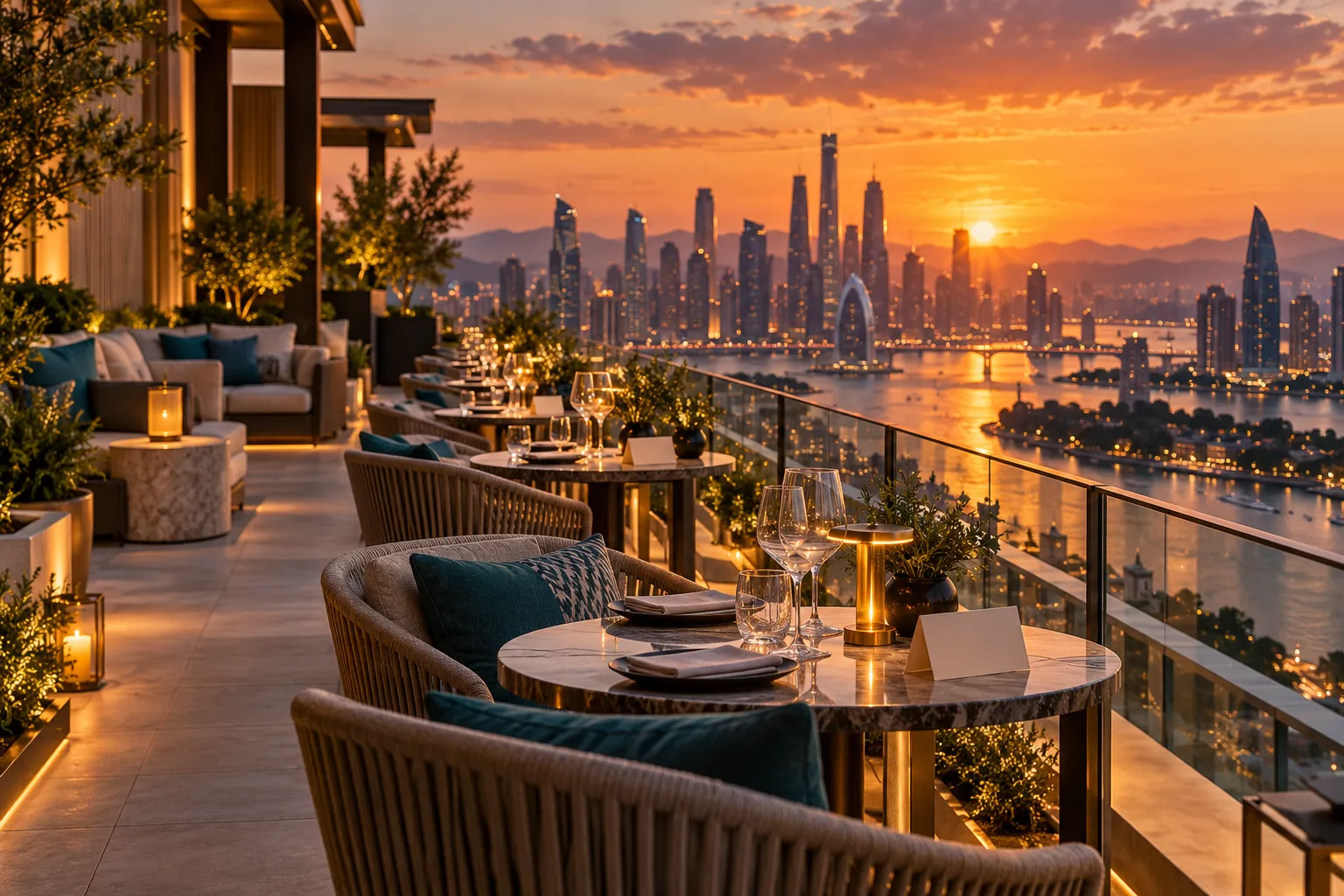
Every rooftop has a short list of tables that matter. The rail with the skyline behind it. The corner that catches the sunset. The lounge set back from the bar where a group can hear itself. A guest who books "a table for four at 6pm" wants one of those, and a system that sells a table for four at 6pm gives them whichever one is free.
That gap is where rooftop revenue leaks. The best positions go to whoever arrives first, not whoever would have paid most for them.
The direct answer: a rooftop sells positions, so the system has to sell the exact table
A rooftop bar reservation system has to let the guest see the terrace, pick the specific table, and pay for that position in a session the venue has defined, with the minimum spend or package the position carries. The checkout has to work on a phone late at night, because that is when the decision gets made. And when the best tables are gone, the system should keep capturing the guests who wanted them.
A form that asks for date, time and party size sells covers. A rooftop is selling a view, table by table.
The rail table and the back table are different products
Same chairs, same menu, same bar. The rail table and the table by the service door are still different products, and the guest knows it.
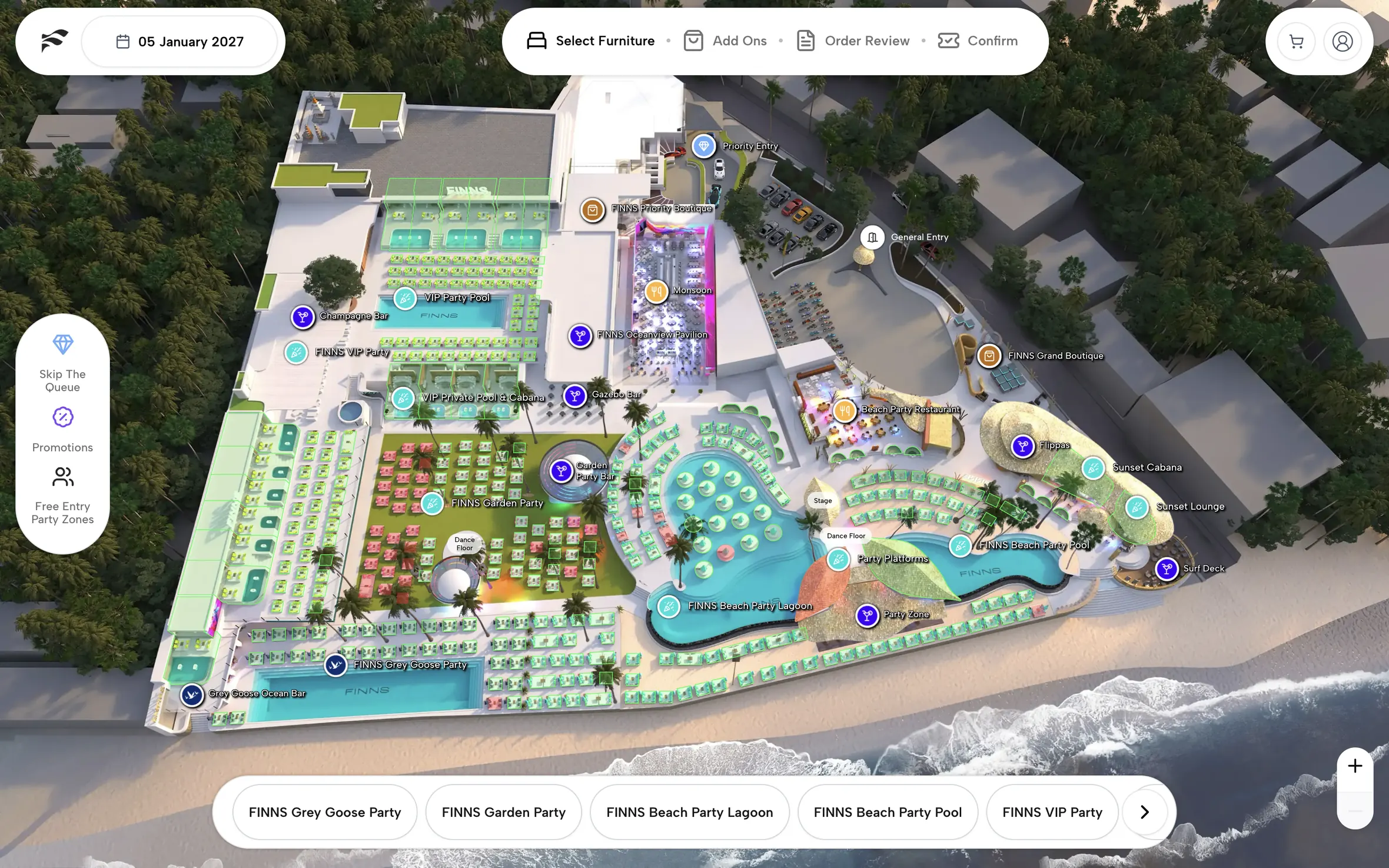
On Clubtech, guests explore the venue from an overhead 3D view, watch the 360° walkthroughs, and tap the specific table before they commit. The map is color-coded with real-time availability, so what is still open is visible at a glance. Guests buy the spot, not a category, which is the case for venue booking software with an interactive map. On a rooftop the view is the product, so it matters more.
It also changes how the terrace is priced. Once each position is a product, the rail, the corner, the lounge and the high-tops by the bar can each carry their own rate and package. An unnamed table sells at the terrace's lowest price. A named one can be priced for what it is.
Sunset and late seating on the same table
A rooftop often runs two different nights on the same furniture. The sunset hour sells the view to guests who came for it. The late seating sells the room, the music and the bar to a different crowd, often at a different spend.
Selling both on the same table means sessions, with the window stated when the guest books. Clubtech sets up time-slot logic per venue, from part-of-day sessions through to hourly slots. It was built for Sol Rooftop in Canggu, Bali, and other venues, such as Ravana Pool Club, run different configurations. It is a setup we do with the venue, not a switch the venue flips on a busy Friday. When the sessions need to change, you talk to your account team.
The rail table becomes two products a night, each priced for its own demand. Dynamic pricing lets rates flex by demand, time of day and inventory, so the venue makes more from the same tables instead of charging one flat rate from 5pm to close.
Minimum spends and packages for the premium positions
The premium positions are where a minimum spend belongs. A rail table at sunset with no minimum is the most valuable seat on the terrace sold at the price of the least valuable. A minimum sets a floor under that table while the group still chooses what it drinks. How to set the number, vary it and keep it without burning guests is covered in our minimum spend strategy.
Packages do the same job with more structure. Tiered packages run from the table alone up to a full experience, with bottles, cakes and transfers stacked on as add-ons in the booking flow. A birthday group choosing the corner at sunset can buy the table, the bottle and the cake in one pass. The order review step before payment shows the whole order in one place, so what the group agreed to is on the screen before anyone pays.
Keep the back tables simple. Not every position needs a minimum, and a terrace where every table carries one gives the walk-in nowhere to sit.
The 10pm phone booking
Rooftop plans get made on a phone, late, in a group chat. 82% of bookings happen on a phone after 10pm, and the guest choosing tomorrow's sunset table at 11pm will not download an app or fill in a long form.
Clubtech's booking pages load in under a second, need no app install, and complete checkout in four taps, with wallet authorization in one tap. It all runs white-label on the venue's own domain, so the booking, the guest data and the brand stay the venue's.
When a group starts the booking and drops out to argue about the time, abandoned-booking events fire within seconds, and WhatsApp and email recovery return the guest to the exact zone, date and price they left.
When the rail sells out
The best tables sell out first. The booking flow keeps working after they are gone. Priority and free-entry data capture takes the details of guests who could not get a table, so sold out is not a lost guest. It is a name the venue can reach for the next date, and a measure of how many people wanted the rail and could not have it.
That measure is a pricing input. If the rail and the corner go days ahead while the lounge fills on the night, the positions are not priced to their demand, and dynamic pricing is how the tables that sell first start earning more.
Rooftops with a restaurant floor
Some rooftops run a dining room beside the terrace. The terrace sells positions; the restaurant sells covers at a time. Clubtech's Restaurant Module is an add-on that does full time-slot reservation booking for the restaurant inside a venue, so a rooftop with a dining floor runs both on one platform. The wider difference between selling time and selling space is in restaurant reservation software vs beach club management software.
Bring your terrace plan to the call. We will show your rail, corner and lounge as separate products on one map, with sessions and minimums attached. Book a 15-minute demo, pre-configured to a venue like yours. No contracts, no credit card.