Sell and run event nights
Event ticketing for clubs that checks in at the door, not just sells the seat.
Event ticketing software for clubs: tiered tickets, QR check-in at the door, every-guest data capture, and the ads loop — in the same platform as your table bookings.
Explore Events and ticketing- TieredTicket types and value
- QRCheck-in at the door
- One guestRecord across the night
Trusted by leading venues








The operating case
A club sells 600 tickets to a Saturday headliner and, by Monday, knows almost nothing about the night. The ticketing site holds 600 email addresses it won't hand over cleanly. The door ran on a printed manifest and a highlighter. The tables that sold alongside the tickets sat in a different system. And the ad spend that filled the room can't be traced to a single ticket. The event sold out and still left the venue poorer in data than it should be.
Event ticketing for clubs should do more than take the money. Clubtech runs the ticket, the door, and the guest record on one platform — tiered tickets, QR-code check-in, and every-guest data capture, sitting alongside the same nightclub table booking map that pre-sells your decks. It's the system behind $1M+ in weekly GMV for venue partners in more than 7 countries: reservations, front-of-house operations, and marketing in one place, not three tools that never talk.
The commercial case, in numbers
The booking flow
Tickets and tables on the same platform
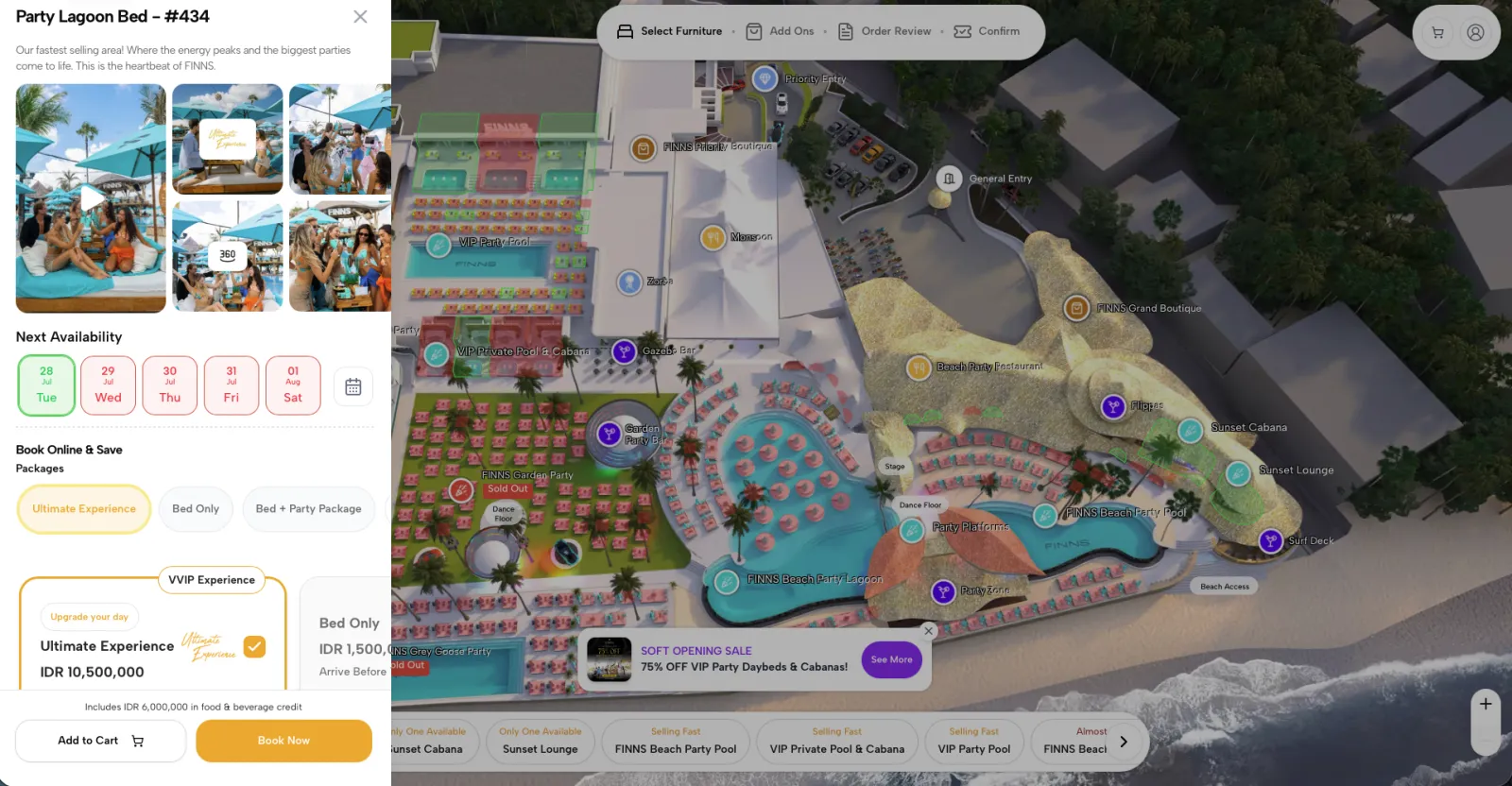
Most clubs bolt a ticketing site onto a stack that already has a booking tool and a POS. Clubtech is the native events widget inside the booking platform, so the ticket and the table are the same object.
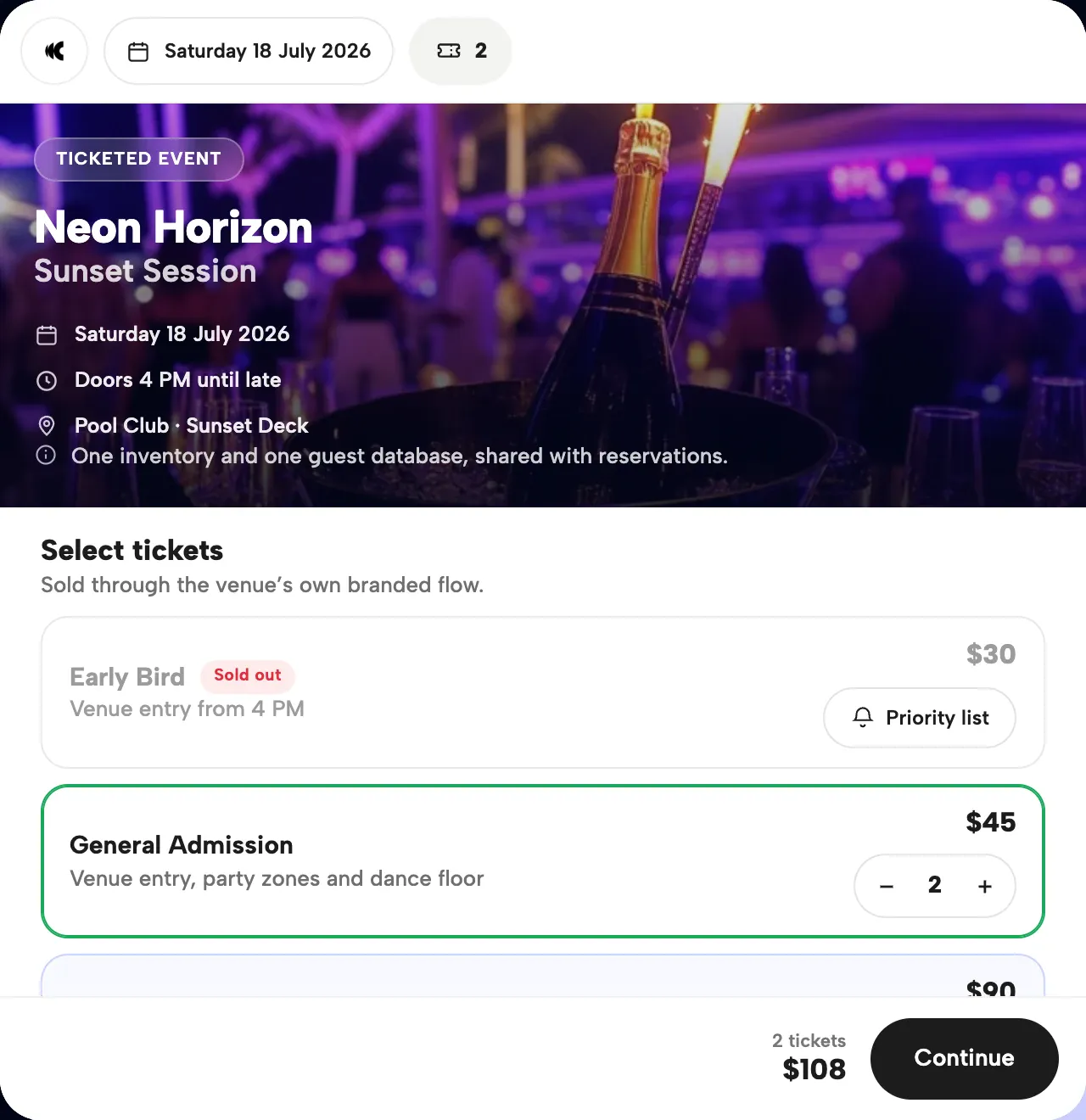
- 01Tiered tickets, sold like the room
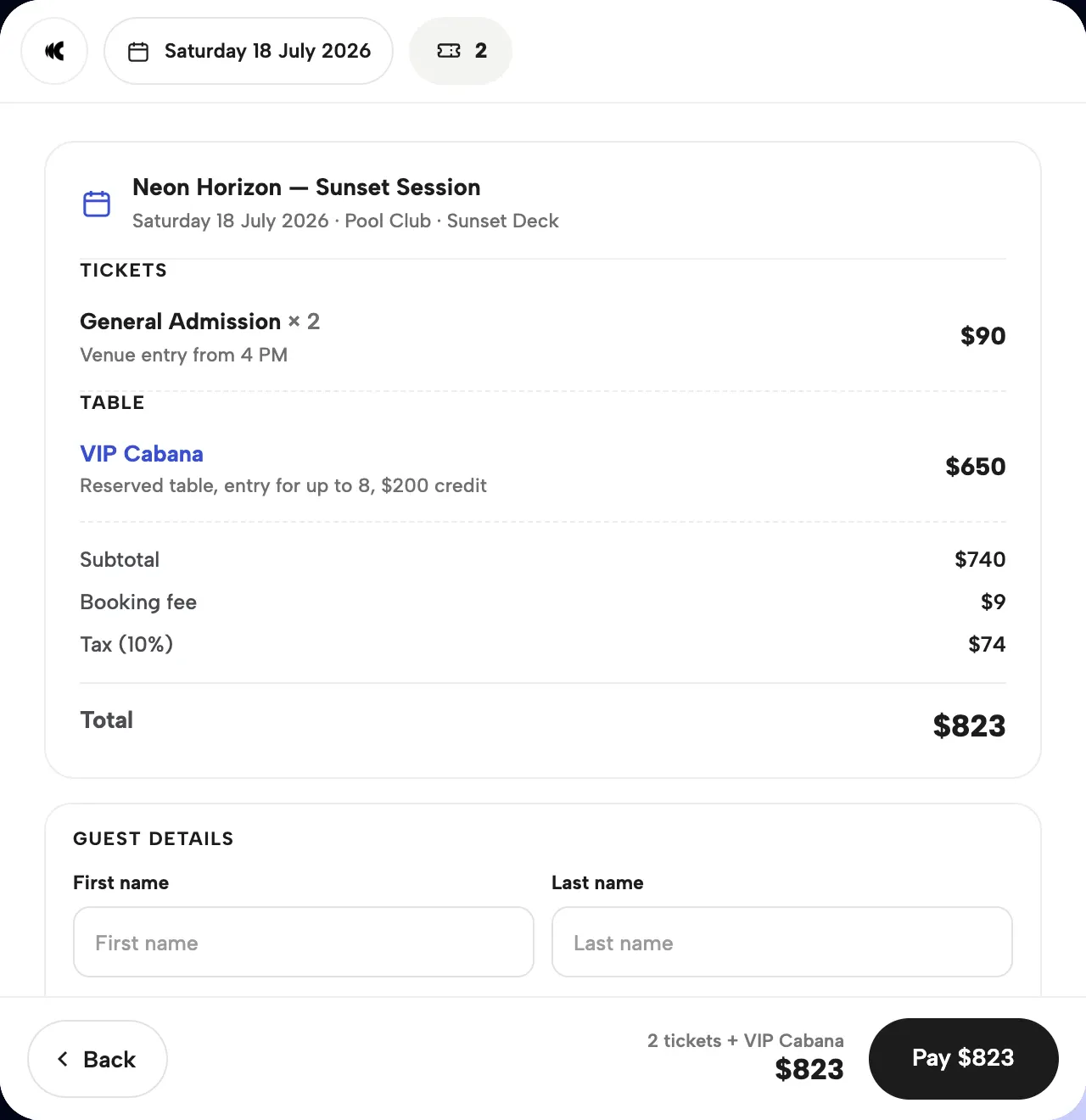
Early-bird, general admission, and VIP tiers priced to demand — with the option to step a general-admission buyer up to a table on the 3D booking map before checkout, so the higher-margin inventory sells in the same flow.
01Tier the tickets - 02White-label on your domain
Guests buy on your brand, not a marketplace's — and the guest data belongs to the venue, not to the ticketing platform renting you its audience.
02Sell and prepay - 03Low switching cost
It sits on top of your existing POS and PMS with no major IT changes, so adding native ticketing doesn't mean ripping out the stack.
03QR check-in
Revenue levers
QR check-in at the door
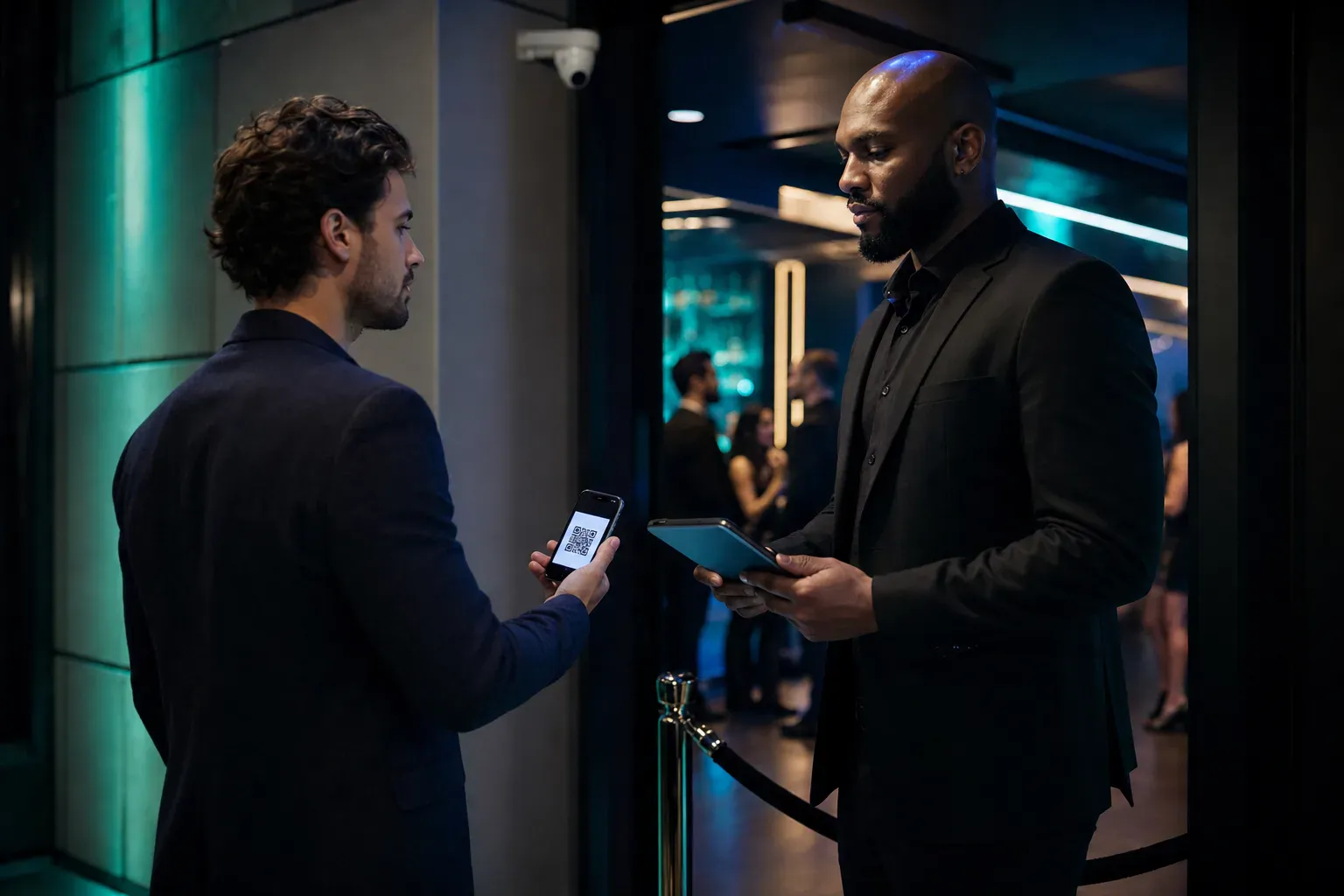
A ticket is only useful if the door can read it. Clubtech issues a QR code with every ticket and checks guests in with a tap.
- 01Scan, don't search
The host works from a live list instead of a printed manifest — no name-hunting, no duplicate entries, no "spell that again" while a queue builds behind the rope.
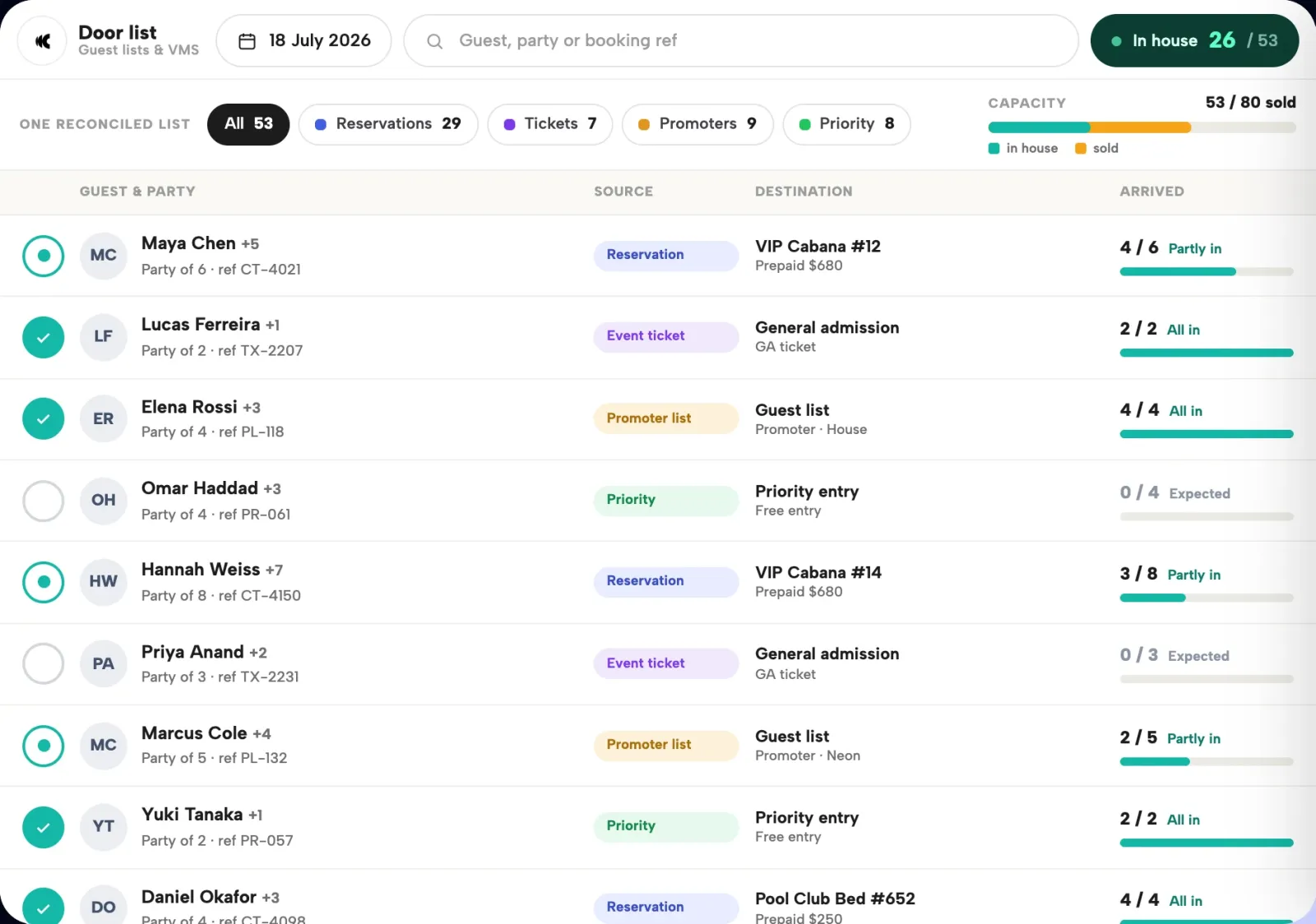
- 02One list at the door
Ticketed guests, table reservations, and priority registrations arrive in the same system, so the door isn't reconciling three sources under pressure at 11:40pm.
- 03The floor in view
Because the booking map and the internal floor plan are the same object, the host can see which tables are prepaid and who they belong to while checking ticket-holders in.
Operator outcomes
Every guest, not just the buyer
- 01Four tickets, four records
One buyer used to mean one captured email; on Clubtech the buyer invites their group and each guest supplies their own details, so a sold-out night fills the marketable audience, not just the room.
- 02A guest list, not a receipt
That's the difference between a ticketing receipt and a database that grows your marketing every time you open the doors.
- 03Sold out keeps capturing
The "sold out" badge used to turn demand away and capture nothing; priority and free-entry data capture keeps taking details after the last ticket is gone, so the people who wanted in this Saturday become the easiest sell for the next one.
Where it fits
From ticket to ad, and back
A ticket sale is a conversion, so Clubtech treats it like one.
- Existing POS
- QR scanners
- Meta
- Google Ads
- GA4
- Campaigns optimize toward booked dollars
Bookings and ticket revenue fire to Meta, Google, and GA4 in real time with the revenue value posted back, so spend chases revenue rather than clicks. See the attribution loop.
- The next event warms itself
Abandoned-checkout events fire within seconds, and lookalike audiences are seeded from your highest-value buyers, not your follower count.
- The night lands as data, not a spreadsheet
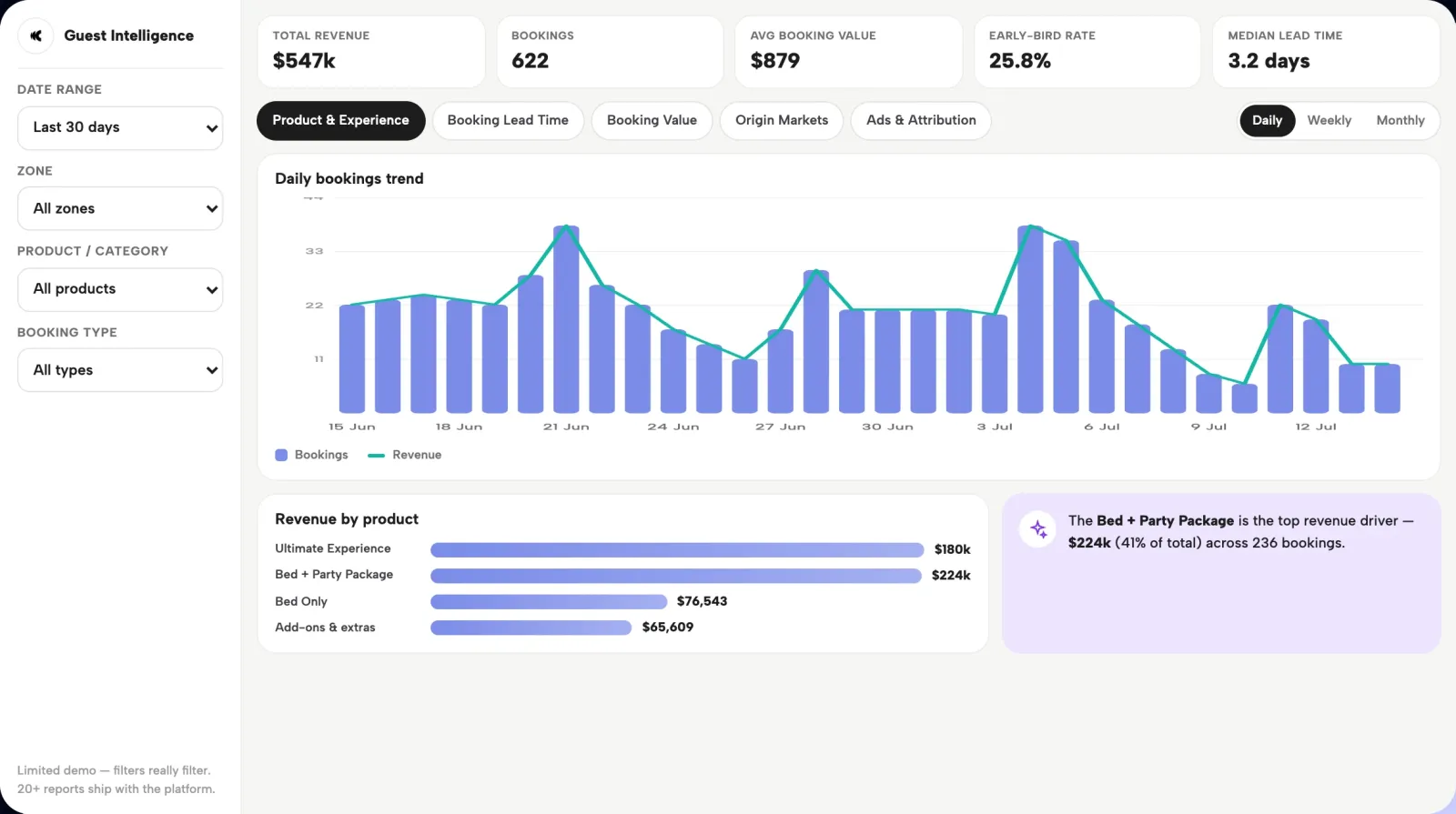
More than 20 built-in reports — sales by tier, lead time, average value — without exporting a CSV, and the door operation shares the same guest record.
The proof
Scoped to the venue
Commercials are scoped to the venue. Discovery maps the event inventory, booking flow, payments, integrations, door operation, and rollout before Clubtech returns with a tailored proposal.
Operator questions
Questions operators ask
What is event ticketing software for clubs?
It's software that sells entry to a club event and controls who gets in on the night. A basic tool takes the payment and emails a ticket; a venue-grade one issues a QR code, checks guests in at the door, captures every guest in a group rather than just the buyer, and stores the data where your marketing can use it. On Clubtech, ticketing lives inside the booking platform, so tickets, tables, and the door share one guest record.
Can guests upgrade from a ticket to a table?
Yes. Because event ticketing and table booking run on the same platform, a general-admission buyer can step up to a specific table on the 3D booking map inside the same checkout. The highest-margin inventory sells in the ticket flow instead of in a separate system or a DM the next day.
How does QR check-in work at the door?
Every ticket carries a QR code, and the host checks guests in with a tap against a live list. Ticketed guests, table reservations, and priority registrations all appear in the same door view, so there's no printed manifest and no reconciling three sources while a queue forms.
Who owns the guest data from a ticket sale?
The venue does. Clubtech is white-label on your own domain, so the ticket buyer and their whole group enter your database — not a marketplace's. Each invited guest supplies their own details, so a four-ticket order produces four marketable records the venue keeps.
What does club event ticketing cost?
The commercial proposal follows the confirmed event and venue scope. Ticketing-only, furniture-led booking, and a connected model are different operating jobs, so the proposal is built after discovery rather than pulled from a generic tier.
Connected product path
See the capability, the operating fit, and the proof.

Your venue, pre-sold.
Put your venue
inside the demo.
Book a focused walkthrough, configured around a premium venue like yours.
Book a Demo