The enquiry arrives in November. A company wants the whole deck on a Saturday in December for its year-end party, and it wants a number by Friday. The usual reply is last year's quote plus something, or a figure the owner remembers. Either can be right by accident.
A buyout is not a new product with its own price. It is the venue's public day, sold to one buyer instead of to the public. So the quote starts with that day.
The direct answer: a buyout is priced against the day it replaces
Venue buyout pricing starts from displacement. Work out what the date would have earned from public inventory: the furniture at its tiers, the packages, the add-ons and the minimum spends. Weigh the guests the venue would have met, then add the cost of running a private event and whatever exclusivity is worth to you. The figure is the venue's own. The method is the same for a beach club deck, a pool terrace or a nightclub floor.
What the date would have sold
Two reads tell you what you are giving up.
The same weekday last season. Daily booking volume, average value by variant and product mix show what that kind of date earned, zone by zone. Not just whether it filled, but what the front row sold for, which packages carried it and how much landed in add-ons. A $450 daybed is $450 of the floor before the bottles it would have carried.
The forward book. Before quoting a full buyout, check whether the date is still whole. If public guests have already paid for furniture on it, the full-venue option may not exist, and the honest quote is for a zone.
Then read lead time by zone. A zone that usually sells in the last few days looks empty three weeks out, so a quote built on today's bookings alone undercounts the day. And with dynamic pricing, the public rate for a peak date may sit above the standard rate card. Displacement should use the rate the date would really have carried.
Full buyout or one zone
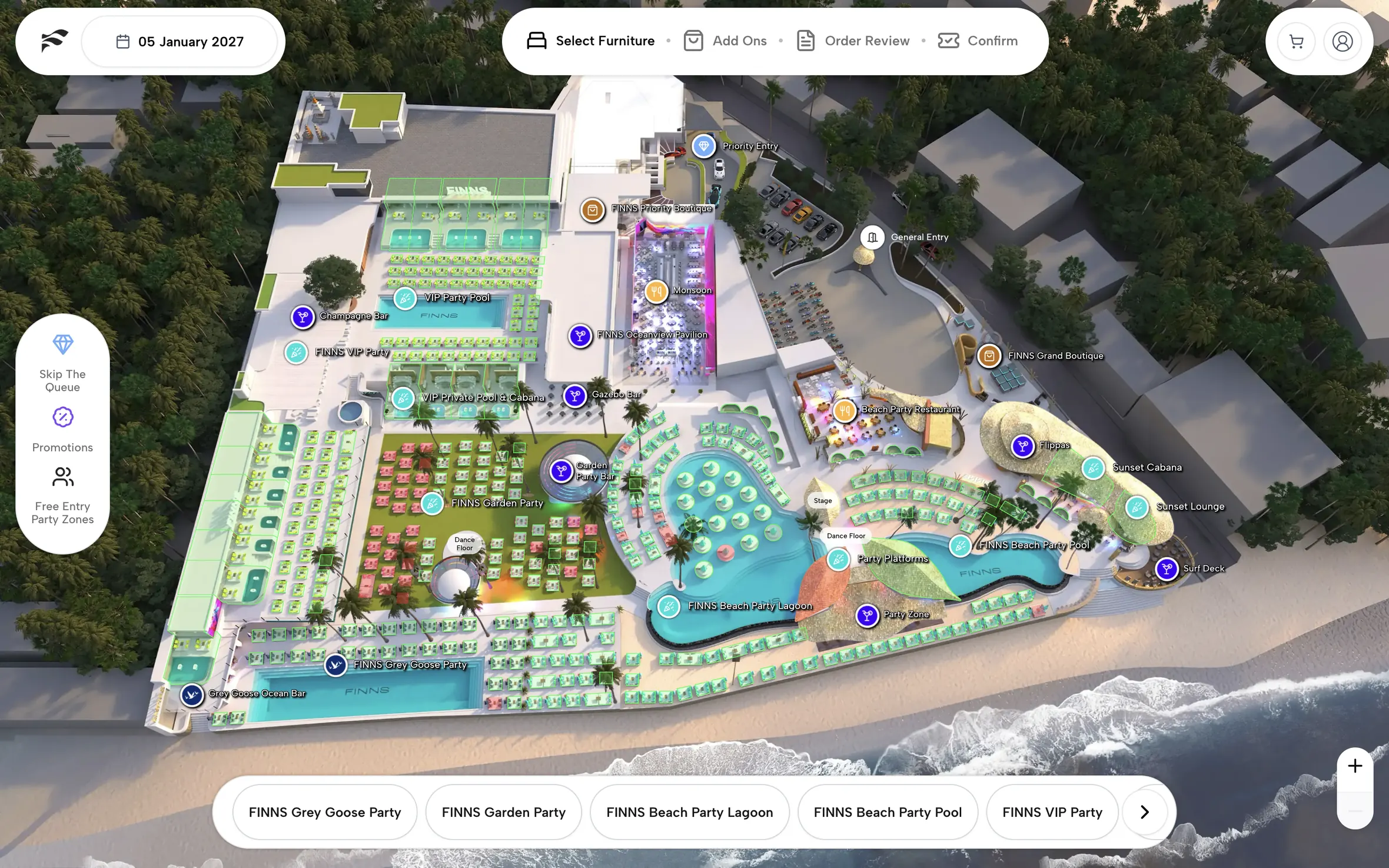
A private hire takes one of two shapes. Area-blocking and all-day blocking in the operations dashboard take inventory off sale, either the whole venue for a full buyout or one zone, such as the upper deck or the cabana row, while the rest of the map keeps selling.
The partial can suit both sides. The organizer gets privacy where it matters, and the venue keeps selling the public zones. Price it on the zone's own displacement, then allow for what a private event does to the zones beside it: shared access, a shared bar, a company party next to a couple's sunset table.
Once the space is agreed, the private party is entered through manual booking and override. The map supports multi-unit and group bookings, so the private zone sits on the plan as a booking the floor can see, not as a note on the manager's desk.
Building the private package
The displacement figure is the venue's number. The organizer needs a shape to say yes to, and the simplest one translates that figure directly: a minimum spend across the space, set at or above what the date would have earned. It puts a floor under the day you gave up, while the organizer still chooses what the guests consume. Designing that number is its own discipline, covered in our minimum spend strategy.
Where the organizer wants less to decide, the package ladder the venue already sells does the same job at a fixed level, with bottles, cakes and transfers stacked on at the venue's own prices. Either way, the floor comes from displacement, not from the menu.
The quote itself is the venue's sales practice, written and agreed the way you already do it. The platform carries the inventory, the booking and the money. The wider revenue stack a buyout draws on is in the beach club revenue playbook.
The organizer pays, the guests are the prize
The public day a buyout replaces would have grown the database, because each guest in each party supplies their own details. A private event, left to default, gives you one contact and a room of strangers. That is part of the displacement too, and the time to recover it is in the quote, not on the night.
Write guest registration into the agreement. For a party that books as a group, the booker invites the group and each guest registers their own details. For a larger event, run it with tiered tickets and QR-code check-in on the private list, the same setup as event ticketing for clubs. The organizer gets a clean door list, and the venue owns the list afterwards.
Cash before the date
Prepayments and deposits put predictable cash in the account before the service day: working float the operator can see before the doors open. A buyout is usually the largest single booking a venue takes, and it deserves the same treatment, paid inside the same flow as every other booking. How much is due when, and what happens if the event changes, is set by the venue's own terms.
After the event, read it back. The group-bookings report and average value by variant show what the private date actually earned, next to what the public version of that date earned last season. If the buyout cleared the displaced day, the method held. If it did not, the next quote starts higher.
Questions operators ask
How should a beach club price a full venue buyout?
Start from what the date would have earned from public inventory: furniture at its tiers, packages, add-ons and minimum spends, read from the same weekday last season and adjusted for the forward book and for lead time by zone. Add the cost of running the event and what exclusivity is worth. The number is the venue's own. The displacement method is what makes it defensible.
Can we sell part of the venue privately and keep the rest open?
Yes. Area-blocking in the operations dashboard takes one zone off sale while the rest of the map keeps selling. Price the partial on that zone's own displacement, then allow for what a private event next door does to the public zones around it, such as shared access, a shared bar and noise.
How do we take payment for a private event?
As a prepayment, like any other booking. Payment runs inside the booking flow with multi-currency support, and prepayment puts the cash in the account before the date as working float the operator can see. Deposit size, balance timing and change terms are the venue's own terms, set before the quote goes out.
Do we get the guest details at a corporate event?
Only if the event is run to capture them, so write it into the agreement. A group booking lets each invited guest register their own details, and a larger event can run on tiered tickets with QR-code check-in on the private list. Either way, the list belongs to the venue afterwards rather than staying in the organizer's inbox.
How far ahead should buyout enquiries be quoted?
Far enough ahead that the quote does not displace furniture the public would already have bought, and that depends on your own booking curve. Read lead time by zone for the dates buyouts ask for. Zones that commit early need an earlier decision on a private date than zones that fill in the last few days.
Bring your next buyout enquiry to the call. We will read what that date sold last season, block the space on your own map, and show the private package as a booking. Book a 15-minute demo, pre-configured to a venue like yours. No contracts, no credit card.