The right time to change a venue's booking platform is when almost nobody is booking. That is also the moment the old system still holds next season's early sales, the link in every bio, and the conversion events your ad accounts spent a season learning from. The software is rarely the hard part. The cutover is.
The short answer: switch in the quiet months, and plan the cutover around the forward book
Pick one cutover date in the quiet months. Bookings already sold on the old system are honored where they were taken, and every new date sells on the new system. Before the date, re-point every link, pixel and saved reply, introduce the new platform to your POS, PMS and payment providers, and set up team access. Get your guest data export before giving notice.
Why November, not March
The booking calendar sets the date. The contract renewal does not.
The cleanest switch is one where the old system holds almost nothing for next season. For a Mediterranean venue opening in May, that moment is now. Software decisions there get made between January and April, the same months the early-commitment sale runs. Switch in November and the first early-bird booking lands on the new system. Wait until March and you carry a forward book across the cutover, because the old system has already sold part of June.
Other markets run on other calendars, so the month moves and the test stays the same: the date when the old system holds the fewest future bookings and your team has the most time. It is never the weeks leading into a peak.
The bookings already sold: a cutover date, not a migration weekend
A switch works better as a date than as a migration weekend. Before the date, the old system sells. After it, the new one does. The only thing that crosses the line is the list of bookings already sold for dates still to come.
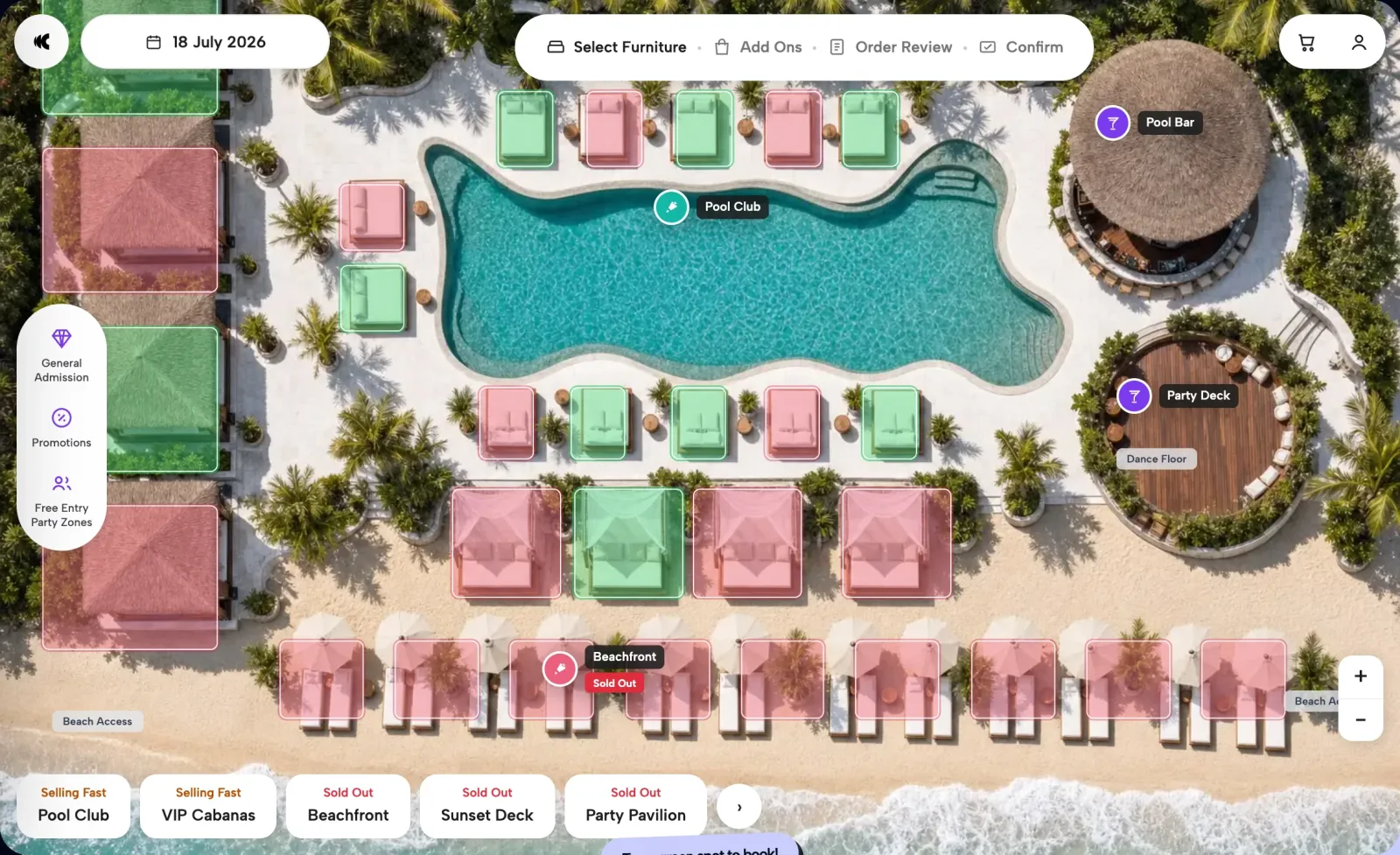
Leave those bookings where they were taken. The guest paid through that flow and holds its confirmation, and a guest who bought a June daybed in February should never notice the switch. The new system only needs to know the furniture is taken. On a beach club reservation system that sells from a live venue map, enter each of those bookings as a manual booking on its unit, so the daybed cannot be sold twice. The door then works from one floor plan on the day, whichever system took the money.
This is why the quiet months matter. A short list is careful work with a second person checking each entry. A peak month's worth is where double bookings come from.
Your guest data leaves with you
Before you give notice, ask the current vendor in writing for your guest data export: which fields it includes (contact details, visit history, spend, marketing consent), in what format, and how consent was recorded. Consent is the one that gets missed, and the venue carries that responsibility whichever platform collected the data.
Choose the next platform with the switch after it in mind. Clubtech is white-label: your domain, your design, your guest data. The guest data belongs to the venue, never pooled or marketed against the operator. From the cutover on, every guest in a party supplies their own details, not only the booker. The full product model sits on the beach club management software page.
Every link, pixel and bio that points at the old checkout
Guests reach a booking page from more places than anyone remembers. List them before the cutover, each with an owner and a date changed:
- The website. Every book-now button, including old landing pages still used as ad destinations.
- Instagram. The bio link, link stickers in saved story highlights, and any link in the auto-replies.
- Google Business Profile. The booking link and the website link, which are separate fields.
- WhatsApp. The quick replies your team pastes all day, and the ones most often missed.
- Print and partners. QR codes on menus and table cards, hotel concierge sheets, and links held by agents and promoters.
- The ad accounts. This is the item with a cost attached.
On Clubtech, bookings fire to Meta, Google, TikTok and GA4 in real time with revenue values posted back, so campaigns optimize on booking value rather than on a click. Your campaigns learned from the old system's events, and until the new ones are live and verified, a booking made on the new system teaches them nothing. Set up and test the new events before the date, then retire the old ones on it, so every campaign optimizes toward one source of bookings.
POS, PMS and payment: who has to be introduced to whom
The till and the front office do not change with the booking platform. Clubtech sits on top of the venue's existing POS and PMS with zero major IT changes rather than replacing the stack. The connections still need setting up, though, and they run through you. We work through an introduction to your vendor: you introduce Clubtech to your POS provider, your PMS provider if you are inside a hotel, and your payment provider. A payment gateway is mandatory, because online transactions cannot run without one. Make those introductions first, because your vendors' pace is the part of the plan you control least. The questions worth putting to each of them are in our guide to beach club booking software integrations.
The team: who needs which view before opening day
Your team needs the new system on the cutover date, not on opening day, because the first phone booking and the first manual entry arrive the week the old system stops selling. Set up each person's access, with role-based, tiered permissions, before that week. From the cutover date, reservations works in the new system only, so a phone booking for a new date never lands in the old one and has to be moved later. Setup is guided through Clubtech Onboarding. If a WhatsApp inbox and a spreadsheet are retiring too, the order of work is in moving from WhatsApp and spreadsheets to prepaid bookings.
Questions operators ask
When is the best time to switch booking systems?
In the quiet months, on the date when the old system holds the fewest future bookings and the team has the most time. For Mediterranean venues opening in May, that is usually November, ahead of the January to April early sale. Elsewhere, find the same gap in your own calendar, away from the weeks leading into a peak.
What happens to bookings already taken on the old system?
They are honored where they were taken, because the guest paid through that flow and holds its confirmation. On the new system, each one is entered as a manual booking on its unit so the furniture cannot be sold twice, and the door works from one floor plan on the day. A quiet-month switch keeps that list short.
Do we keep our guest data when we leave a platform?
Ask the current vendor for the export in writing before you give notice, and check which fields it includes, including how marketing consent was recorded. On Clubtech, the booking flow is white-label on the venue's own domain, and the guest data belongs to the venue, never pooled or marketed against the operator.
Will our POS or PMS need to change?
No. Clubtech sits on top of the venue's existing POS and PMS with zero major IT changes rather than replacing the stack. The connections are set up through an introduction to your vendor, so the venue introduces Clubtech to its POS, PMS and payment providers. A payment gateway is required, because online transactions cannot run without one.
How long does the switch take?
It depends on three things more than on the software: how many forward bookings the old system still holds, how quickly your POS, PMS and payment vendors respond after the introduction, and how many links, pixels and team accounts need re-pointing. Setup itself is guided, and a quiet-month cutover keeps all three small.
How much does it cost?
Commercials follow discovery. Every venue has a different mix of inventory, zones, payments, integrations, teams, and rollout work. Book a discovery call. We map the operation, including the forward book and the vendors your switch involves, and return with a commercial proposal built around the real scope.
Bring your forward book to the call. We will walk the cutover against the bookings you already hold, on a demo pre-configured to a venue like yours. Book a 15-minute demo — no contracts, no credit card.