A pool party is the highest-stakes day on a venue's calendar. Demand spikes, the deck sells in packages rather than single sunbeds, and the difference between a profitable event and a chaotic one is decided before the doors open. A pool party booking system is the machinery that makes the event pre-sold: tickets, furniture, and add-ons paid for in advance, a door that runs on QR codes instead of a printed list, and a guest database that is bigger after every event than before it.
The direct answer: what a pool party booking system does
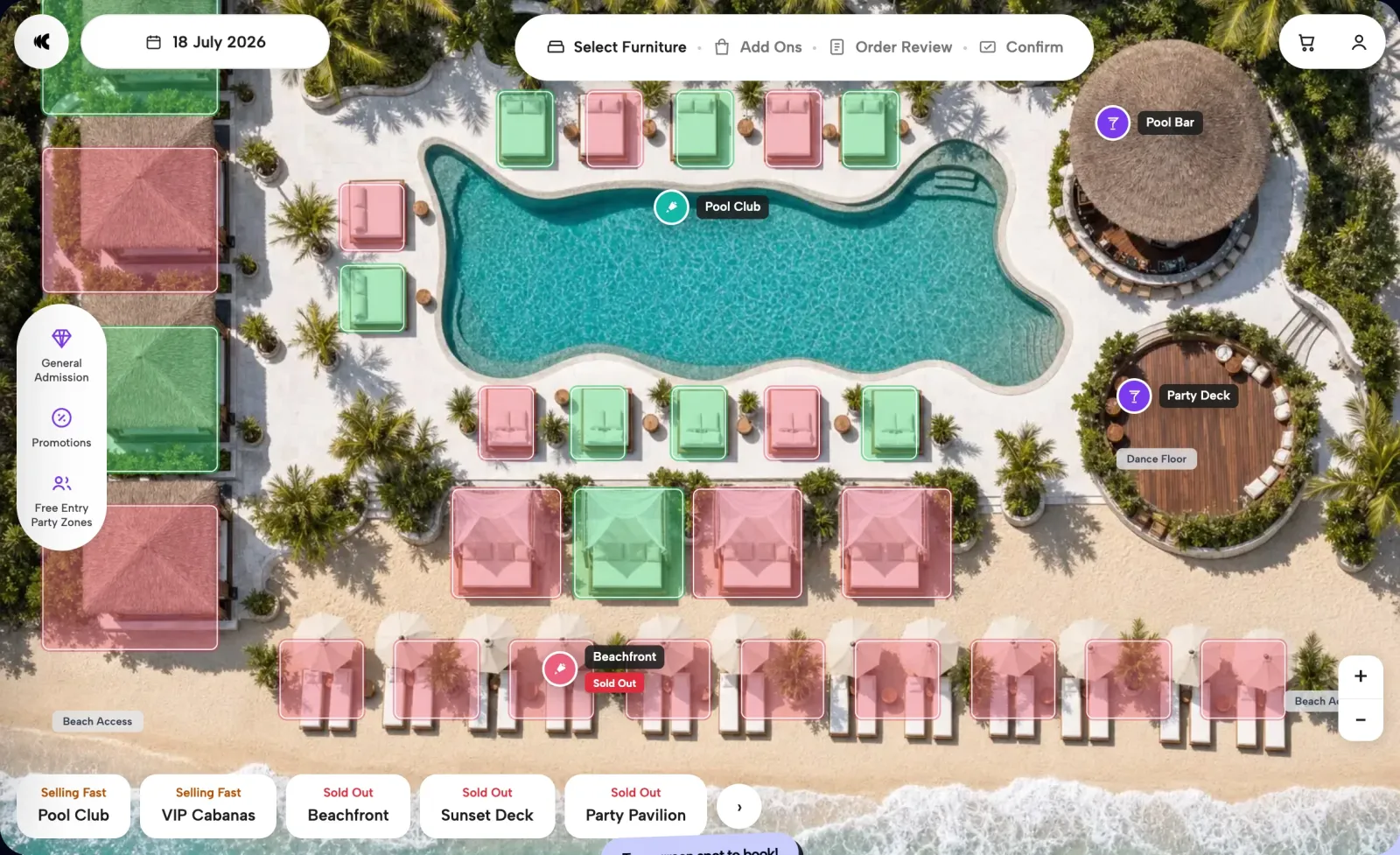
It sells the event in advance across both kinds of inventory a party has — entry and furniture. On Clubtech, the events side runs a native events booking widget with tiered tickets and QR-code check-in. The furniture side runs on the 3D birds-eye venue map, where guests tap the specific daybed or cabana they want and book multi-unit and group reservations for the whole crew. Both carry prepayment, which is what turns a promoted date into committed revenue instead of a hopeful forecast.
Packages are the party's pricing architecture
Party demand does not arrive in single sunbeds. It arrives in groups that want a spot, a package, and bottles — which is why tiered packages are the right unit of sale: bed only, party package, ultimate experience, each with stackable add-ons like bottles, cakes, and transfers attached in the booking flow.
The add-on layer earns its place on party dates specifically. Clubtech's TikTok-style mobile add-on shop — full-screen bottle video and swipeable product discovery inside the booking journey — has driven an 80% increase in bottle add-ons as a product experience. A group committing to a party date days in advance is exactly the buyer that upsell reaches: the decision happens on the sofa on a Tuesday, not shouted over music at the bar.
Party dates are also where dynamic pricing works hardest. A headline date carries more demand than the same deck a week earlier; pricing to that demand — with early-commitment "Book Online & Save" rates rewarding guests who lock in first — makes more from the same furniture without adding a single bed.
The map sells what a form cannot
Group bookers arguing over where to sit is the moment most booking flows lose them. The 3D interactive map settles it: the crew looks at the actual layout from above, watches the 360° walkthrough, and buys the spot — front row by the DJ or back corner by the bar. The map shows real-time availability, so scarcity on a big date does its own selling. Bookings complete in four taps on a phone, which matters because 82% of bookings happen on a phone after 10pm — the party gets booked when the group chat is deciding, not during office hours.
Sold out is a list, not a lost guest
A good party sells out, and most venues let the demand past that point evaporate. Priority-entry data capture takes contact details when furniture is gone, so the overflow becomes an audience for the next date instead of a closed tab.
The bigger multiplier is every-guest capture. The booker invites their group and each ancillary guest supplies their own details — so a ten-person party booking yields ten marketable contacts, not one payer and nine strangers. Run three or four events on that pattern and the guest database compounds; it is the difference between renting an audience from promoters every time and owning one.
The party is also a campaign
Every party booking fires to Meta, Google, TikTok, and GA4 in real time with revenue values posted back, so the ads promoting the event optimize on money rather than clicks. Abandoned bookings — the group that reached checkout and stalled — trigger recovery over WhatsApp and email that returns them to the exact zone, date, and price they left. And the next event's targeting starts from lookalike audiences seeded from the highest-value bookers of the last one. The day club booking page covers how the same machinery runs the regular season, and the event ticketing page covers the entry side.
The door on the day
QR-code check-in runs the entry line from the events widget, and on the furniture side the internal floor plan shows the team what is booked before doors open, with check-in workflow as groups arrive. The team spends the event serving guests rather than adjudicating a printed list.
Questions operators ask
What is a pool party booking system?
It is a platform that sells a party in advance across both inventories an event has — tiered entry tickets through an events booking widget with QR-code check-in, and furniture like daybeds and cabanas through an interactive venue map with group and multi-unit bookings. Prepayment attaches committed revenue to the date before the event runs.
How do venues sell tickets and daybeds for the same event?
On Clubtech both sell through the same platform: the native events widget handles tiered tickets and QR check-in, while the 3D map sells specific furniture with packages and add-ons. Scoping which mix fits your event format is a discovery conversation, since every venue splits entry and furniture differently.
How do you handle a sold-out party?
Capture the demand you cannot seat. Priority-entry data capture takes contact details once furniture sells out, so overflow demand becomes the invite list for the next event. Real-time availability on the booking map also lets scarcity drive earlier commitments for future dates.
Can guests book as a group?
Yes. The interactive map supports multi-unit and group bookings, and each ancillary guest supplies their own details rather than hiding behind one payer — so a group booking grows the venue's marketable database by the size of the party, not by one contact.
How does a booking system make party ads perform better?
Bookings fire to Meta, Google, TikTok, and GA4 in real time with revenue values attached, so campaigns optimize on booking value rather than clicks. Abandoned bookings get recovered over WhatsApp and email, and lookalike audiences for the next event are seeded from the highest-value bookers of the last one.
Planning a party calendar this season? Bring the dates and the deck layout and we will walk how the event sells, ticket to cabana. Book a 30-minute demo — no contracts, no credit card.