Most clubs manage tables in two disconnected worlds. Online, bookings arrive through DMs, forms, or a widget. On the night, the floor runs on a laminated map, a radio, and whoever holds the master list in their head. A table management system closes that gap: the same floor plan that sells tables online is the one the team runs at midnight, and what happens at the door, on the floor, and at the till lands in one record of the night.
The direct answer: what a table management system covers
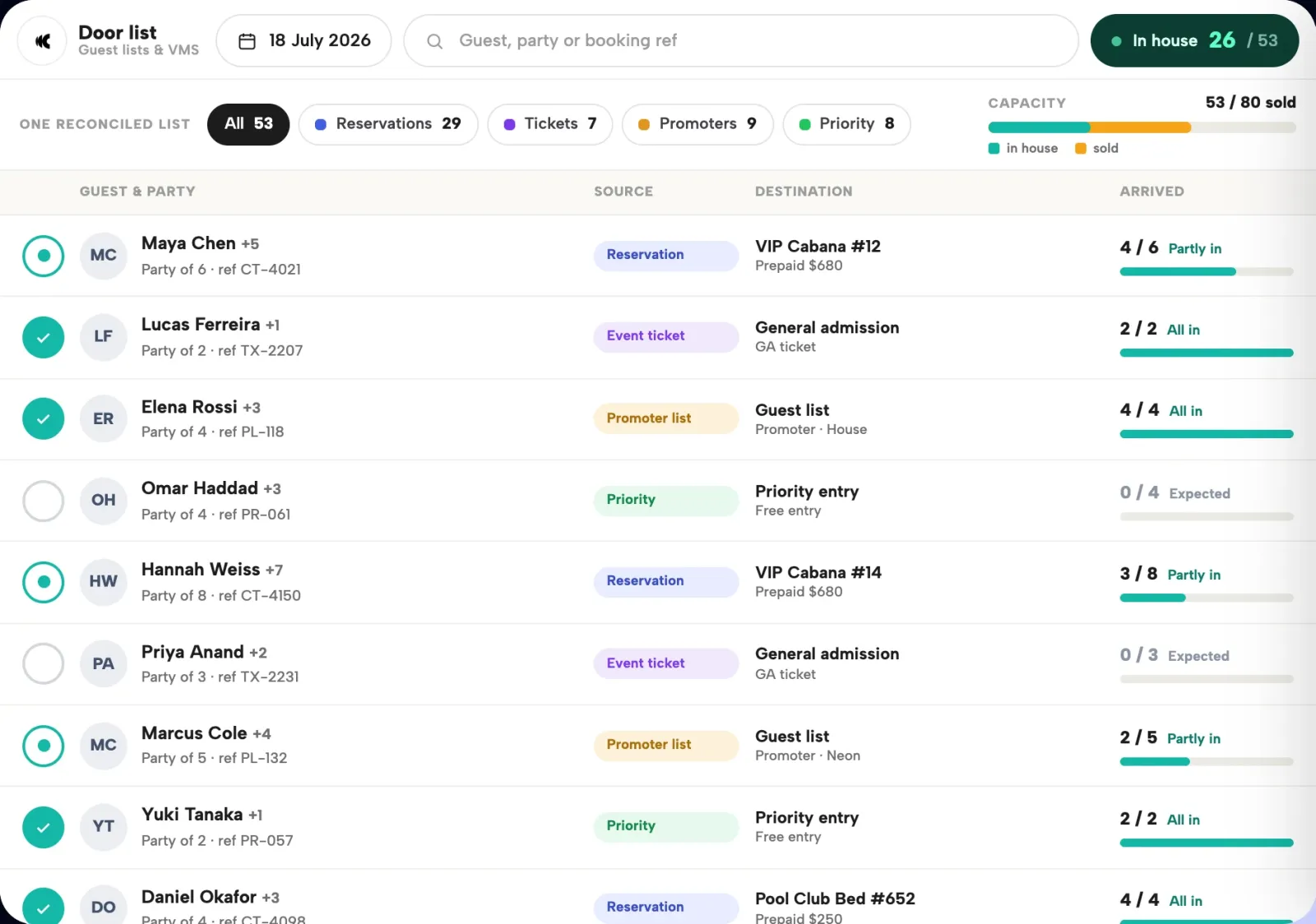
Four workflows, one platform. Selling — tables booked and prepaid from an interactive venue map, in tiered packages with bottle add-ons. Allocation — an internal floor plan with automatic seating allocation and real-time inventory sync, so online sales and the physical floor never disagree. The night itself — a day-of operator console with check-in and check-out workflow, manual bookings and overrides, and area blocking. The door — guest-list and visitor management with QR-code check-in. A reservations widget does the first job; a management system does all four.
The floor plan is the system of record
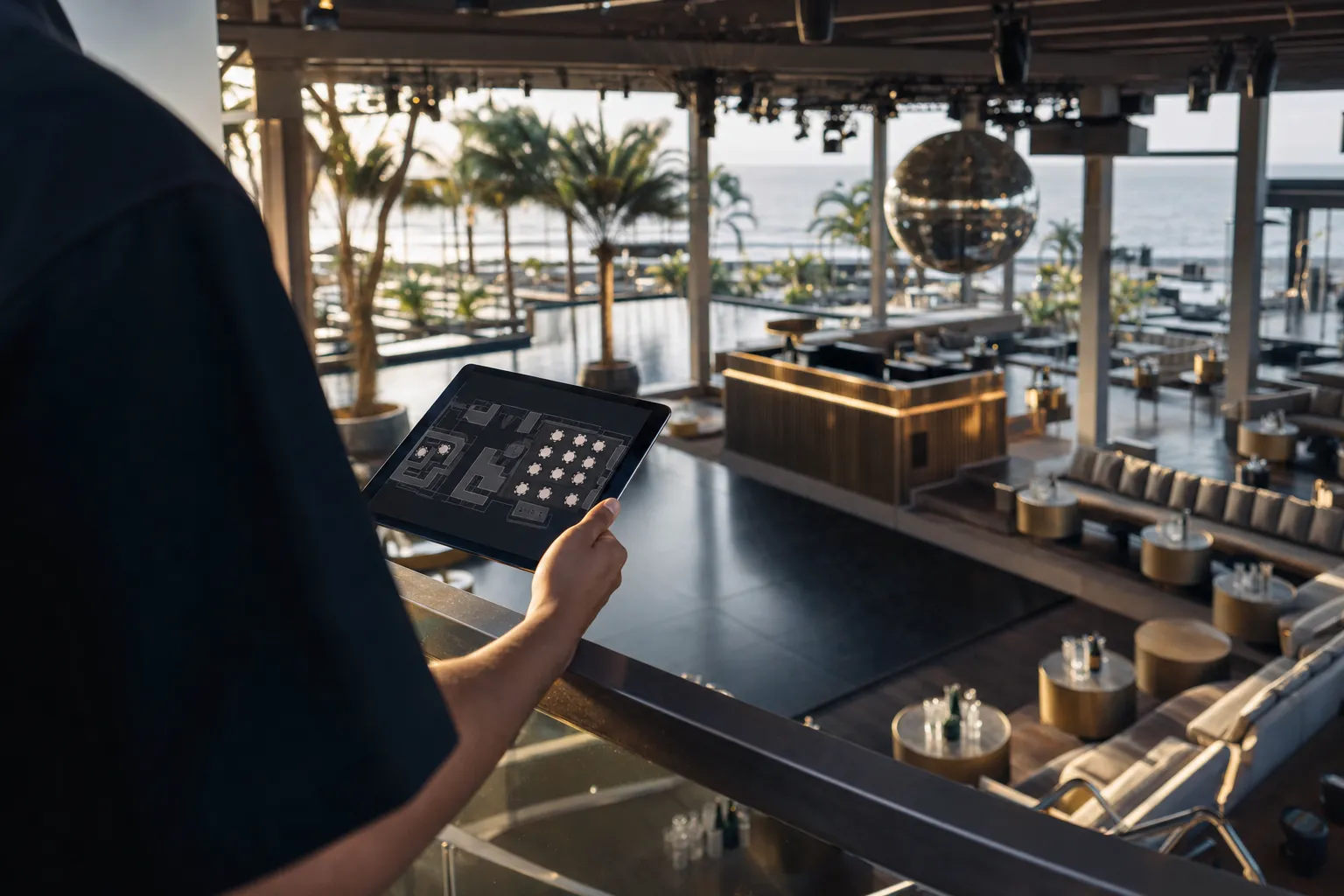
On Clubtech, the operator side runs an interactive internal floor map where the team sets the inventory the night sells, runs allocation from the venue map, and knows what is booked before doors open. Online inventory syncs to the floor plan in real time — when a table sells at 9pm from a phone, the floor sees it immediately, and when the floor blocks a section for a private buyout, the booking map stops selling it. That single source of truth is what removes the double-sold table and the "who released VIP 3" argument.
Role-based permissions keep the system usable by an actual team: the door sees the list, the floor manager sees allocation and overrides, the GM sees everything. Manual booking and override exist for the reality of a nightclub — the call that comes in at 11pm still goes into the same floor plan rather than onto a Post-it.
Prepaid tables change the economics of the night
The management problem and the revenue problem are the same problem: a table held on a DM promise costs nothing to abandon. Prepayments, deposits, and minimum spends attach money to the reservation, which is why they kill no-shows — and prepaid deposits put predictable cash in the account before the night begins, working float the operator can see before doors.
The selling side compounds it. Guests book from the 3D birds-eye map — they buy the specific table, not "a table" — in tiered packages with stackable bottle add-ons committed at booking rather than negotiated tableside. Checkout completes in four taps, which matters in this vertical more than any other: 82% of bookings happen on a phone after 10pm, exactly when the group chat is deciding where tonight goes. The guest-facing detail lives on the nightclub table booking page.
The door and the floor read the same list
Guest-list and visitor management runs on the same platform as the tables, so the door is not reconciling a spreadsheet against a booking feed at 11pm. QR-code check-in moves the line, and check-in status is workflow the system tracks rather than a mental note — who has arrived, which tables are seated, what is still open. When furniture sells out, priority-entry data capture keeps taking contact details, so a full Saturday grows the database for the next one. The wider list mechanics are on the guest list management page, and the door-side detail in QR door check-in for venues.
The morning after has numbers
A table management system should be able to explain the night. Clubtech ships 20+ reports — daily booking volume, lead time by zone, average value by variant, product mix, repeat-customer share, origin markets — segmented and trending without CSV exports. Which package sells out first, how far ahead the big spenders book, what share of Saturday is repeat guests: those answers set next month's pricing and programming instead of gut feel. Because every booking also fires to Meta, Google, TikTok, and GA4 in real time with revenue values, the marketing team reads the same nights the operations team ran.
Questions operators ask
What is a nightclub table management system?
It is the platform that runs tables end to end: online sales from an interactive venue map with prepayment and packages, an internal floor plan with automatic seating allocation and real-time inventory sync, a day-of console for check-ins, overrides, and area blocking, and guest-list management with QR check-in at the door.
How does it prevent double-booked tables?
By making one floor plan the system of record. Online inventory syncs to the internal floor map in real time, so a table sold online is instantly unavailable to the floor and a section blocked by the team instantly stops selling online. Manual bookings go into the same plan, so phone reservations cannot collide with web ones.
Do prepaid table bookings reduce no-shows?
Yes — prepayments, deposits, and minimum spends attach committed money to the reservation, and a guest with money on a specific table behaves differently from one holding a free promise in a DM thread. Deposits also put cash in the account before the night runs.
Can the door and the floor team work from the same system?
Yes. Guest-list and visitor management runs alongside table allocation, with QR-code check-in at the door and role-based permissions so the door, the floor manager, and the GM each see the controls their job needs. Check-in and check-out are tracked workflow, not a printed list.
What should a club measure after each night?
Booking volume, lead time by zone, average value by package variant, product mix, and repeat-guest share. Clubtech ships 20+ reports covering these without CSV exports, so pricing and programming decisions for the next month run on the venue's own numbers rather than instinct.
Run your floor plan through it once. Bring your table map and how tonight's list actually works, and we will show the same night on one system. Book a 30-minute demo — no contracts, no credit card.