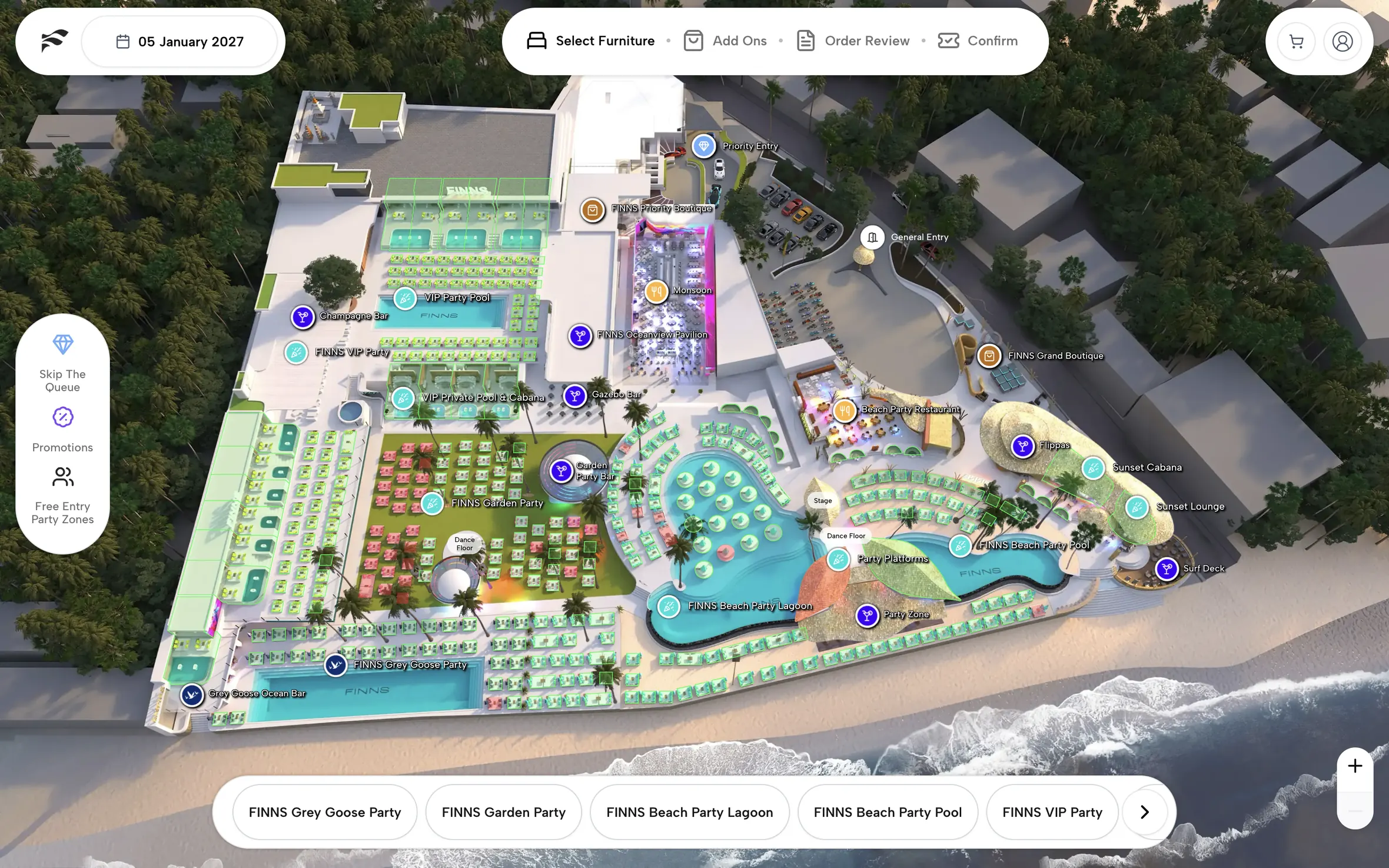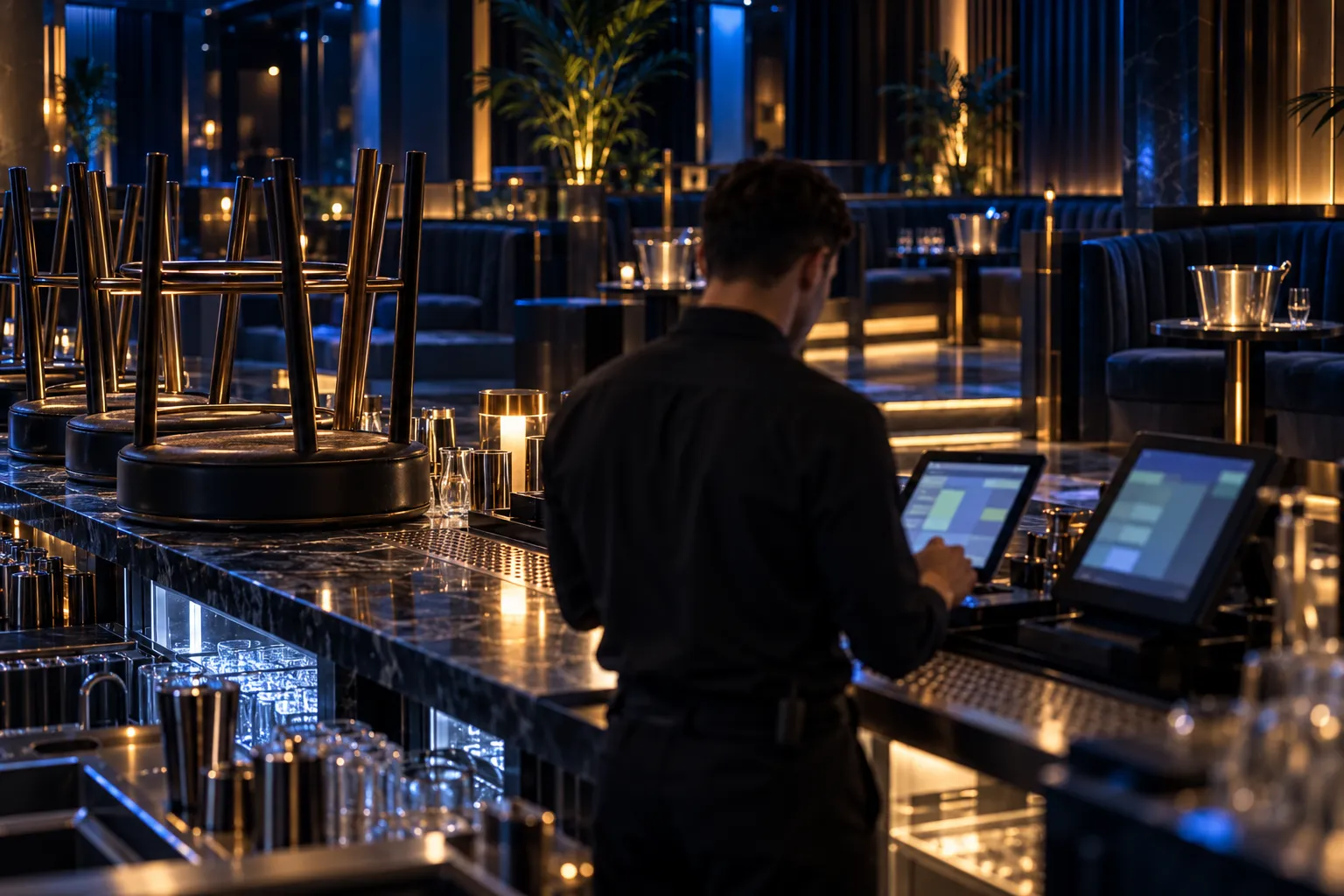
It is 3am. The last table has gone and the night manager is at the POS with a printed booking sheet, a pen, and a memory of which tables moved. That is how most venues close: from recollection, by the person who least needs another hour on shift.
In a venue that sells in advance, the night was written down before it started. Every prepaid table, package and deposit sat on a specific unit and date days earlier, so the close can run against a record.
The direct answer: three lists that should agree
Venue end-of-night reconciliation means checking three lists against each other before the manager goes home: what was booked and paid before doors, who actually checked in and out, and what the POS rang during service. Where all three agree, the night is closed. Where they disagree, the gap is one of a handful of known exceptions, and it is either resolved tonight or written into the handover for the morning team.
This is not the cash-up. The till count, card settlement and accounts belong to finance, in finance's systems. This close is about the bookings: whether the night the venue sold is the night it ran.
List one: what was sold before doors
The first list already exists. Prepayments and deposits put cash in the account before the service day, attached to the exact furniture, package and date. That is the baseline for the other two. A $450 daybed that was prepaid and never occupied is a different line in the close from a $450 daybed that was never sold. Both are empty at midnight. Only one is a no-show, and the venue's own terms decide what happens to it, not a tired manager at 3am.
List two: who actually arrived
The second list is attendance. Run check-in and check-out as a workflow in the operations dashboard, not ticks on a clipboard, and the night leaves a record of which bookings arrived and which furniture turned over.
Laid against list one, the gaps are specific:
- Sold, not checked in. A no-show, or a party that walked past the door. The second is a door problem worth knowing by name.
- Occupied, not booked. A walk-up seated at a table the system still shows as open. The money may be fine. The record is not.
- Checked in to the wrong unit. A party moved on the floor while the plan still has them where they booked.
Catching these needs the door and the floor to have worked from one live plan all night, which is why online inventory syncing to the internal floor plan in real time matters at close as much as at opening.
List three: what was spent in the venue
The third list is the POS. Where the POS is integrated, online orders push to it before the guest arrives, so the bottle bought in the booking flow and the round bought at the table sit in one guest purchase profile. Clubtech sits on top of the venue's existing POS with zero major IT changes, so the close asks nothing new of the POS. It asks whether the POS and the booking describe the same table.
Two gaps show up here. A booking with no spend usually means a tab opened under the wrong table number. Spend with no booking is the expensive one: a walk-up seated, served and never entered, so the guest never reaches the database and the unit reads as unsold in every report built on that night. Where a table carried a minimum spend, a shortfall also shows here, and the venue's own terms decide what follows.
The exceptions log
Every night brings changes the plan did not predict: a party that grew, a booking taken at the bar at 11pm, a table moved for a birthday, a zone blocked because a speaker failed. The operations dashboard carries manual booking and override, area-blocking and all-day blocking, so each change lands on the plan rather than in someone's head.
The close lists them, because each one either explains a gap in the three lists or creates one tomorrow. Role-based user permissions narrow who could have made the change in the first place. If only the floor manager and the GM can override a sold-out section, the question of who moved table 12 has two possible answers, not twelve.
The handover note
The last thing the close produces is the first thing tomorrow's opener reads. Write it with the operations dashboard still open, and keep it to what the system will not say on its own:
- Blocks left on. A zone blocked for a private party, or a unit all-day blocked because it broke, is kept on purpose or released. A forgotten block is inventory that quietly stops selling.
- Manual bookings taken during service for future dates, so reservations can confirm them.
- The night's no-shows, by booking, for whoever applies the venue's terms.
- What the floor learned tonight: an occasion, a complaint, a regular who asked for the same table next week.
- Tomorrow's known exceptions: the large party, the early arrival, the zone that needs resetting first.
A handover the opener can read in two minutes gets read. The routine it feeds, reading tomorrow's bookings by zone, is in running the venue you already sold.
Why tonight's close decides what next month's reports say
Clubtech ships 20-plus reports, and every one is built from the bookings. A walk-up seated without a manual booking is missing from all of them. A party moved without the plan knowing distorts which zone earned what. A forgotten block makes a zone look softer than it was.
A venue that reconciles every night can trust its reports. One that does not prices next season from a record with holes in it. It is why software for nightclubs has to run the door, the floor and the reports as one system. The table side is in our guide to nightclub table management.
Questions operators ask
What is end-of-night reconciliation at a venue?
It is the close-out check that the night the venue sold is the night it ran. The manager compares bookings and prepayments taken before doors, check-ins and check-outs during service, and what the POS rang. Where they agree, the night is closed. Each gap is either resolved or written into the handover.
What should a night manager check before closing?
Every prepaid booking is either checked in or recorded as a no-show, and every seated party has a booking behind it. Walk-ups are entered as manual bookings, and moved parties sit where the plan says they sat. Then the blocks: any area or all-day block still on is kept deliberately or released before morning.
How do we reconcile prepaid bookings against POS takings?
Compare them table by table rather than as totals. Where the POS is integrated, online orders push to it before the guest arrives, so pre-bought add-ons and in-venue spend sit in one guest purchase profile. A booking with no spend usually means a tab under the wrong table number. Spend with no booking usually means a walk-up that never entered the record.
What goes in a shift handover note?
Only what tomorrow's opener needs and the system will not show on its own. That means blocks left on and why, manual bookings taken for future dates, the night's no-shows by booking, guest notes the floor picked up during service, and tomorrow's known exceptions. Keep it short enough to read in two minutes, and write it with the operations dashboard open, while the night is still on it.
Who should be allowed to override a booking after service?
As few people as the operation allows, usually the floor manager and the GM. Role-based user permissions in the operations dashboard decide who can make manual bookings, overrides and blocks, so any correction made after close comes from someone accountable for it. Anything that touches a no-show follows the venue's own terms.
Bring last Saturday's close to the call. We will lay that night out in the operations dashboard: the bookings, the check-ins, the manual bookings and the blocks. Book a 15-minute demo, pre-configured to a venue like yours. No contracts, no credit card.