Sold out is the best day your venue has and the most fragile one it runs. Every other day carries slack. A party that grew by two goes to the next table. A group that sits an hour past its window costs you nothing, because nobody was waiting for that furniture. A late arrival is absorbed and nobody notices.
At 100% none of that is true. Every mismatch between what you sold and what the floor physically holds arrives on the same afternoon, in front of guests who already paid, with nothing behind it to absorb the difference. The day that reads as a win in the revenue report is the day your team is most likely to be improvising.
The short answer
Venue capacity management on a sold-out day is four decisions taken before the day rather than during it.
Know the seated number, not the sold number, and know it in the morning rather than at 2pm. Decide how a late-arriving party is handled once, in advance, for everybody. Protect the parts of service that break first when the floor is full — the door, the runner path, the kitchen ticket order — because guest experience, not capacity, is what a sold-out day actually spends. And treat the day as evidence: a full house is a price signal plus a list of guests you could not serve, and both are worth more than the takings if you keep them.
Sold is not seated
Sold is a count of reservations and units. Seated is what your floor plan physically holds once real parties land on it — a six that became eight, two bookings that expect to sit together, a unit that cannot take another chair without closing a service route. The gap between those two numbers is where a sold-out day fails, and it is almost never visible in a booking total.
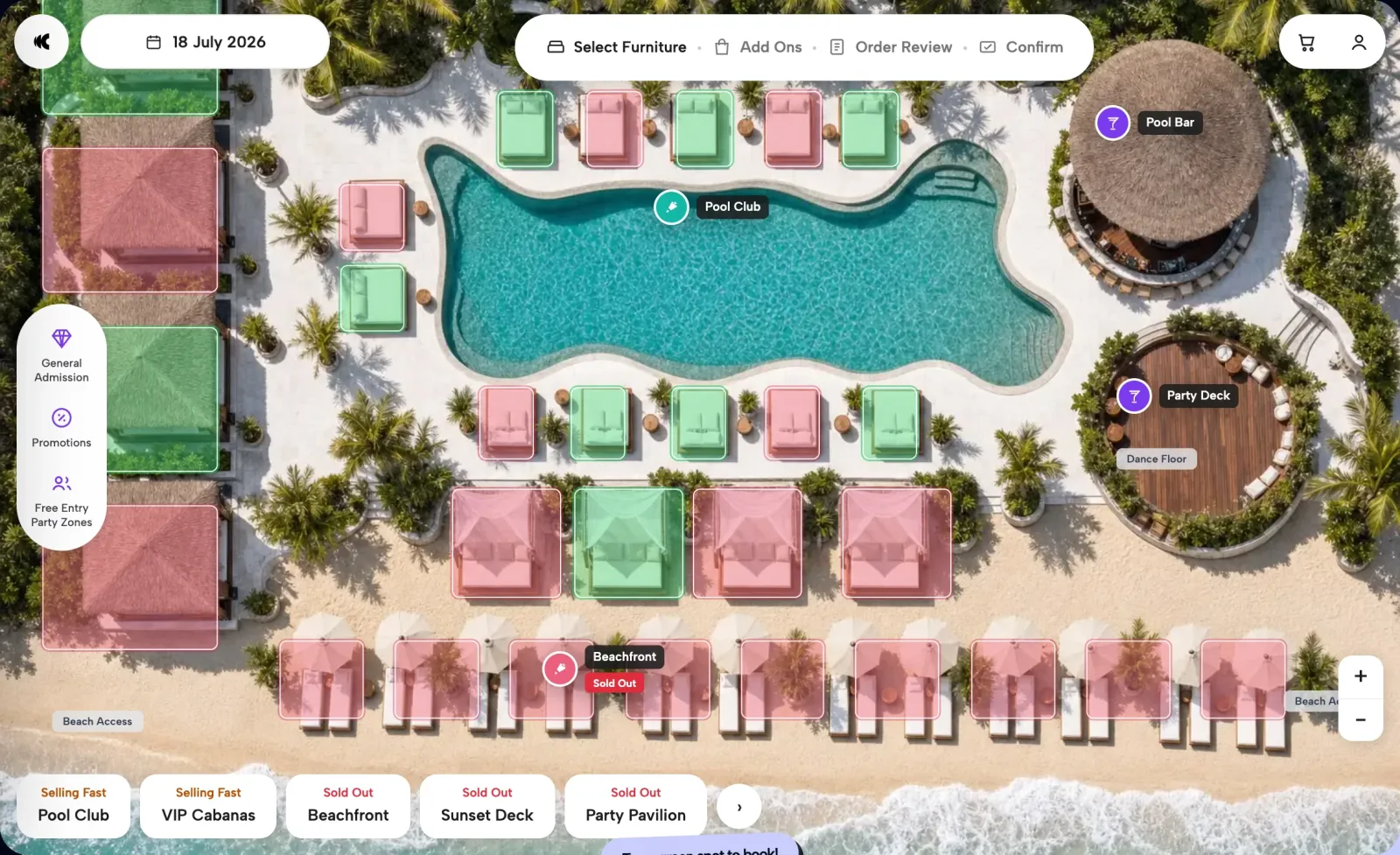
Closing that gap is a floor-plan problem, not a spreadsheet problem. On Clubtech, what sells online is subtracted from the same interactive internal floor plan the venue team works from, in real time, so what the site has sold and what the plan shows are never two different numbers. Automatic seating allocation places the parties on that plan, and the operator console is where the service day is set up: define the inventory the team sells, run allocation from the venue map, and know what is booked before doors open.
The reservation also carries the party rather than one name. The booker invites their group and each guest supplies their own details, so the party behind a booking is a list of real people rather than one payer multiplied by an assumption.
Know the number in the morning, not at 2pm
Most venues discover their true sold-out capacity when the floor tells them, mid-service and loudly. The same information exists hours earlier. Run allocation in the morning, look at the plan rather than the total, and the day's real problems surface while they are still cheap: the two groups that need to be adjacent, the party too large for the unit it bought, the zone that closed out first and will take every walk-up question at the door.
Solving three of those at 10am is administration. Solving them at 2pm with a queue at the entrance is service recovery. That is the whole difference, and it is worth a standing half-hour on any day you know is full.
Turn and overrun with nothing to move into
On a normal day, an overrunning table is somebody else's problem tomorrow. On a sold-out day it is the next booking standing in front of you.
No software ends a party. What software settles is whether the arithmetic ever worked. If a day genuinely needs two seatings on the same furniture, that has to exist as inventory before it is sold — two products, each with its window stated at the moment of purchase, so the guest agreed to the shape of the day when they paid rather than hearing it from a supervisor. Clubtech configures time-slot logic per venue, from sessions that split the day through to hourly slots. It is a setup we do with you, not a switch flipped on the morning of a full Saturday.
Where a second seating is not realistic, the honest move is to sell fewer late units and price the day up.
The late-arrival decision
Decide it before the day and give it one owner. The failure mode is rarely the rule you chose; it is three people making different calls in the same hour — the door holding a table the floor already reallocated, a supervisor improvising something the manager would not have approved.
Prepayment helps, because the value of the seat was settled in advance rather than argued at the entrance. Prepayments, deposits and minimum spends are what make a full book a real book. Everything past that point is your own booking terms — written by you, published under your own name, and applied by your own team.
Protecting service when the floor is at 100%
The number that protects a sold-out day is the one you had on Wednesday. Pre-sold capacity gives you the head count, the zone spread and the product mix days ahead, so the stock order and the shift plan are arithmetic rather than instinct, and the reporting reads those figures back without a CSV export: average value by variant, product mix, repeat share, lead time by zone.
Two habits beat any tool on the day itself. Give the door its own answer for the questions a full venue generates, so the entrance does not become the bottleneck everything else queues behind. And leave one unit unsold in each zone where the season allows it — not to sell, but to move people into. A floor with nothing spare turns every relocation, every speaker-stack complaint and every group that grew into a refusal. More on running the night is in our guide to venue operations, every night.
What the sold-out day should leave behind
Two assets, and most venues bank neither.
A price signal. A zone that closed out days early at your earliest and cheapest tier is not a triumph, it is a number that was too low. Read lead time by zone across a few of these days and the pattern is unmistakable: same furniture, same day of the week, gone earlier each time. Dynamic pricing exists to make more from the same seats by pricing to demand, and a sold-out day is the evidence that says which seats.
A list. When the furniture is gone the booking flow keeps working. Priority and free-entry registration captures the guests who could not get in, which does two jobs: it grows the venue's own marketable database, and it measures the demand you turned away. That measurement is the argument for holding back more of that zone next time, repricing it, or both. Sold out is not a lost guest, and the booking UX behind a pre-sold Saturday is what keeps the capture running after the last unit sells.
A full house that leaves nothing but a good takings figure taught you nothing. One that leaves a price signal and a list is how the next one gets sold higher.
Questions operators ask
What does venue capacity management mean on a sold-out day?
It means managing the difference between what you sold and what the floor physically seats. Sold is a count of reservations; seated is what the plan holds once real party sizes, adjacency requests and service routes are applied. On a full day there is no spare furniture to absorb that gap, so the work is done before doors open rather than during service.
How do I know my real capacity before doors open?
Work from the floor plan, not the booking total. Online inventory syncs to the internal floor plan in real time, automatic seating allocation places every party on it, and the operator console shows the day as it will actually sit before anyone arrives. Running that pass in the morning surfaces the oversized party and the adjacency conflicts while they are still administration rather than service recovery.
What should happen when a booked group arrives late?
Decide the rule in advance, give one person the call, and make sure the door and the floor are working from the same answer. Most late-arrival damage comes from three people improvising differently in the same hour, not from the rule itself. Prepayment takes the value of the seat out of the argument, because it was settled before the guest arrived, which leaves an operational decision your team can make in seconds.
Does selling out mean my prices were too low?
Often, yes — particularly when a zone closes out days early at your cheapest tier. Read lead time by zone across several full days rather than judging one. If the same furniture on the same day of the week keeps going earlier, the market cleared before you finished asking, and dynamic pricing lets you take more from the same seats instead of adding capacity you do not have.
How do we capture guests we cannot seat?
Keep the booking flow open after the furniture is gone. Priority and free-entry registration captures contact details from guests who could not get a unit, so a sold-out day still grows the venue's own database instead of sending demand to a competitor. It is also a measurement of unmet demand, which is the evidence behind holding back more of that zone or repricing it.
How much does it cost?
Commercials follow discovery. Every venue has a different mix of inventory, zones, payment methods, integrations, teams and rollout work, so a list price would be fiction. We map the operation on a call and come back with a proposal built around the real scope of what you run.
Bring your last sold-out day to the call. We will lay that floor out as a booking map and an allocation plan, and show you what the same day looks like priced to the demand it actually had. Book a 30-minute demo