A pre-sold Saturday starts before the guest reaches payment. They need to understand the venue, see what is available, choose the exact spot, know what the package includes, and complete the booking on a phone without losing confidence.
That is booking UX for a furniture-led venue. It is not a prettier restaurant form.
Show the venue, not a list of labels
"Front-row daybed" means little without context. The guest wants to know how close it is to the pool, the DJ, the shade, and the route through the venue.
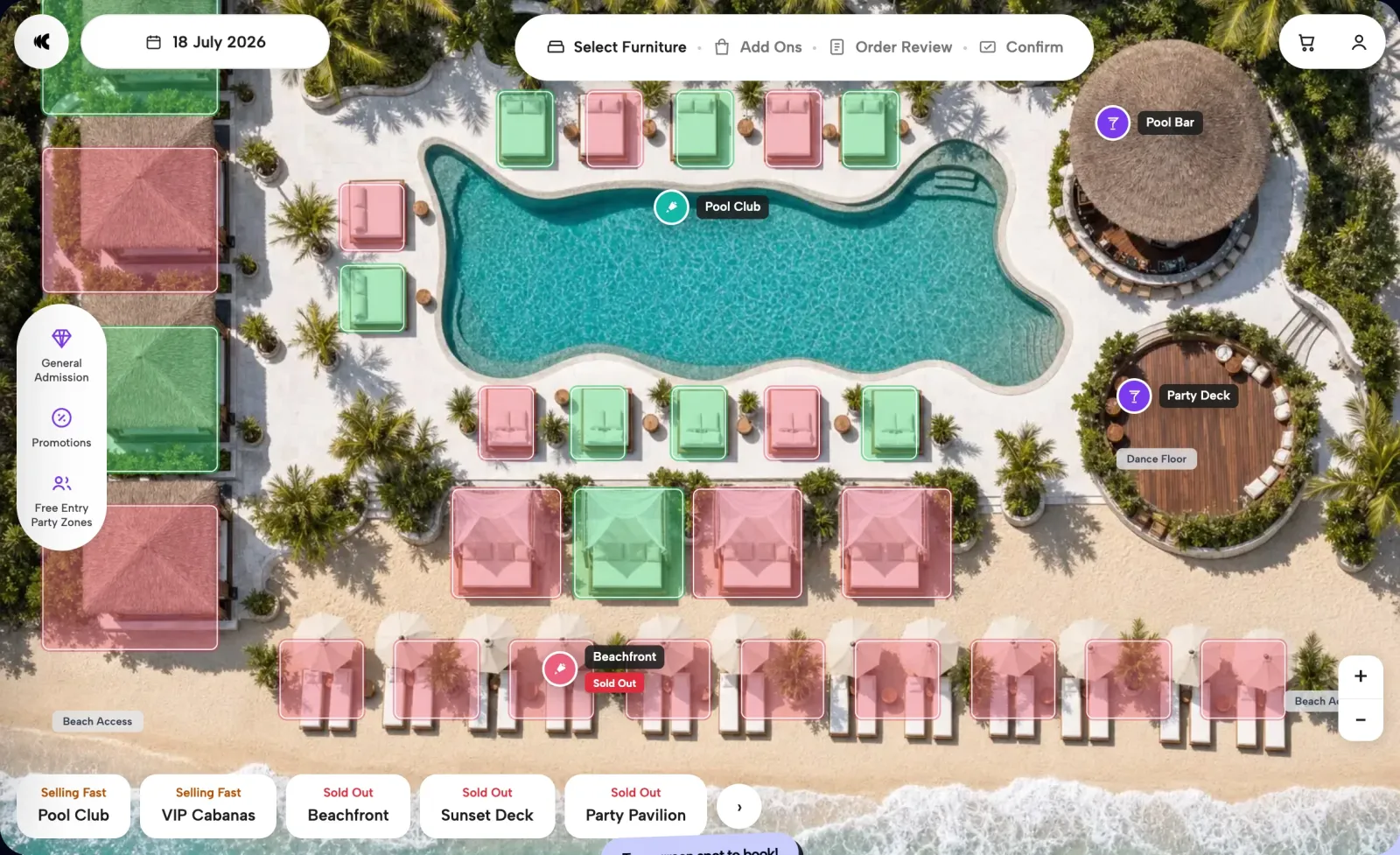
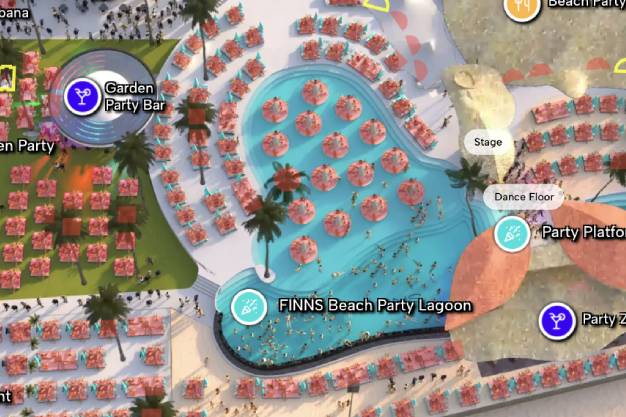
Clubtech starts with a 3D birds-eye map. Guests explore the real zones, select exact furniture, and can view 360° walkthroughs. The map turns inventory names into places the guest can understand.
The practical test for any platform is simple: can a first-time guest tell why one spot costs more than another before reading a paragraph of explanation?
Make the package legible
Once the guest chooses a spot, the package should answer three questions quickly:
- What is included?
- What is committed or prepaid?
- What can be added now?
Clubtech supports tiered packages and stackable add-ons including bottles, cakes, transfers, and products. The interface should make the difference between the base furniture and a higher-value package obvious without forcing the guest to compare a long menu.
Design for the phone at night
Clubtech's approved product data says 82% of bookings happen on a phone after 10pm. That buying moment sets the standard: sub-second load, no app install, and checkout in four taps.
Mobile-first means more than fitting the desktop page into a narrower screen. The map must remain usable, package choices must stay readable, and the payment action must remain obvious while the guest uses one hand.
Take payment while intent is high
A provisional reservation leaves the operator exposed. Deposits, minimum spends, and prepayments turn the booking into a commitment before the guest arrives.
The interface needs to state the payment rule plainly. Hidden terms and surprises at the final step create hesitation. Clear value, amount, and cancellation conditions protect both conversion and trust.
Keep the sold-out guest
When furniture sells out, the flow should not end with a dead screen. Clubtech supports priority and free-entry data capture, so the venue can still collect contact details from guests who want to attend.
Sold out is an inventory state, not the end of the marketing journey.
Connect booking UX to the floor
The guest experience and the operating experience are one chain. Exact furniture selected online must remain exact furniture on the internal floor plan. Inventory sync, allocation, and the operator console keep front of house working from the same booking the guest made.
That handoff is part of UX even though the guest never sees the console. A clear checkout that produces a confused service day is not a successful flow.
Questions operators ask
What makes a venue booking flow work on mobile?
Fast load, readable spatial inventory, large touch targets, a short package decision, familiar payment methods, and no app requirement.
Why does a map convert better than a list?
A map lets the guest understand location and relative value. They buy the exact spot rather than interpreting an internal inventory label.
Where should prepayment appear?
The commitment should be clear when the package is selected and repeated at order review. It should not arrive as a surprise after the guest has built the booking.
Review the complete flow
Use the beach club booking-system guide for vendor questions and Bookings for the Clubtech workflow. To test it on a venue like yours, book a demo.