A social follower may visit. A booking names the guest, the date, the product, and the value. That is why first-party data for a beach club should start with the booking rather than a disconnected newsletter form.
The venue already has a direct exchange with the guest. The job is to capture the right details with clear consent, keep them under the venue's brand, and connect the reservation to the marketing and operating questions the team needs to answer.
What first-party booking data includes
Useful booking data is specific to the transaction:
- contact details supplied by the guest;
- visit date and booking lead time;
- furniture, zone, time of visit, and package;
- booking value and add-ons;
- acquisition source and campaign;
- repeat-booking history.
Clubtech turns booking patterns into guest intelligence, including daily booking volume, lead time by zone, average value by variant, repeat-customer share, and 20+ reports.
Capture the party, not only the payer
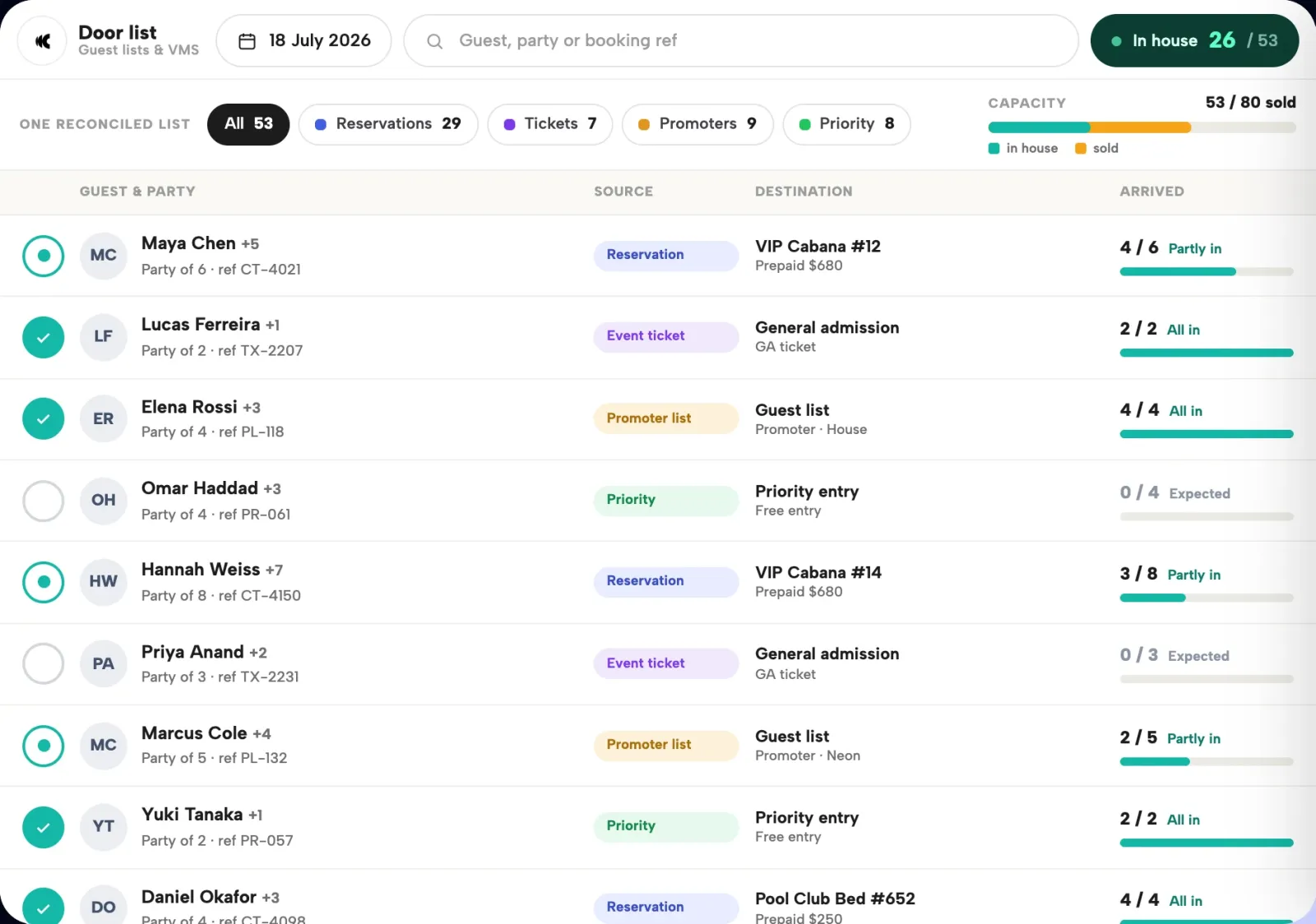
Most reservations identify one booker and leave the rest of the group invisible. Clubtech's every-guest capture lets the booker invite the party, and each invited guest supplies their own details.
The difference compounds. A six-person booking can produce six guest relationships rather than one payer and five anonymous arrivals. Each detail still needs an appropriate consent basis and clear use; owning the system does not remove the venue's privacy responsibilities.
Put the booking value into attribution
Clubtech sends bookings to Meta, Google, and GA4 in real time with revenue values. That lets the marketing team compare campaigns against booked revenue, not only clicks or form completions.
Abandoned-booking events can also retain the zone, date, and price the guest left, supporting a return to the exact booking context. The important distinction is that the booking engine produces the event; the ad account is not guessing from a thank-you page.
Turn data into operator questions
A database is useful when it answers decisions. Start with questions a GM, revenue manager, or marketing manager can act on:
- How far ahead does each zone book?
- Which packages raise average booking value?
- Which campaigns produce prepaid revenue?
- Which origin markets book premium zones?
- How many guests return, and what do they book next?
The point is not to collect every possible field. It is to capture enough reliable information to price, staff, market, and report with less guesswork.
Keep ownership clear
Clubtech is white-label: the venue's domain, design, and guest data. That ownership is strategically different from relying only on a marketplace or promoter channel.
Ownership also creates responsibility. State what is collected, why it is collected, and how guests can control marketing consent. Retention, access, and deletion requirements depend on the venue and jurisdiction; privacy counsel should set the operating policy.
Questions operators ask
What is first-party data for a beach club?
It is information guests provide directly to the venue through bookings and other owned interactions: contact details, visit history, furniture and package choices, booking value, and campaign source.
Why capture every guest?
The whole party visits the venue, but a traditional booking captures only the payer. Inviting each guest to supply their own details expands the venue's consented audience with every reservation.
How does booking data improve advertising?
Revenue-valued booking events show Meta, Google, and GA4 which campaigns produced paid reservations. That supports attribution and value-based optimization on booked revenue.
Build the owned data loop
Continue to guest data and reporting, every-guest capture, or the full beach club marketing strategy.