The forecast is rarely the problem. Most operators can see a week out that Thursday looks wet. The problem is the morning it actually turns: 11am, the sheet is full, the kitchen has prepped, a dozen parties are already in cars, and nobody has decided anything. From there every choice gets made twice — badly on the phone, then again at the door.
A turned day costs a venue in three places. The inventory that goes unsold. The labor already committed. And the hours the team burns having the same conversation forty times, slightly differently each time. Only the first of those is about weather.
The direct answer: decide early, communicate once
The operational answer to a bad day is a standing decision rule, written before the season and run by one named person on the day.
It has four parts. A trigger — the condition, read at a fixed hour, that changes the plan. A decider — one person with a deputy, who makes the call rather than convenes a meeting. A cut-off — the time the call is made, early enough that guests hear from the venue before they leave the hotel. And one message, sent once, that says what is happening, what the venue is able to offer, and where its terms sit.
Late and repeated is the expensive version. Deciding at 1pm means half the sheet already traveled and the floor is improvising forty versions of the venue's position. Deciding at 9:30am against a full sheet is uncomfortable, and it is the cheapest thirty seconds in the day.
Know what you can offer before you pick up the phone
The call is short when the person making it already knows the alternatives. Before anyone contacts a guest, the decider should have three things on screen.
The covered inventory. Which zones are usable in this weather, how many they seat, and what is already sold in them. Discovering mid-call that the covered section was committed an hour ago is how a short conversation becomes a long one.
The other times. A later start on the same day is the smallest move available, because nothing about a guest's trip changes except the hour.
The other dates. Which days in the next two weeks have space in the equivalent zone at the equivalent tier. If that answer needs a call to the reservations team, the offer will not get made.
What you are able to offer, and on what conditions, is set by your own booking terms — which are yours, not your platform's. This is about having the inventory picture ready, not about what the terms should say.
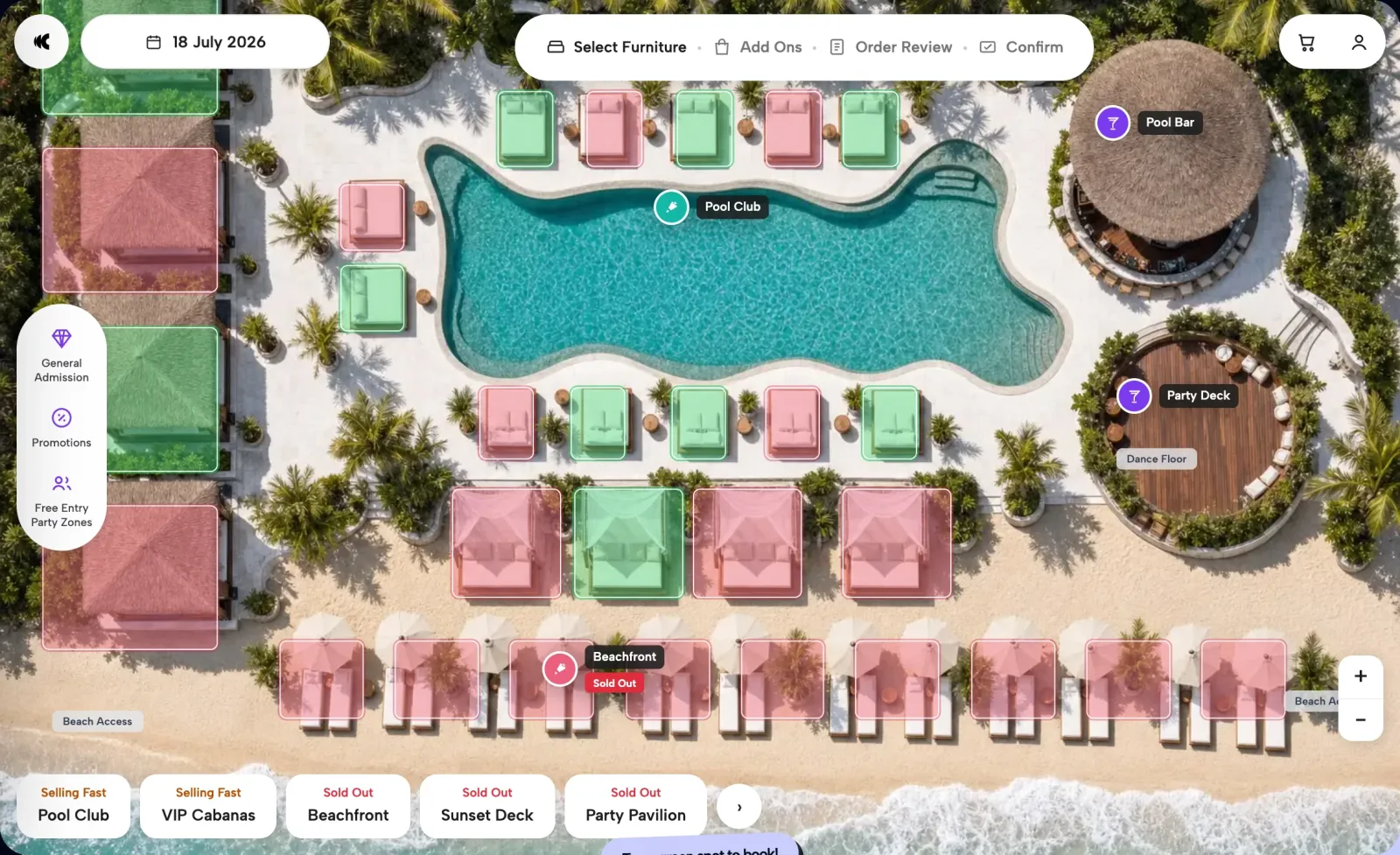
On Clubtech, that picture is one screen. The online booking map and the internal floor plan share inventory in real time, so the operator console shows what is actually sold, including whatever the team moved five minutes ago. Automatic seating allocation runs from that same venue map, so the seating plan gets worked there rather than redrawn on paper at the host desk. And contact details for the booker and the rest of the party are already captured, owned by the venue — so reaching the sheet does not depend on who took the original message.
What the floor team needs before the first call goes out
Brief the team before the guests, not after. Three minutes, standing up, covering four things.
- The decision, in one sentence. What is happening to today, stated the same way by everyone.
- What is on offer, with the covered zones and alternative dates named specifically.
- Where the terms live — the venue's own booking terms, wherever the venue publishes them for guests. Every team member points to the same place instead of inventing an answer under pressure.
- Who escalates, and to whom. One named person owns exceptions, so nobody on a headset is making a commercial decision alone at 11:40am.
The failure mode is a team that finds out from a guest. That is how a venue ends up running three different positions at once.
Run the rest of the day for the guests who still come
Some parties will arrive regardless. A turned day is a service day with a smaller sheet, not a closed one.
Consolidate. Pull the remaining bookings into the zones that work rather than spreading them across a wet deck. A full covered section reads as a good day; the same guests scattered across an empty venue reads as a bad one. Re-cut labor against the sheet you actually have — pre-sold bookings tell you what the afternoon looks like before it happens, which is the argument for running operations off an order book rather than a forecast. And hold the rate, adding value inside the experience rather than discounting on the day, so the guest in front of you does not learn to wait for weather.
Same discipline as any full service day, covered in more depth in our guide to running the venue you already sold.
Read the pattern so next year is planned, not survived
The last step happens after the day, and almost nobody does it. Keep a one-line record of every date the weather changed the plan: the date, the call, the hour it was made, how many parties it touched, and what they were offered. Six entries is enough to see a shape.
Then read that list against your booking data. Clubtech ships 20-plus reports — daily booking volume, lead time by zone, average value by variant, repeat-customer share, product mix, origin markets — and the useful question is what the book looked like going into those dates. If the same fortnight turns twice in three seasons, that is a planning input rather than bad luck: a covered-zone build, a different staffing shape, or less exposed inventory sold into that window. The revenue side of that argument sits in our beach club revenue playbook.
Venues that handle weather well do not have better forecasts. They are the ones for whom the eleventh wet Thursday is the eleventh run of the same short, boring procedure.
Questions operators ask
What should a venue do when the weather turns on a day that is already fully booked?
Make one decision early and communicate it once. Set a trigger condition read at a fixed hour, name the single person who makes the call, and set a cut-off early enough that guests hear from you before they travel. Then brief the floor team before contacting anyone, so every conversation that follows says the same thing.
How early should the call be made?
Early enough that a guest coming from a hotel has not left yet. In practice that means a morning cut-off for an afternoon service, and a late-afternoon cut-off for an evening one. Deciding an hour later costs more, because half the sheet is already traveling and the floor ends up handling arrivals and inbound calls at the same time.
What is a beach club weather policy, and does Clubtech set one?
The terms are the venue's own. Refund, deposit, cancellation and rescheduling conditions govern the relationship between a venue and its own guests, so Clubtech publishes no position on them and does not set them for you. Write your terms, keep them where the guest can find them, and point the floor team at that page rather than asking staff to improvise.
Does the platform rebook or notify guests automatically when weather changes?
No. There is no weather-triggered rebooking or notification feature, and we do not claim one. What the platform gives you is the inventory picture and the contact data: a real-time floor plan and operator console showing what is sold and what is still open, automatic seating allocation run from the venue map, and contact details captured for the booker and their group, owned by the venue. The outreach itself is your team's call.
What does the floor team need to know before the first guest calls?
Four things: the decision in one sentence, the alternatives you are able to offer with covered zones and open dates named specifically, where your booking terms live so everyone points to the same page, and who owns exceptions. A team that hears it from a guest first will produce three different positions inside an hour.
How much does it cost?
Commercials follow discovery. Every venue has a different mix of inventory, zones, payments, integrations, teams, and rollout work, so a list price would be fiction. Book a discovery call, we map the operation, and we come back with a proposal built around the real scope of your venue rather than a number pulled off a page.
Bring a wet Thursday to the call. We will walk the booking map, the covered zones, the allocation, and the reporting — pre-configured for a venue like yours — so the next turned day is a procedure rather than an afternoon. Book a 30-minute demo