Most hotel pools are managed like an amenity: a towel desk, a clipboard, and whatever the front office can see from the lobby. Venue management software treats the pool as what it actually is — a venue with sellable inventory, its own demand curve through the day, and its own P&L. The difference shows up in three places: what gets sold before the day starts, how the deck runs while guests are on it, and what the team knows the next morning.
The direct answer: what the software runs
Venue management software for a hotel pool covers three layers on one platform. Selling: sunbeds, daybeds, cabanas, and day passes booked and paid in advance, with packages and add-ons attached. Operating: an internal floor plan with automatic seating allocation, check-in and check-out workflow, and a day-of console for the team. Reading: reporting on booking volume, lead times, product mix, and repeat guests, so decisions stop being anecdotal. A booking widget alone does the first job; management software does all three.
Sell the deck before the day starts
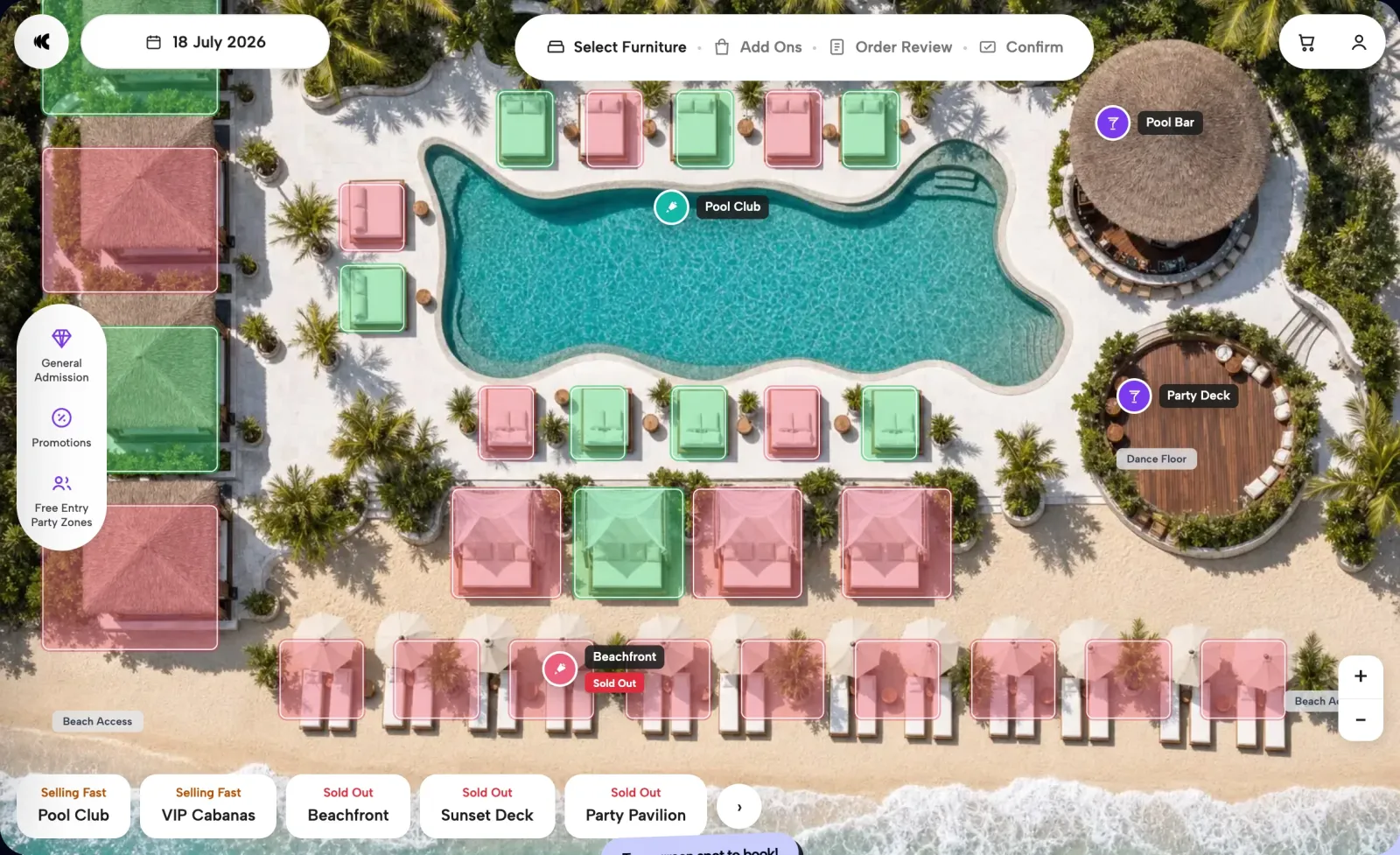
The selling layer is where the pool stops depending on walk-ups. On Clubtech, guests book from a 3D birds-eye map of the deck — they explore zones, tap the specific daybed or cabana they want, and commit to the spot rather than "a sunbed." Tiered packages run from bed-only to full experience, with add-ons like bottles and transfers stacked inside the booking flow rather than sold ad hoc at the pool bar.
For hotels, the day-pass channel matters as much as the furniture. Non-resident guests are a revenue line most properties either ignore or hand to a marketplace that owns the guest relationship. Selling passes through your own booking flow keeps the guest data and the pricing control with the property — the mechanics are covered in how hotels sell day passes, and the booking-side detail lives on the hotel pool booking page.
Prepayments and deposits do double duty here. They put predictable cash in the account before service day, and they kill the no-show problem that makes pool forecasting guesswork: a guest with money committed to a specific daybed on a specific date behaves differently from one who tapped "reserve" for free.
Operate the deck while guests are on it
The operating layer is what separates management software from a booking form. Clubtech's operator side runs an interactive internal floor plan with automatic seating allocation, and online inventory syncs to that floor plan in real time — the team sets what is sellable, runs allocation from the venue map, and knows what is booked before doors open.
The day-to-day console handles the rest of a service day: manual bookings and overrides when a guest calls the desk, check-in and check-out workflow as the deck turns over, and area blocking when a zone closes for maintenance or a private event. Role-based permissions mean the towel desk, the pool manager, and the F&B director each see the controls appropriate to the job.
Price the same deck for more
A hotel pool has demand patterns as sharp as any beach club — weekends against weekdays, school holidays against shoulder season. Dynamic pricing lets the venue price to that demand and make more from the same furniture, while "Book Online & Save" early-commitment pricing pulls bookings forward and gives the team capacity data days in advance. None of this requires new inventory; it requires the deck being sellable in units that can carry a price.
Read the pool like a business
Clubtech ships 20+ reports, and for a pool operation the useful ones are specific: daily booking volume, lead time by zone, average value by variant, product mix, repeat-guest share, and origin markets. That last one matters more for hotels than most venues — knowing which markets book the pool independently of rooms changes how the property markets both. The reporting lives alongside the booking data rather than in a spreadsheet someone maintains, and the operations side of the platform shows how the pieces fit.
Fit inside the hotel stack
The evaluation question every hotel asks is whether new software means an IT project. Clubtech sits on top of the existing stack with zero major IT changes rather than replacing anything. Opera PMS is an integration row for the hotel vertical, with exact scope confirmed property by property — availability sync, guest-profile matching, and charge posting are different pieces of work, and an honest vendor scopes yours specifically rather than answering "yes, we integrate with Opera."
The platform is white-label: the booking journey runs on the property's own domain and design, and the guest data belongs to the venue. For a hotel brand that has spent years controlling its guest experience, that is the difference between adding a capability and renting an audience.
Questions operators ask
What does venue management software do for a hotel pool?
It runs the pool as a venue rather than an amenity: sunbeds, daybeds, cabanas, and day passes sold and prepaid in advance from an interactive map, an internal floor plan with automatic allocation and check-in workflow for the service day, and reporting on booking volume, lead times, product mix, and repeat guests.
How is this different from a pool booking widget?
A widget takes reservations. Management software also runs the operation — floor-plan allocation, check-in and check-out, manual overrides, area blocking, role-based team permissions — and reads the business through reporting. Clubtech ships 20+ reports covering volume, lead time by zone, average value by variant, and origin markets.
Does it integrate with Opera PMS?
Opera PMS is an integration row for the hotel vertical, with exact scope confirmed property by property. Availability sync, guest-profile matching, and charge posting are three different projects, so the right approach is scoping which one your property needs during discovery rather than accepting a generic yes.
Can a hotel sell day passes to non-residents through it?
Yes. Day passes sell through the property's own white-label booking flow, so pricing control and guest data stay with the hotel instead of a marketplace. Passes can carry packages and add-ons the same way furniture bookings do, and prepayment applies, which protects the deck from no-show blocks.
Do prepaid pool bookings reduce no-shows?
A prepaid booking attaches money to a specific piece of furniture on a specific date, which changes guest behavior compared with a free hold. Prepayments, deposits, and minimum spends are the platform's no-show mechanics, and they also put predictable cash in the account before service day.
See it configured for a property like yours. Tell us your deck layout, your PMS, and how you sell passes today. Book a 30-minute demo — no contracts, no credit card.