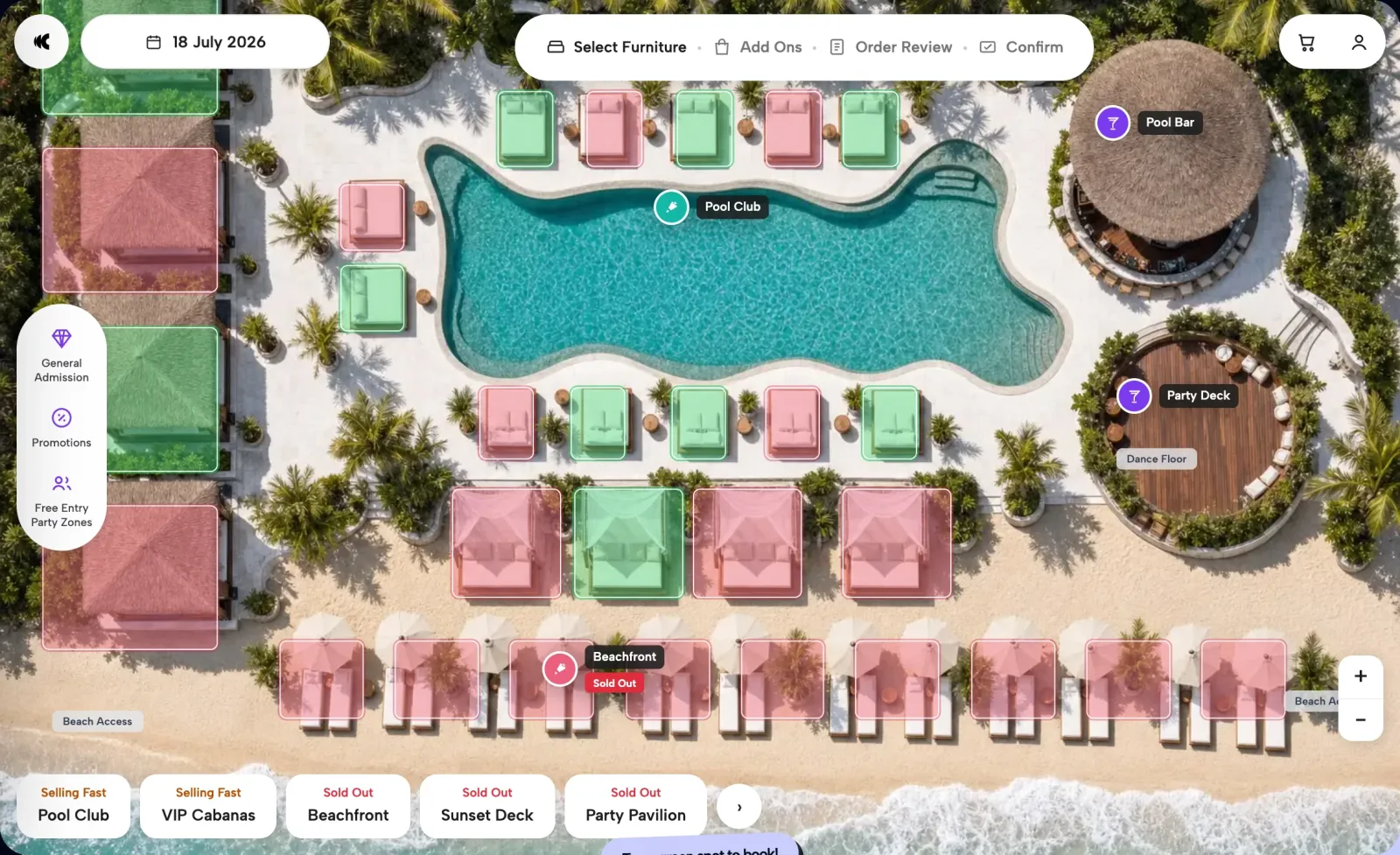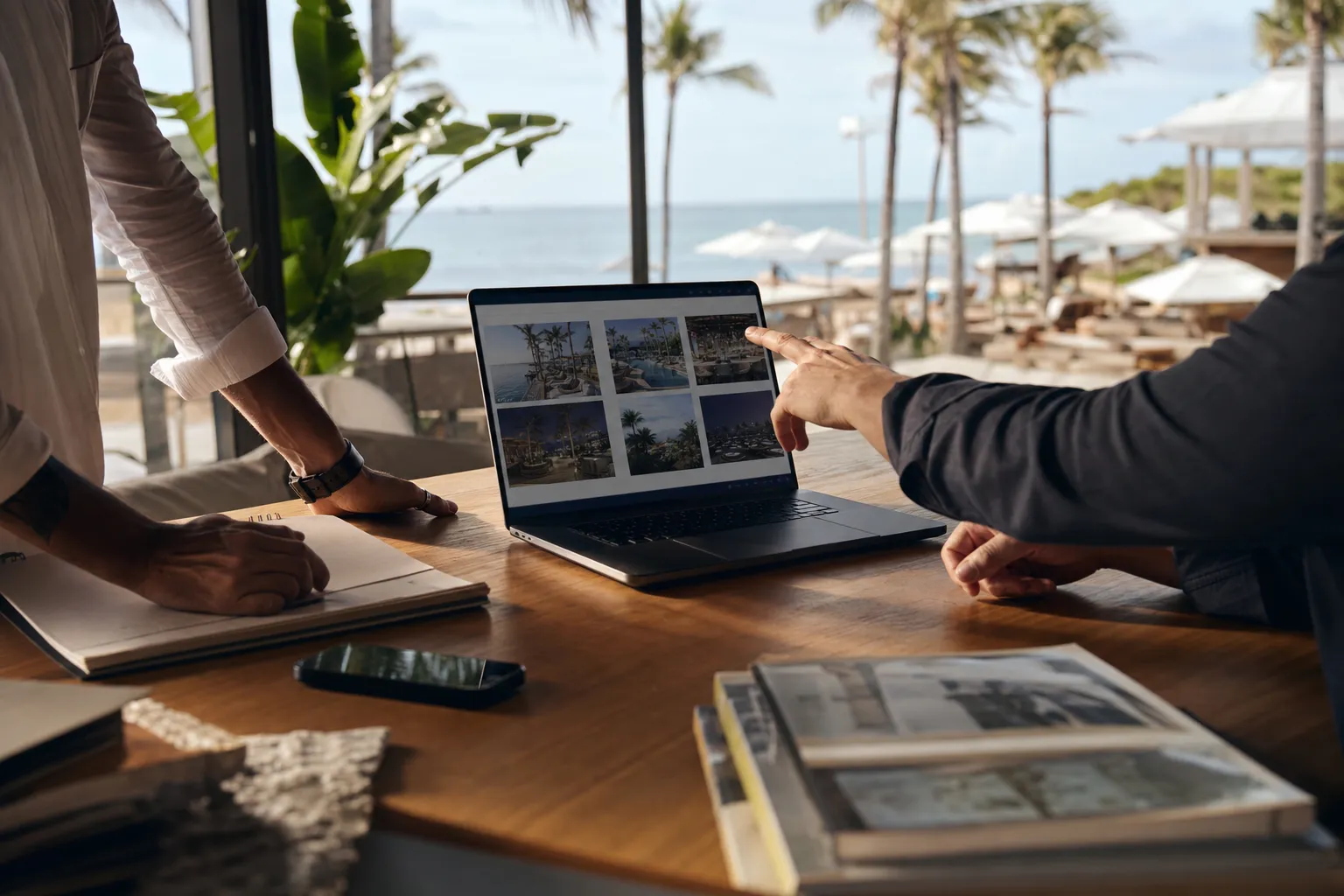
Most of these decisions start the same way. A developer the venue already trusts looks at the booking page, scopes it, and comes back with a number. From the outside it is a floor plan, a calendar, a card charge, a confirmation email. The estimate is usually given in good faith. It is just an estimate of the first version, not of the system the venue will still be running in three years.
The short answer
Buy the platform, unless one of three things is true. Your inventory model is genuinely unlike anything on the market and no vendor can configure their way to it. You already employ engineers — with a roadmap, and someone reachable on a Saturday night — who will own this for years. Or the booking experience is part of what your group sells rather than just how it sells, so owning the code is strategic.
Any one of those makes a custom booking app defensible. If none is true, the build is a staffing decision wearing a software decision's clothes, and venues tend to discover that in year two.
What the first version always covers
A competent developer really can ship the front half: a map or grid of your furniture, a date picker, live availability, a price, a card charge, a confirmation email, and an admin screen listing today's bookings. It looks exactly like your brand, and that is the part that sells the decision in the first demo. Version one is real software and it sells furniture. It is also the front of the operation, and the front was always the part that was easiest to buy.
What the first version never does
Payment the way it actually arrives. Guests pay in different currencies, from wallets, through local rails, on phones — 82% of bookings happen on a phone after 10pm. A card form is the easy part. One-tap Apple Pay and Google Pay, a domestic gateway alongside an international one, and multi-currency behaving, all inside a checkout that never redirects, is not. Clubtech runs Stripe, Airwallex, Apple Pay, Google Pay, and Midtrans (QRIS, GoPay, OVO), and keeps payment inside the flow.
The floor plan the team actually works from. The staff surface is larger than the guest surface: an internal floor map, automatic seating allocation, real-time sync between what sold online and what the floor holds, manual bookings and overrides, check-in, and the day-of console a manager reads before doors. Custom version ones rarely include it, because nobody demos it and nobody misses it until the first sold-out Saturday.
The marketing surface. A booking is a conversion event. It has to fire to Meta, Google, TikTok, and GA4 in real time with revenue values posted back, or the ad spend keeps optimizing toward clicks. Abandoned bookings have to trigger recovery within seconds and return the guest by WhatsApp or email to the exact zone, date, and price they left.
The reports. Not a bookings list. Lead time by zone, average value by variant, product mix, origin markets — segmented and trending, without CSV exports. Clubtech ships 20+ reports. Version one ships the list and calls it reporting.
If you have not written down what the system has to do, the complete guide to choosing a beach club booking system is a specification you can build or buy against.
The line nobody quotes for
Builds are quoted as projects. A booking system is not a project. Payment providers deprecate API versions on their schedule, not yours. Wallets, browsers, and phone operating systems change every year. The price ladder changes every season and someone has to change it. A decline pattern appears at 11pm on a Saturday and someone has to be awake for it. Then the developer who wrote it takes another job, and the venue learns that everything it owns lived in one person's head.
None of that is visible on the day you accept the estimate. The real cost is recurring, more payroll line than invoice, and the most under-scoped part of this decision. Ask for the annual running number next to the build number before comparing anything.
Where building genuinely wins
Your inventory model is genuinely unusual. Some venues sell something no product models cleanly. Test that before accepting it — the line between an architecture problem and a configuration problem is rarely obvious from the outside. Clubtech sets up bespoke per-venue time-slot configurations case by case, from part-of-day sessions through to hourly slots. Ask a vendor to configure your strangest week before concluding nobody can.
You already employ engineers. With a team, a roadmap, and someone on call, the standing cost is one you already carry and the build is a real option rather than a hidden hire. Groups with an in-house product function build things vendors will not prioritize.
You have a strategic reason to own the code. If the booking experience is part of what the group sells — licensed to other operators, or a product line in its own right — owning it can be worth paying more for. That is an ownership argument, not a cost argument.
The integration surface you inherit either way
Either route inherits the same connectors: payments, POS, PMS, ad platforms, analytics, messaging. What changes is who maintains them. Build, and every vendor's API change becomes your sprint, permanently. Buy, and you inherit what the platform has already built, which makes the useful question "which of these are live today", not "which are on the slide" — the integrations to verify before you sign sets out the categories.
Clubtech sits on top of the venue's existing POS and PMS with zero major IT changes rather than replacing the stack, which is what keeps switching cost low: the systems already in the building stay where they are.
The part with no shortcut
A custom booking app makes guest data and payment handling your problem permanently — not a checklist item at launch, but a named owner for as long as the system runs. On the platform side, ask where card data lives. With Clubtech, guest card data never sits in Clubtech's own database, payment runs through the integrated processors, and Clubtech employs full-time cybersecurity and privacy specialists. The guest data belongs to the venue.
How to run the decision honestly
Seven questions, answered in writing before anybody quotes anything.
- Which part of our operation is genuinely unusual — the inventory model, or a configuration nobody has asked a vendor for?
- Who owns this in year three, by name, and what happens on the Saturday they are unreachable?
- What is the standing annual cost, set beside the build cost, over the same multi-year window for both routes?
- What is the exit if the build stalls half-finished mid-season?
- What does the floor need on the day? Write the operator console before the booking page.
- Which integrations must work on day one, and who maintains each connector after that?
- Where does guest and card data live, and who is accountable for it?
Answer all seven and still want to build, then build — you have the organization for it. Most operators find questions two and three do the deciding, and that what they wanted was not a custom app but a platform configured closely enough to their venue that it feels like one.
Questions operators ask
Is a custom booking app cheaper than a platform?
Usually that question sets a single build estimate against a figure nobody has given you yet, which is not a comparison. What is knowable today is the build's own standing line: maintenance, hosting, payment API upgrades, someone on call, and the engineer who owns it. Work that out across the same multi-year window you would judge any other route on. Clubtech's commercials follow discovery, so the other half comes from a call.
How long does a custom booking system take to build?
Longer than the estimate, because the estimate almost always describes version one, the guest-facing booking page. The honest measure is not time to launch but time until the system does what your floor, your payments, your marketing, and your reporting already need, which is a far bigger build. With a platform, scope and rollout are mapped during discovery rather than guessed at.
What can a platform do that a custom build usually cannot?
The parts that exist because many venues funded them: multi-currency and wallet payment inside the checkout, an internal floor plan with automatic seating allocation, bookings posted back to the ad platforms as revenue events, abandoned-booking recovery, and 20+ built-in reports. One venue rarely funds all five in a single project, so they get deferred to a version two that often never ships.
Do we have to replace our POS or PMS to move to a platform?
No. Clubtech sits on top of the venue's existing stack, integrating with the POS and PMS already in the building with zero major IT changes rather than replacing them. Confirmed connections include Stripe, Airwallex, Midtrans, Opera PMS, Apple Pay, Google Pay, Meta Ads, Google Ads, TikTok, GA4, and WhatsApp. Ask any vendor which integrations are live today rather than which appear on a logo slide.
How much does a booking platform cost?
Commercials follow discovery. Every venue has a different mix of inventory, zones, payments, integrations, teams, and rollout work, so a published price would be fiction. We map the operation on a call and come back with a proposal built around the real scope. We will not quote your build alternative either, because that depends on your market and your team.
Bring the build spec to the call. Whatever your developer scoped, bring it. We will show the same operation running as a booking map, an operator floor plan, and the reports attached to both — so you hold the spec against something already running rather than against another estimate. Book a 30-minute demo