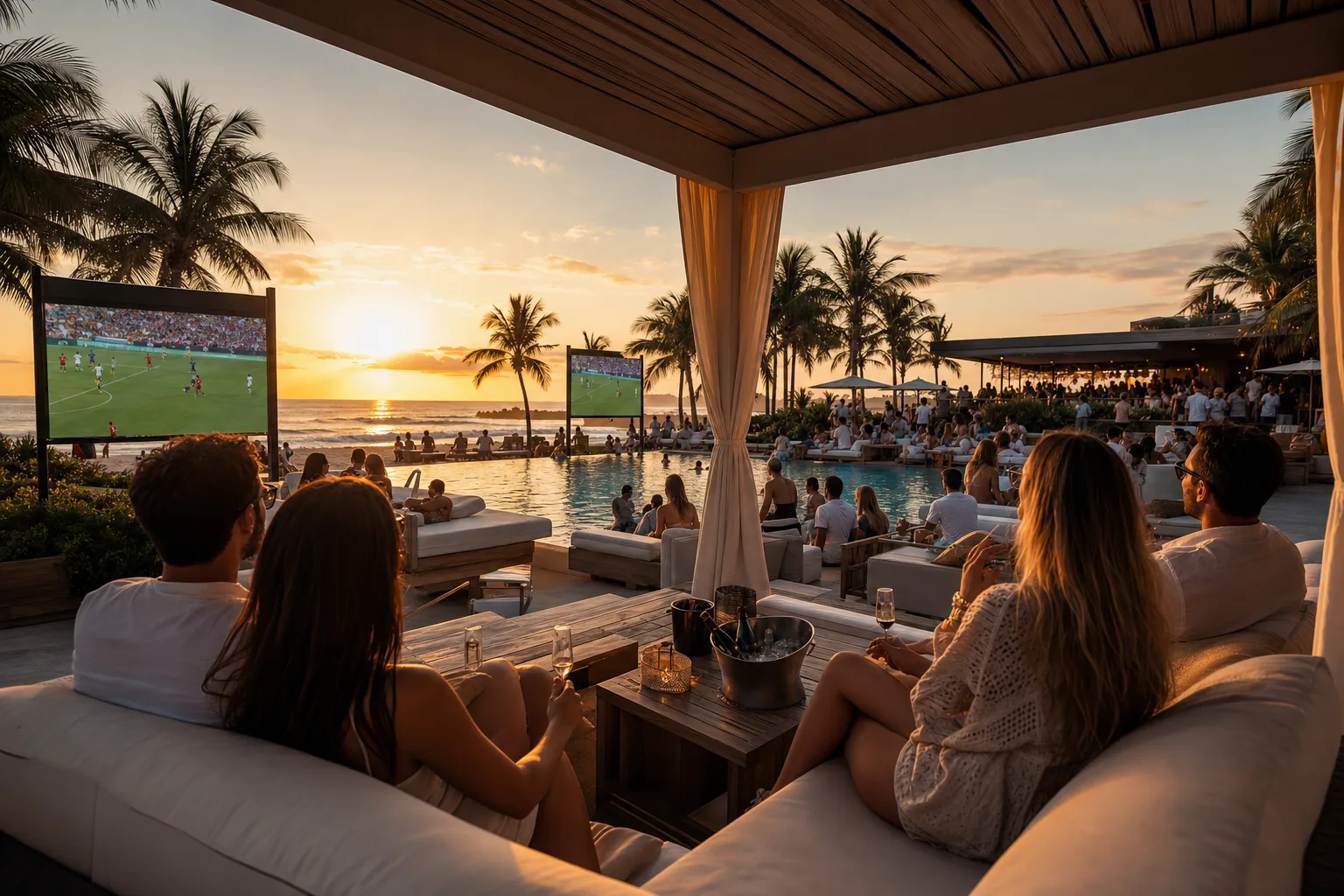
A World Cup final, a title fight, a Grand Prix weekend — a marquee event fills your venue whether you plan for it or not. The demand is real and the date is fixed months out. The only question is whether it lands as pre-sold revenue with capacity data days ahead, or as a walk-up scramble you can't forecast and can't attribute.
The answer, up front
Treat a major event like a product launch, not a busy night. Put your high-ticket furniture — cabanas, daybeds, VIP tables — on sale as event packages weeks ahead, priced for the peak with a minimum spend attached. Take a deposit or prepayment so every reserved spot is committed, not hoped for. Capture the guests who arrive after you sell out. Then keep the data, because the same crowd is your warm audience for the next fixture. Done right, one event weekend pre-sells before the first whistle and feeds the two after it.
Why the walk-up model leaves money on the table
On a normal day, walk-up demand is soft and you can absorb the uncertainty. A marquee event inverts that. Demand spikes hard against fixed capacity, and the walk-up model turns your best inventory into a lottery.
A $450 daybed that walks at 2pm on an ordinary Tuesday is $450 you never see again. On a World Cup final, that same daybed could have sold three times over — but only if it was bookable in advance. Every prime seat you hold back for walk-ins is a spot you couldn't pre-sell at event pricing, and every no-show is a table that sat empty while a paying guest was turned away at the door.
The operators who win these weekends stop rationing inventory at the door and start selling it online, early, at the price the event justifies.
The playbook
1. Pre-sell the furniture, not just the entry
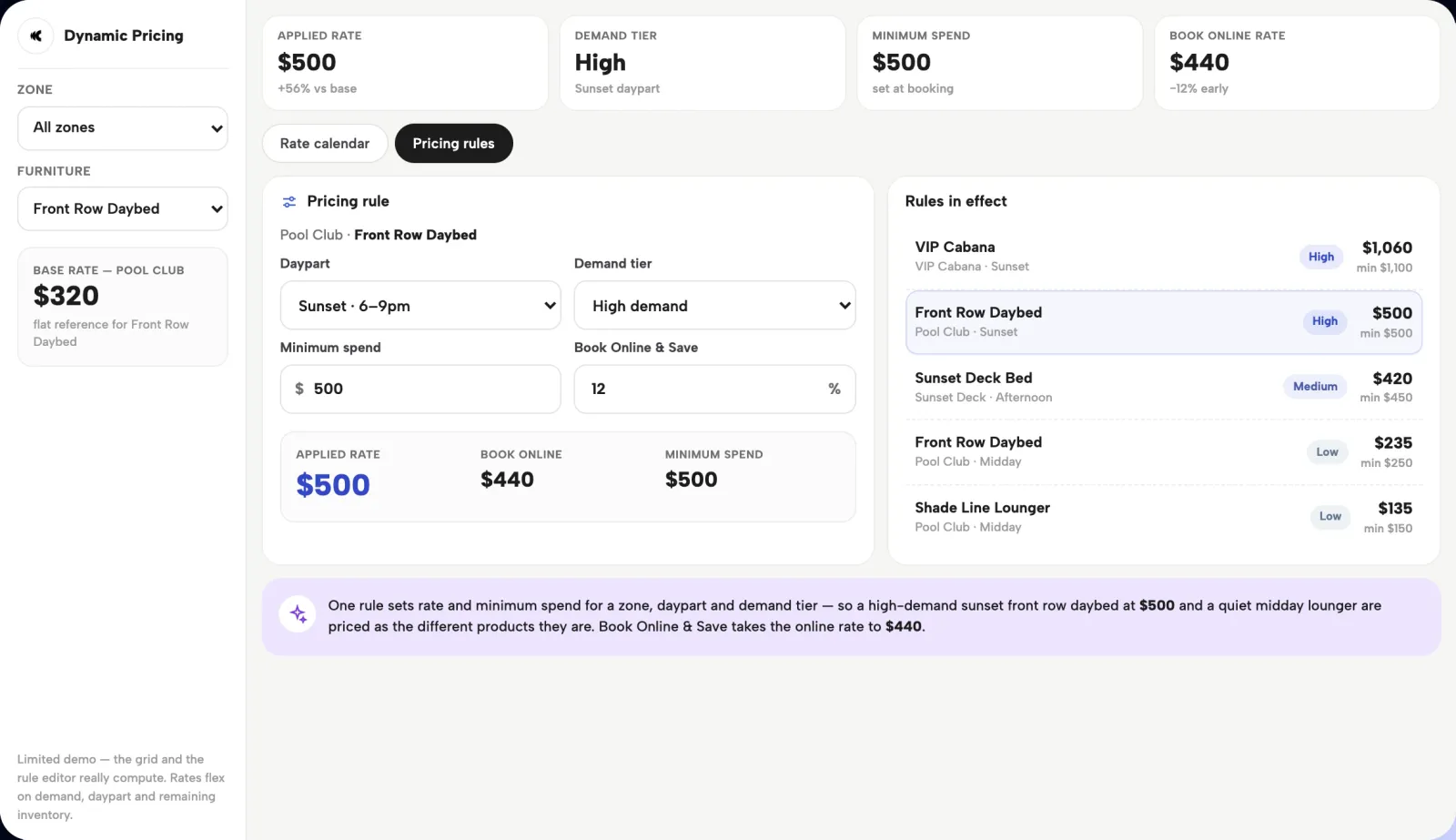
Your sellable inventory is the furniture, and an event is when it commands its highest price — the same logic behind dynamic pricing for beach clubs, applied to a fixed date. Build event-specific packages the way you'd build any tiered offer — bed only, party package, ultimate — with stackable add-ons like bottles, cakes, and transfers. Put them on an interactive map so guests pick the exact daybed or table in front of the main screen, and let early commitment pricing ("Book Online & Save") pull demand forward. The result is predictable revenue and real capacity data days before the event, instead of a guess.
2. Attach a minimum spend and take the money up front
An event weekend is exactly when prepayments, deposits, and minimum spends earn their keep. A prime cabana in front of the screen carries a minimum spend that reflects what the seat is worth that day. A deposit — or full prepayment — means the booking is committed, so a fully-booked venue actually runs full instead of leaking 20% to no-shows. The guest who has already paid shows up, spends to the minimum, and frees you from chasing confirmations the morning of.
3. Capture the guests you can't seat
Prime furniture sells out first on a big event, and that's a signal, not a dead end. When the beds are gone, keep selling: priority entry, general admission, a standing viewing zone, a waitlist. Sold out should never mean a lost guest — it should mean a captured contact and, wherever you have capacity, a second tier of revenue. The guest who couldn't get a daybed this time is the first person you invite for the next fixture.
4. Make the booking do your marketing
Every event booking should be more than a reservation — it should be a data point that compounds. When a booking fires to Meta, Google, and GA4 in real time with its revenue value posted back, your ad platforms optimize toward the guests who actually buy high-value packages, not toward clicks. Abandoned checkouts trigger recovery within seconds, and dynamic ads return the guest to the exact zone, date, and price they were looking at. You spend the run-up to the event acquiring bookers, not impressions.
5. Own the data so the next event is easier
Bookings that arrive through DMs, spreadsheets, or a third-party marketplace leave you with revenue but no guest list. On your own white-label booking flow — your domain, your design, your data — every event booker becomes a named, contactable guest you own. That list is the reason the second event outperforms the first: you seed lookalike audiences from your highest-value bookers and open pre-sales to the people who filled the room last time, instead of buying the whole audience again from scratch.
Beyond one tournament
The value of building this once is that a major event is never a one-off. A World Cup final this month is a title fight next month, a Grand Prix weekend, a New Year's Eve, a local derby. Each one runs the same play: event packages live weeks ahead, deposits securing the room, sold-out capture feeding the list, and first-party data making the next campaign cheaper. The venues that treat marquee events as a repeatable revenue system — rather than a good night they got lucky with — compound an advantage every season. It's the same discipline behind the beach club revenue playbook, pointed at the calendar.
This is the shift from walk-up guesswork to a pre-sold venue. As FINNS Beach Club CEO Beau Whittington put it: "We have grown from simple on-the-day bookings with no financial guarantee… to now having millions of dollars worth of pre-paid bookings each month."
Questions operators ask
How far ahead should I open bookings for a major event?
Open event packages as soon as the fixture and date are confirmed — typically two to four weeks out for a single match, longer for a tournament or festival. Early commitment pricing pulls demand forward and gives you capacity data before the event, so you can adjust pricing, staffing, and stock while there's still time to act on it.
Should I raise prices for a big event?
Yes — a marquee event is when your furniture commands its highest price, and event-specific pricing on prime inventory captures that. Attach a minimum spend that reflects the day's value rather than your standard rate. The goal is not to gouge; it's to price the best seats for the demand they'll genuinely see and to reward early bookers with a better rate for committing.
How do deposits and minimum spends reduce no-shows?
A deposit or prepayment turns a reservation into a commitment. When a guest has money down, they show up — so a fully-booked event weekend actually runs full instead of losing prime tables to last-minute drop-offs. Minimum spends protect the value of each seat, ensuring a front-of-screen cabana delivers the revenue its position is worth.
What happens when my furniture sells out before the event?
Selling out is a chance to capture more, not a stopping point. Keep offering priority entry, general admission, or a standing viewing zone, and open a waitlist. Every guest who couldn't get a daybed becomes a contactable lead — the first people you invite when the next event goes on sale, and the reason your list grows with each fixture.
How do I make event demand pay off after the event ends?
Own the guest data. On a white-label booking flow, every event booker is a named guest on your own list, tied to a real revenue value. You use that to seed lookalike audiences from your highest-value bookers and to open early access for past attendees, so each subsequent event costs less to fill and performs better than the last.
Turn your next big event into pre-sold revenue
The next marquee event on the calendar will create demand regardless. Whether that demand lands as committed, pre-paid, owned revenue depends on the setup. Review events and ticketing, then book a demo to walk through the event workflow for your venue.